🇨🇳 The colours of China
7 meanings recorded, 46 colours tied to the country and 3 colour cities.
China’s national colours are red and gold. Red stands for the Communist Revolution and the unity of the people, while gold represents the leadership of the Chinese Communist Party. The five stars on the flag show the relationship between the Party and the people.
Where no official value is given, the swatch shows the colour family, not the exact shade.
- Red symbolises the Communist Revolution.
- The large gold star stands for the Communist Party.
- Four smaller stars represent the people united under the Party.
- Flag colours are officially specified as #DE2910 (red) and #FFDE00 (gold).
- Earlier flags used yellow, blue, and multiple colours for different dynasties and governments.
The colours of the flag of China
The flag of China features a red background with five gold stars in the top left corner. The large star represents the Chinese Communist Party, while the four smaller stars stand for the people, originally described as four social classes. The official explanation focuses on the unity of the people under the Party. Red is linked to the Communist Revolution, and gold is used for the stars to highlight their importance. The arrangement of the stars shows the people gathered around the Party. These meanings are officially recognised.
How the colours were chosen of China
China’s current flag was adopted in 1949, after the founding of the People’s Republic. Earlier flags included the Yellow Dragon Flag of the Qing dynasty, which was yellow with a dragon, and the Five-Colored Flag of the early Republic, which used stripes for major ethnic groups. The present red and gold design was chosen to symbolise the new government and its guiding ideology. The meanings of the stars have shifted from representing social classes to a more general sense of unity.
Official shades and rules of China
The colours of the flag are precisely defined in Chinese national standards, with official samples and digital specifications. The flag’s proportions, star arrangement, and sizes are regulated by law. Only certain sizes are permitted for different uses, and the flag must be displayed and handled according to strict protocols. Damaged or faded flags are not allowed to be used.
The facts in this overview come from the Wikipedia article "Flag of China", written by its contributors and used under the CC BY-SA 4.0 licence. Rang rewrote the text in its own words, with AI assistance, and compares every page with the article to make sure no passage is copied. It may be reused under the same CC BY-SA 4.0 licence with a link back.
What colours mean in China
Customs vary by region, faith and family; these are the meanings most often recorded.
Red stands for good fortune and happiness. Brides traditionally wear it, doors are hung with red couplets at New Year, and gifts of money come in red envelopes.
Luck and prosperityFestival and celebrationWeddings and marriageJoySource: Color in Chinese cultureThe national flag is red with five yellow stars. The red stands for the Communist revolution, and the same red runs through party banners and slogans.
Politics and protestPrideSource: Flag of ChinaYellow was the emperor's colour. Under the Ming and Qing dynasties bright yellow robes and yellow glazed roof tiles, as on the Forbidden City, were reserved for him.
Royalty and powerAweSource: Color in Chinese cultureTo "wear a green hat" is a Chinese phrase for a man whose wife is unfaithful. For that reason men avoid green hats, and they make a poor gift.
Love and desireShameSource: Color in Chinese cultureThe old colour word qing covers green, blue and the shades between. In the five-element system it belongs to wood, the east and spring.
Nature and renewalCalmSource: Blue–green distinction in languageWhite is the traditional colour of death and mourning. Families wore undyed white cloth at funerals, and condolence money is still given in white envelopes.
Mourning and deathGriefSource: Color in Chinese cultureGold stands for wealth. It is paired with red on New Year decorations, wedding invitations and shop signs to wish for a prosperous year.
Luck and prosperityOptimismSource: Color in Chinese cultureColour and feeling in China
Happy events such as weddings and births are called 'red affairs'. The double happiness character is cut from red paper and pasted up at weddings.
Lovers are said to be tied by a red thread from birth. The bride's dress, the invitations and the wedding decorations are red.
In a 30-nation survey, people in China linked white with sadness more than people elsewhere, in line with white's place at funerals.
Funerals are called 'white affairs'. Close relatives traditionally wear white or undyed cloth, and gift money is given in white envelopes.
An envious person is 'red-eyed' (yanhong), and envy is jokingly called 'red-eye disease' (hongyanbing).
In Peking opera a red painted face marks a loyal, brave character such as Guan Yu. A black face is blunt and upright, and a white one is treacherous.
In the five phases of Chinese thought, red belongs to fire, summer and the south. A thriving life or business is 'red and fiery', honghuo.
Under the Ming and Qing dynasties bright yellow was the emperor's colour. To be 'draped in the yellow robe' still means to take the throne.
To be embarrassed is lianhong, 'face red'. To smear someone's reputation is mohei, to 'paint them black'.
In Chinese a person's face is said to 'turn green' (lian dou lü le) when they are sickened, shocked or furious.
A sudden shock is a thunderclap from a clear sky: qingtian pili in Chinese and seiten no hekireki in Japanese.
A discouraged person is huixin, 'grey-hearted' or 'ash-hearted', as if the fire had gone out.
Old photographs, books and letters are described as fanhuang, 'gone yellow', a common image for the passing of time.
At the Spring Festival, doors are hung with red couplets and children receive money in red envelopes, hongbao, as a wish for a fortunate year.
Colour cities of China
 🇨🇳 The white and red palaceLhasaThe Potala Palace rises in white and dark red above the city; gilded roofs and prayer flags surround it.
 🇨🇳 The Forbidden CityBeijingRed walls and yellow glazed roofs mark the old imperial palace; the lanes around it are grey brick.
 🇨🇳 The rainbow mountains of GansuZhangye DanxiaStriped hills of red, orange, yellow and pale green sandstone in the dry north-west of China.
Colours tied to China

Red
Cinnabar
A scarlet to brick-red mineral and the main source of mercury and vermilion pigmentColour named from nature · 🇪🇸 Spain +5

Brown
Terracotta
A clay-based material and colour, known for its reddish-brown toneColour named from nature · 🇮🇳 India +4
White
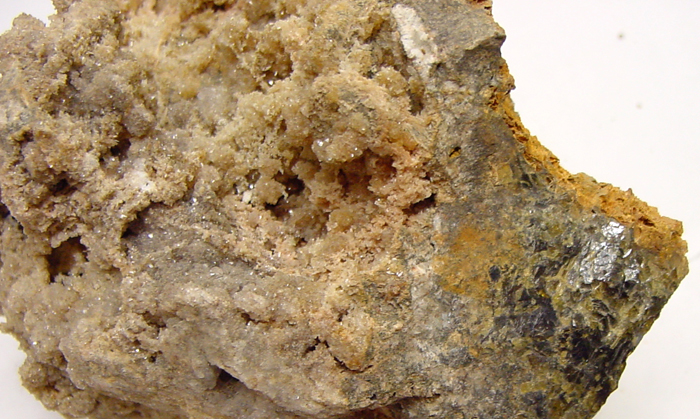
Zinc oxide
A white inorganic powder used in pigments, ointments, ceramics and electronicsPigment · 🇮🇳 India +2

Yellow
Orpiment
A golden-yellow mineral pigment once prized for its brilliant colour and rarityPigment · 🇪🇬 Egypt +5

Red
Realgar
An orange-red arsenic sulfide mineral once used as a pigment and poisonPigment · 🇨🇳 China +5

Red
Lacलाक्षा
A red resin secreted by insects and used as dye, varnish and shellacColour named from nature · 🇮🇳 India +5

White
Lead white
A dense, opaque white pigment once used in art, home, and cosmetics worldwidePigment · 🇨🇳 China +2

#FA5053
Strawberry
A bright red colour inspired by the ripe strawberry fruitNamed shade · 🇫🇷 France +4

Green
Jade
A decorative stone prized for its green shades and cultural meaning across continentsColour named from nature · 🇨🇳 China +5
White
Antimony trioxide
A white antimony compound used in flame retardants and glassmakingPigment · 🇨🇳 China +4

Red
Dragon's blood
A deep red resin from several plants, used as pigment, dye and varnish since ancient timesColour named from nature · 🇮🇳 India +3

#FF4203
Minium
A bright orange-red pigment made by heating lead, once common in medieval manuscriptsPigment · 🇨🇳 China +5

#00CCCC
Robin egg blue
A blue-green shade named for the eggs of the American robinNamed shade · 🇨🇳 China
#FADA5E
Stil de grain yellow
A yellow pigment made from buckthorn berries, once known as 'pink' or 'sap green'Pigment · 🇫🇷 France +2

Brown
Gambiered Guangdong gauze
A silk from Guangdong, China, dyed with plant juice and river mudTraditional colour · 🇨🇳 China +1

Blue
Blue pigment
Pigments that give blue colour to paints, inks, and art from ancient times to todayPigment · 🇪🇬 Egypt +5

Red
Red pigment
Pigments made from minerals, plants, and insects to create red colours in artPigment · 🇫🇷 France +4

Green
Green pigment
Pigments that give green colour to paint, ink, and art through historyPigment · 🇪🇬 Egypt +5

Yellow
Safflower
A thistle-like plant whose petals yield red and yellow dyesColour named from nature · 🇪🇬 Egypt +4

Brown
Walnut
A brown dye and ink made from the husk of the walnut fruitColour named from nature · 🇮🇷 Iran +5

Brown
Catechu
A reddish-brown dye and extract from the heartwood of Senegalia catechuDye · 🇮🇳 India +3

Red
Sappanwood
A tropical Asian tree whose heartwood yields a red dye called brazilinColour named from nature · 🇳🇵 Nepal +4

Red
Red yeast rice红曲米
A vivid reddish purple rice coloured by a special mould, used in food and medicineColour named from nature · 🇨🇳 China +3

Blue
Vaccinium bracteatum dye
A bluish-violet dye from the leaves of an Asian bilberry shrubDye · 🇨🇳 China +2
Brown
Gambier
A yellow-brown plant extract used as dye, tannin and traditional medicineDye · 🇮🇩 Indonesia +4
Photo credits on this page
The small pictures above come from Wikimedia Commons under free licences. Some are cropped to fit.
- Safflower: AndrewMT, CC BY 3.0, source
- Robin egg blue: Laslovarga, CC BY-SA 3.0, source
- Strawberry: Unknown author, CC BY-SA 2.0, source
- Lac: Jeffrey W. Lotz, CC BY 3.0, source
- Minium: Torii Kiyonobu I, Public domain, source
- Walnut: Ivar Leidus, CC BY-SA 4.0, source
- Jade: Simon, CC BY-SA 3.0, source
- Green pigment: Claude Monet, Public domain, source
- Lead white: Unknown author, Public domain, source
- Zinc oxide: Andrew Silver, USGS, Public domain, source
- Realgar: Géry PARENT, CC BY-SA 4.0, source
- Orpiment: Ra'ike, CC BY-SA 3.0, source
- Dragon's blood: Andy Dingley, CC BY-SA 3.0, source
- Terracotta: anonymous, CC0, source
- Cinnabar: H. Zell, CC BY-SA 3.0, source
- Gambiered Guangdong gauze: 方人也, CC BY 2.5, source
- Blue pigment: David Stroe, CC BY-SA 3.0, source
- Red pigment: Marco Almbauer, Public domain, source
- Catechu: Shaik Jaber Al-Shihab, CC BY-SA 4.0, source
- Sappanwood: Vinayaraj, CC BY-SA 3.0, source
- Red yeast rice: Gluo88, Public domain, source
- Vaccinium bracteatum dye: Alpsdake, CC0, source
- Lhasa Cn: 钉钉, CC BY-SA 4.0, source
- Beijing Cn: N509FZ, CC BY-SA 4.0, source
- Zhangye Danxia Cn: YubYub41, CC BY-SA 4.0, source