Red pigment
Pigments made from minerals, plants, and insects to create red colours in art
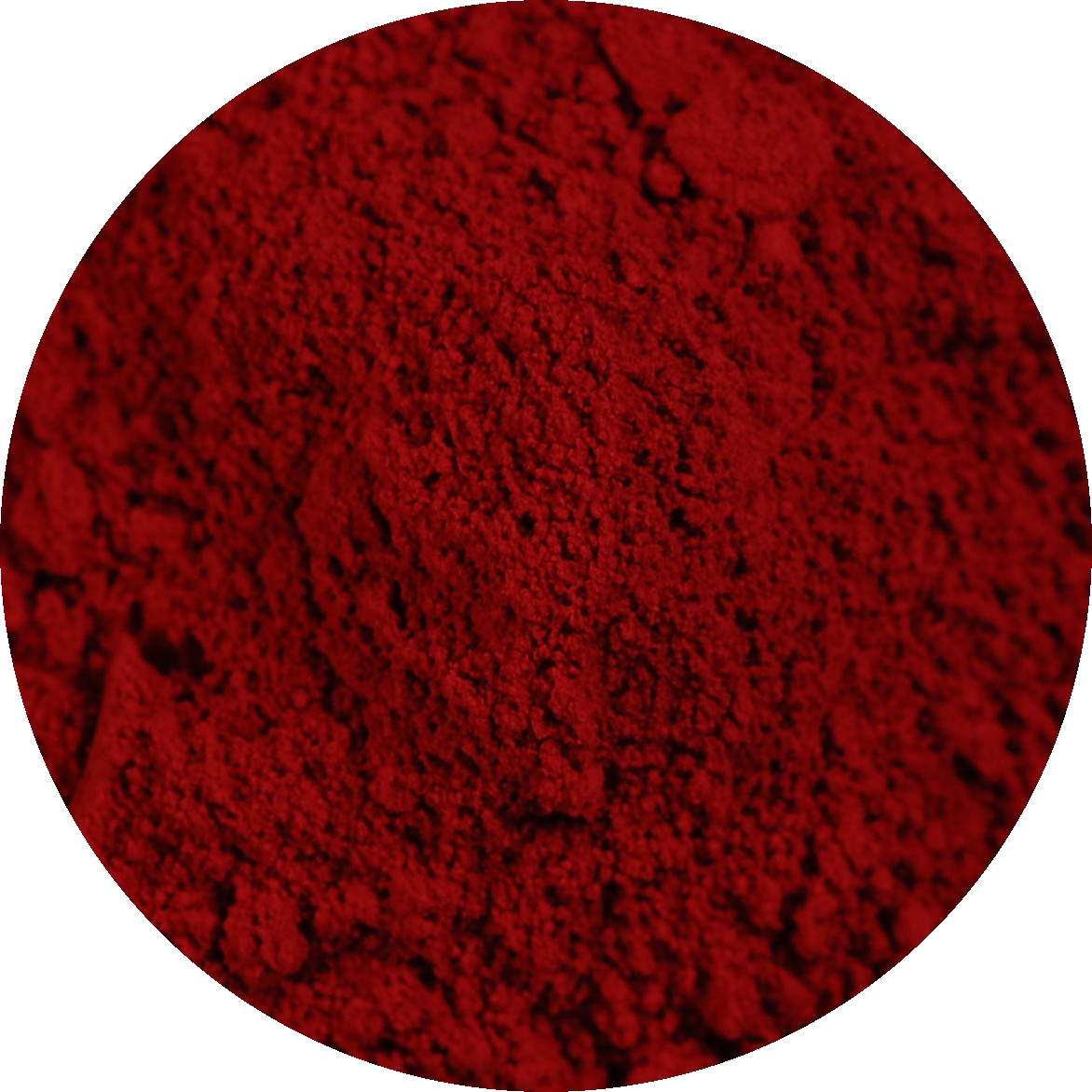
No single value: Red pigment is a material, and its colour varies. The background shows its family, red.

Red pigments are materials used to make red colours in painting and other arts. They have been made from minerals like hematite and cinnabar, plants such as madder, and insects like cochineal. These pigments range from opaque reds like vermilion to translucent reds like red lake, and have been used since prehistoric times.
- Red ochre was used in French cave art over 16,000 years ago
- Vermilion is made from cinnabar and used in Indian and Chinese traditions
- Cochineal red comes from insects and was exported from the Americas to Europe
- Cadmium red is a bright, synthetic pigment made from metal ore
- Red lake pigments are translucent and often fade in sunlight
What colour is Red pigment?
Red pigments are substances that give a red colour when used in painting, textiles, and other arts. They can be made from minerals, plants, or insects. Some, like vermilion, are bright and opaque, while others, such as red lake, are translucent and used in layers. The specific shade and qualities depend on the source material and how the pigment reflects and absorbs light.
Where does Red pigment come from?
Red pigments have a long history. Mineral-based reds like red ochre, made from hematite, have been found in prehistoric cave paintings in France dating back over 16,000 years. Vermilion, from cinnabar, and plant-based reds like alizarin crimson from madder root, have been used in many cultures. Cochineal, made from insects, was produced by the Incas and later exported to Europe. In China, a form of vermilion called Chinese red was important in art and ceremonies.
How is Red pigment made?
Red pigments are made from a range of sources. Mineral reds include hematite (red ochre) and cinnabar (vermilion). Plant-based reds come from madder root. Insect-based reds, such as cochineal and gum lac, are made by processing scale insects. Some reds, like cadmium red, are synthetic and made as byproducts of metal ore processing. Others, like minium, are created by roasting lead compounds.



Where Red pigment is used
Red pigments have been used in cave art, illuminated manuscripts, textiles, and body markings. In India, vermilion is worn by married Hindu women. Chinese red was used in architecture, clothing, and lacquerware. Artists have used red lake pigments for their translucency, layering them to create deep reds in paintings. Cochineal has also coloured food and cosmetics.
What Red pigment means
The sources mention that vermilion has a cultural role in India, where Hindu women wear it as a sign of marriage. In China, red was featured in official ceremonies, weddings, and clothing, especially during the Ming dynasty. The meanings are tied to specific practices and traditions in these cultures.
Red around the world
What the red family means from country to country.
Red stands for good fortune and happiness. Brides traditionally wear it, doors are hung with red couplets at New Year, and gifts of money come in red envelopes.
Luck and prosperityFestival and celebrationWeddings and marriageJoySource: Color in Chinese cultureThe national flag is red with five yellow stars. The red stands for the Communist revolution, and the same red runs through party banners and slogans.
Politics and protestPrideSource: Flag of ChinaThe ancient Egyptians called the desert deshret, the red land. Red was the colour of the god Set, of chaos and of danger, and scribes wrote unlucky words in red ink.
Danger and warningFearSource: RedThe flag is red, white and black. Red recalls the struggle before the 1952 revolution, white the revolution itself, which was nearly bloodless, and black the end of oppression.
Politics and protestPrideSource: Flag of EgyptThe red Phrygian cap, a soft cap with the tip pulled forward, became the sign of liberty in the Revolution. Marianne, the figure of the Republic, still wears it.
Politics and protestCourageSource: Phrygian capMany Hindu brides marry in a red sari or lehenga. In much of north India a married woman wears sindoor, a red powder, along the parting of her hair.
Weddings and marriageLuck and prosperityJoyLoveSource: SindoorShades and relatives of Red pigment
There are many types of red pigments, both natural and synthetic. Red ochre and vermilion are mineral-based, while red lake pigments are made from plants or insects. Cadmium red is a modern synthetic pigment. Some reds, like minium, are more orange, while others, like alizarin crimson, lean toward purple. Red lake pigments are known for being translucent and can fade in light.
Questions people ask about Red pigment
What is a red pigment?
A red pigment is a material used to create red colours in painting, textiles, and other arts. It can be made from minerals, plants, or insects.
Where does the name 'red pigment' come from?
The term refers to any substance that produces a red colour when used as a pigment in art or craft. The sources do not give a single origin for the name.
What are some common sources of red pigment?
Red pigments have been made from minerals like hematite and cinnabar, plants such as madder root, and insects like cochineal and gum lac.
How have red pigments been used in history?
They have been used in prehistoric cave paintings, illuminated manuscripts, textiles, body markings, architecture, and food colouring.
Are all red pigments safe to use?
Some red pigments, such as those made from lead or mercury compounds, are toxic. Others, like cochineal, are valued for being non-toxic.
Good reading and sources
The facts on this page come from the Wikipedia article "Red pigments", written by its contributors and used under the CC BY-SA 4.0 licence, and from its Wikidata record (CC0). Rang rewrote the text in its own words, with AI assistance, and compares every page with the article to make sure no passage is copied. It may be reused under the same CC BY-SA 4.0 licence with a link back.
It may contain mistakes. The swatch is an approximation: named colours are not fixed standards, and every screen shows them a little differently. If something is wrong, tell us. Last refreshed 2026-10-03.
More of the red family
All of red
Red
Cinnabar
A scarlet to brick-red mineral and the main source of mercury and vermilion pigmentColour named from nature · 🇪🇸 Spain +5

Red
Realgar
An orange-red arsenic sulfide mineral once used as a pigment and poisonPigment · 🇨🇳 China +5
Red
Carmine
A deep red pigment made from cochineal insects, once prized across continentsPigment · 🇫🇷 France +2

#E25822
Scarlet
A bright red with a touch of orange, long tied to power, sacrifice and sinNamed shade · 🇹🇷 Turkey +4

#E34234
Vermilion
A brilliant orange-red pigment, once made from toxic mercury orePigment · 🇹🇷 Turkey +5

Red
Rubia
A group of plants whose roots once dyed cloth and paint a lasting redColour named from nature · 🇪🇬 Egypt +5

#DC143C
Crimson
A deep red with a hint of purple, once made from insectsNamed shade · 🇳🇵 Nepal

#E32636
Alizarin
A deep red dye first made from madder roots, later produced from coal tarDye · 🇹🇷 Turkey +1
More colours tied to France
The colours of France
#FFFF00
Yellow
A primary colour between green and orange, seen in sunlight, leaves, and pigmentsBasic colour · 🇫🇷 France +5

#800080
Purple
A cool colour between red and blue, long linked with royalty and rarityBasic colour · 🇱🇧 Lebanon +5

#FF00FF
Magenta
A purplish-pink colour named after a battle and key to modern printingNamed shade · 🇫🇷 France +4

Brown
Terracotta
A clay-based material and colour, known for its reddish-brown toneColour named from nature · 🇮🇳 India +4