Learn about colour
81 ideas explained in plain language: how the eye sees colour, how colours are mixed, named, made and standardised, and how to use them well.
Presented by ClearTrust Free for designers, students and the curious.
Colour theory
How colours relate to each other: mixing, opposites, harmony and the words used to describe them.
 Primary colours, and why there are several setsA primary colour is a starting colour for mixing. Screens, printers and painters each use a different set, and all of them are right.
 The colour wheelA circle of hues that shows which colours are neighbours and which are opposites. Newton drew the first one.Hue, saturation and lightnessThe three things you need to say to pin down any colour: which hue, how strong, and how light or dark.Complementary coloursPairs that sit opposite on the colour wheel. Side by side they look their brightest. Mixed together they cancel out.Colour harmonies: analogous, triadic and splitNamed recipes for picking colours off the wheel. Useful starting points, not rules that guarantee a good result.Warm and cool coloursReds, oranges and yellows are called warm, blues and greens cool. It is a convention about feeling, not about heat.Additive and subtractive mixingMixing lights makes colours brighter, and all three primaries give white. Mixing paints makes them darker and gives near black.Tints, shades and tonesAdd white to a colour for a tint, black for a shade, grey for a tone. Three plain words for three kinds of change.Simultaneous contrastA colour looks different depending on what surrounds it. The same grey can look light, dark, pinkish or greenish.
 The colour temperature of lightA number in kelvin that says whether a white light is yellowish or bluish. Low numbers look warm, high numbers look cool.
Seeing colour
What happens in the eye and the brain, in people and in other animals, and why the sky looks as it does.
 How the eye sees colour: cones and rodsThree kinds of cone cell in the retina respond to light of different wavelengths. The brain compares them to make colour.Trichromacy and the opponent processTwo nineteenth century theories of colour vision that seemed to disagree. Both turned out to be right, at different stages.Colour blindness and its kindsA difference in the cone cells that makes some colours hard to tell apart. Usually red and green, and far more common in men.TetrachromacySeeing with four kinds of cone instead of three. Normal for birds and many fish. In humans it is rare and hard to prove.
 AfterimagesStare at a colour, look away, and you see its opposite floating in front of you. Tired receptors are the cause.
 Colour constancy and the dressA banana looks yellow at noon, at dusk and under a lamp. The brain corrects for the light. Sometimes it guesses wrong.MetamerismTwo things can match in one light and clash in another. With only three cone types, the eye cannot see the whole spectrum.How animals see colourDogs see two colour channels, people three, birds four. Bees see ultraviolet. More receptors do not always mean better colour.
 Why the sky is blue and sunsets are redAir scatters blue light far more than red. Overhead you see the scattered blue. At sunset you see what is left over.
 Structural colourColour made by tiny structures, not pigment. It is why a peacock feather shimmers and why no bird has blue pigment.
Colour and the mind
What colour does to feeling, memory and behaviour, and how much of what is claimed the evidence supports.
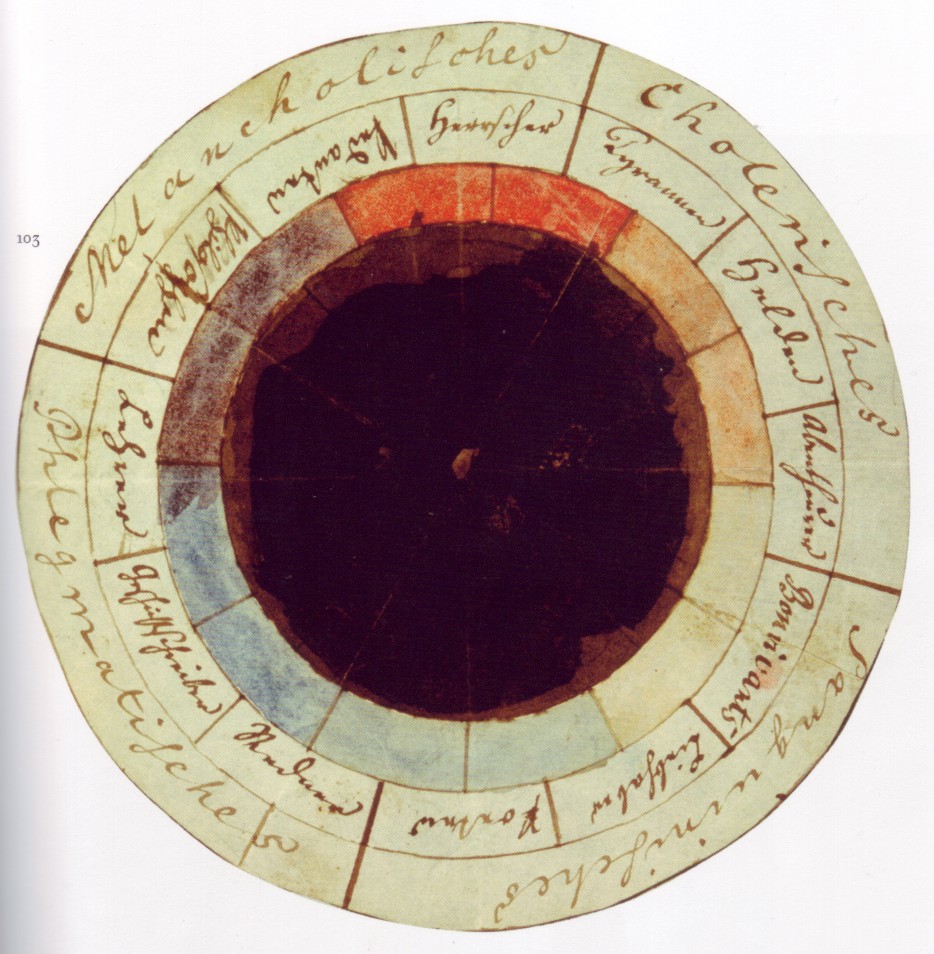 Colour psychology and what the evidence supportsColour does affect mood and behaviour a little. The effects are small, depend on context, and are far weaker than posters claim.Colour and emotion across culturesPeople around the world link colours and feelings in broadly similar ways, with local differences that follow language and custom.
 Colour preferenceBlue is the favourite in most surveys and dark brownish yellow the least liked. Liking seems to follow the things a colour recalls.The red effect in sport and attentionA famous study found that fighters in red won more often. Later, larger studies found the advantage small, uneven or absent.Baker-Miller pinkA bubblegum pink said to calm violent prisoners within minutes. Careful studies have not been able to repeat the effect.
 Colour and appetiteColour changes what we expect food to taste like, and that changes what we taste. Claims about hunger itself are much weaker.
 Colour and memoryColour helps people recognise scenes and objects they have seen before. Evidence that colouring your notes helps you learn is thin.
 SynaesthesiaFor some people letters, numbers, days or musical notes have colours, steadily and automatically. It is a trait, not an illness.ChromotherapyThe practice of treating illness with coloured light or coloured surroundings. There is no good evidence that it works.Colour in marketingColour helps people recognise a brand and tell products apart. Charts claiming each colour triggers one emotion are not evidence.
Colour and language
How different languages divide and name the colours, and whether the words change what people see.
 Himba colour naming and what the studies showedThe Himba of Namibia group colours differently from English. The viral claim that they cannot see blue is not what researchers found.
 Why orange was named after the fruitEnglish had no word for orange until the fruit arrived. The name travelled from South India through Persian and Arabic.
 Homer's wine-dark seaHomer never calls the sea blue. That does not mean the Greeks could not see blue, and the ancient world had blue pigment.Colour idioms across languagesFeeling blue, a forced yellow laugh, a green hat. Colour sayings rarely translate, because each language attached its own meanings.Rang and varna: colour words in Sanskrit and HindiTwo old words for colour in India. Rang also means dye, feeling and the stage. Varna also means a letter, a sound and a social class.
Making colour
Pigments and dyes from earth, plants, insects, shellfish and the laboratory, and the people who made them.
 Pigment versus dyeA pigment is a fine coloured powder that sits on a surface. A dye dissolves and bonds with the material it colours.Mineral pigmentsColours ground from earth and stone: ochre, cinnabar, malachite, lapis lazuli. The oldest paints people ever made.
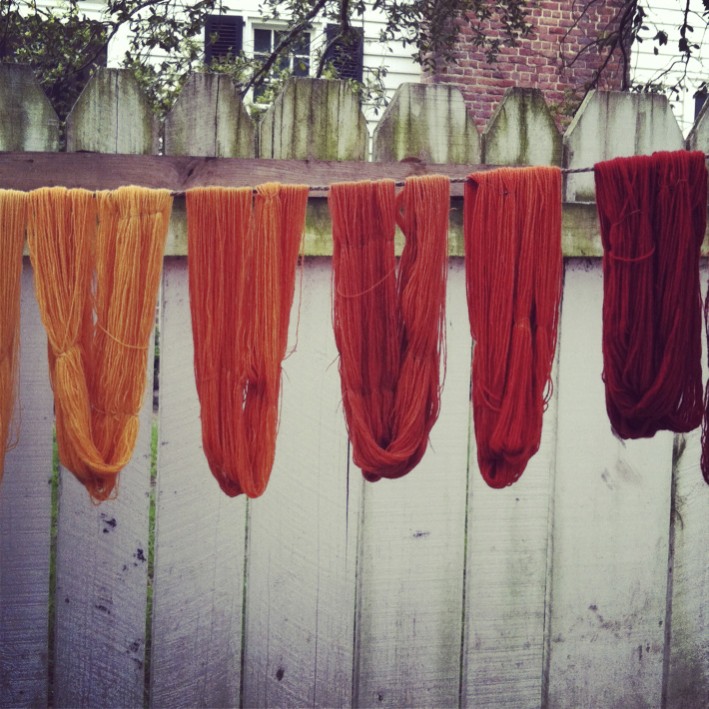 Plant dyes: indigo, madder, turmeric and hennaBlue from indigo leaves, red from madder root, yellow from turmeric, orange-brown from henna. Four plants that coloured the world.
 Animal dyes: cochineal, Tyrian purple and lacCrimson from a cactus insect, purple from sea snails, red from a tree-dwelling bug. Rare, laborious and once worth fortunes.Synthetic dyes and Perkin's mauveIn 1856 an eighteen-year-old trying to make a malaria drug made purple dye instead. The chemical industry grew from it.Toxic colours: lead white, arsenic green and radiumSome of the most useful colours ever made were poisons. They harmed the people who made them more than those who used them.
 Natural dyeing and mordantsMost plant dyes wash out unless the cloth is treated with a metal salt called a mordant. Alum and iron are the usual ones.Lakes and lake pigmentsA lake is a dye turned into a paint pigment by fixing it onto a colourless powder. The name comes from lac, not from water.
 The blue problem: Egyptian blue to YInMn blueGood blue pigment is rare in nature, so people have invented it again and again, from ancient Egypt to an Oregon lab in 2009.
 Fluorescent and phosphorescent colourFluorescent colours turn invisible ultraviolet into visible light, so they look brighter than bright. Phosphorescent ones glow on in the dark.
 Vantablack and the blackest blacksCoatings made of microscopic carbon tubes absorb more than 99.9 per cent of light. Objects coated in them look like flat holes.
Systems and standards
The codes, charts and standards that let a colour be named exactly and matched somewhere else.
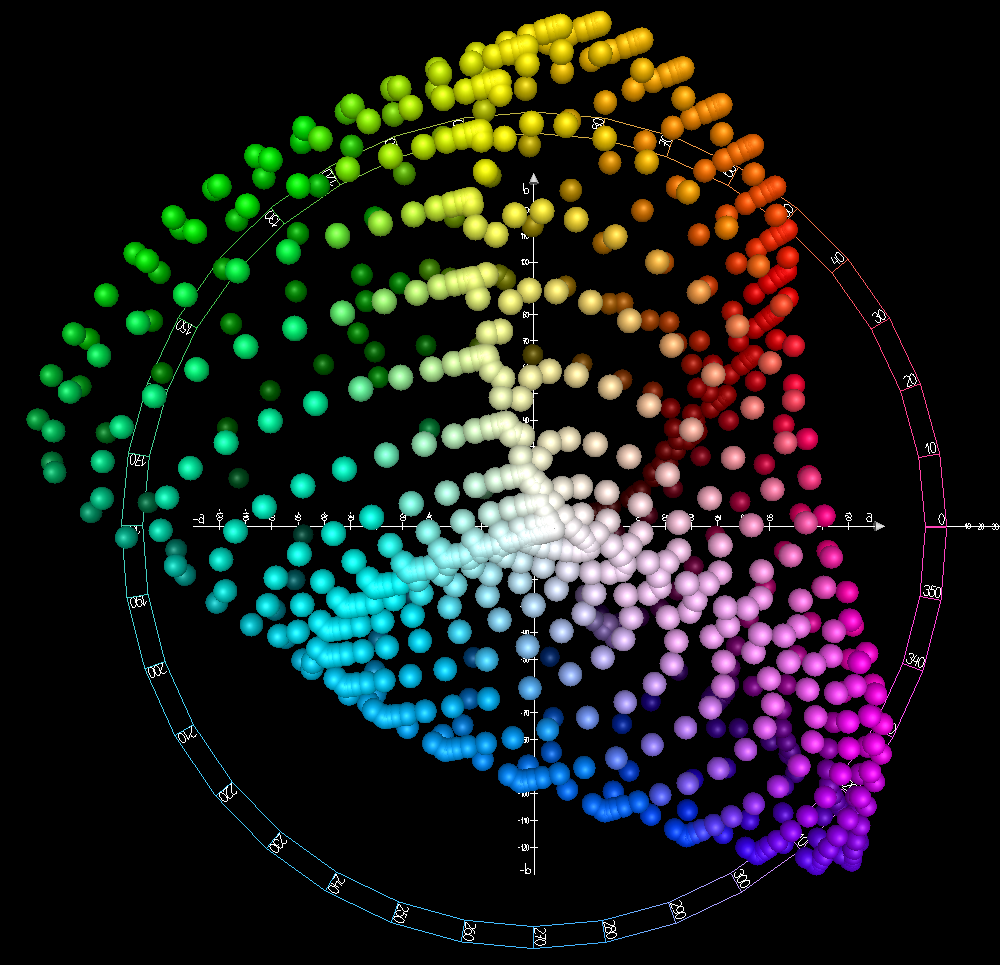 CIE Lab and colour differenceA colour space built on human vision, where distance between two colours roughly matches how different they look.
 The Munsell systemAn American painter's atlas of colour, ordered by hue, value and chroma, with steps that look even. Soil scientists still use it.PantoneA commercial library of numbered colours, each with an ink recipe, so a designer and a printer far apart can agree on a shade.
 RALA German colour standard of four-digit codes, used across Europe and beyond for paint, powder coating, signs and machinery.NCS, the Natural Colour SystemA Swedish system that describes a colour by how it looks: how close to black, white, yellow, red, blue and green.Web-safe and CSS named coloursThe 216 colours that old monitors could show reliably, and the 140-odd colour names, from tomato to rebeccapurple, that browsers understand.Colour gamut and wide-colour displaysA gamut is the range of colours a device can produce. Newer screens show stronger reds and greens than the old standard allowed.Colour managementThe system of profiles and conversions that keeps a colour looking the same from camera to screen to printed page.
Colour in society
What colours are made to mean in mourning, marriage, politics, faith, sport and the street.
 Mourning colours around the worldBlack in much of the West, white across much of Asia, red and black in Ghana. Grief has no single colour.
 Wedding colours around the worldRed in India, China and Vietnam, white in the West since the 1840s, and many traditions that use several colours in one day.
 Pink for girls and blue for boysA custom of the twentieth century, not an ancient one. A hundred years ago babies wore white and advice on colours was inconsistent.
 Political coloursRed for the left, green for environmentalists, saffron, blue and green in India. The same colour can mean opposite things in two countries.
 Flag colours and vexillologyMost national flags use red, white and blue. Purple is almost unknown. Shared colours often mark shared history.
 School house and team coloursFrom the red, blue, green and yellow houses of an Indian school to a national cricket side, shared colours make a group.Caste, class and laws on colourFor much of history, rulers decided who could wear which colours. Purple, yellow and bright dyes were kept for the powerful.
 Colour and religionSaffron robes, green domes, purple at Lent, the blue thread of a prayer shawl. Faiths use colour to mark the sacred.
 Skin colour words and colourismColourism is prejudice in favour of lighter skin, often within one community. The words used for skin carry it, and can be changed.
 Traffic and safety coloursRed for stop came from the railways. Safety colours are now fixed by international standards so that a sign reads the same anywhere.
 Holi and festivals of colourThe spring festival when people across India and Nepal throw coloured powder and water at each other, and rank is set aside for a day.
 Rangoli and kolamPatterns drawn on the ground at the doorstep in rice flour, coloured powder or petals. Made to welcome, and gone by evening.
Using colour
Practical methods for choosing and combining colours in design, painting, cloth, buildings, film and charts.
 Colour in film gradingThe stage after shooting when the colour of every shot is adjusted, to match shots to each other and to set a mood.
 Colour in painting: glazing, impasto and limited palettesThree ways painters control colour: thin see-through layers, thick ridged paint, and working with only a few pigments.
 Colour in textiles: ikat, bandhani, batik and kalamkariFour ways to pattern cloth with dye: tie the yarn, tie the cloth, wax it, or draw on it. All work by keeping dye out of some parts.
 Colour in architectureA pink city, a blue city, white islands, and Greek temples that were never meant to be white. Buildings have always been coloured.Colour in data visualisationIn a chart or map, colour is a code. Use one hue for amounts, two for above and below, and distinct hues for categories.
Photo credits on this page
The small pictures above come from Wikimedia Commons under free licences. Some are cropped to fit.
- Human skin colour: Notradeuussrs, CC0, source
- YInMn Blue: Mas Subramanian, CC BY-SA 4.0, source
- Pigment: Dan Brady, CC BY 2.0, source
- Natural dye: Madison60, CC BY-SA 3.0, source
- Vantablack: Surrey NanoSystems, CC BY-SA 3.0, source
- Carmine: Stephhzz, CC BY-SA 3.0, source
- Fluorescence: ( Hgrobe 06:16, 26 April 2006 (UTC)) - credit: Hannes Grobe/AWI, CC BY-SA 2.5, source
- Primary color: Original uploader was Deglr6328 at en.wikipedia, CC BY-SA 3.0, source
- Food coloring: Skoot13, CC BY-SA 3.0, source
- Holi: Jitenderasingh, CC BY-SA 4.0, source
- Colour Wheel: 8-leaf clover, CC0, source
- Colour Temperature Of Light: en:User:PAR, Public domain, source
- How The Eye Sees Colour: User Stefan.lila on sv.wikipedia, CC BY-SA 3.0, source
- Afterimages: original photo: Gus Freedman derivative image: Dimitri Parant, CC BY-SA 2.0, source
- Colour Constancy: flickr user Shanta, CC BY 2.0, source
- Why The Sky Is Blue: P J Hansen, CC BY-SA 2.0, source
- Structural Colour: user:AlexDuarte, Public domain, source
- Colour Psychology: Johann Wolfgang von Goethe, Friedrich Schiller, Public domain, source
- Natural Dyeing And Mordants: Edgar181, Public domain, source
- Colour Preference: Lai Ho Bao Minga, CC BY-SA 4.0, source
- Colour And Memory: cmglee, Photo courtesy of USDA Natural Resources Conservation Service., CC BY-SA 4.0, source
- Synaesthesia: User:Cytowic in English Wikipedia (transferred by chelo Vechek / talk, CC BY-SA 3.0, source
- Himba Colour Naming: Yves Picq http://veton.picq.fr, CC BY-SA 3.0, source
- Why Orange Is Named After The Fruit: Unknown author, Public domain, source
- Wine Dark Sea: Ввласенко, CC BY-SA 3.0, source
- Cie Lab And Colour Difference: Holger kkk Everding, CC BY-SA 4.0, source
- Munsell: Unknown author, Public domain, source
- Ral: Colourfeeling, CC BY-SA 3.0, source
- Mourning Colours: Ralph Hedley, Public domain, source
- Wedding Colours: Kip Soep, CC BY 2.0, source
- Pink And Blue For Gender: Anonymous Unknown author, CC0, source
- Political Colours: William Hogarth, Public domain, source
- Flag Colours And Vexillology: Groov3, CC0, source
- School House And Team Colours: Monica's Dad's, CC BY 2.0, source
- Colour And Religion: LooiNL, CC BY-SA 3.0, source
- Traffic And Safety Colours: Unisouth, CC BY 3.0, source
- Rangoli And Kolam: SreeramKalyan, CC0, source
- Colour In Film Grading: Clive Varley, CC BY 2.0, source
- Colour In Painting: Titian, Public domain, source
- Colour In Textiles: Ardyansa Nugraha, CC BY-SA 4.0, source
- Colour In Architecture: Unknown author, Public domain, source