Cinnabar
A scarlet to brick-red mineral and the main source of mercury and vermilion pigment
No single value: Cinnabar is a material, and its colour varies. The background shows its family, red.

Cinnabar is a mineral made of mercury(II) sulfide, showing a bright scarlet to brick-red colour. It is the main ore for mercury and has been used since ancient times as the source of the red pigment vermilion, valued in art and decoration. Its striking colour and softness set it apart, but its mercury content makes it toxic.
- Main ore for mercury and source of vermilion pigment
- Scarlet to brick-red colour, leaves a scarlet streak
- Used in art and decoration since ancient times
- Toxic due to its mercury content
- Major deposits in Spain, China, and Slovenia
What colour is Cinnabar?
Cinnabar is a mineral with a vivid scarlet to brick-red colour, sometimes shading towards brownish red or grey. It is soft, with a Mohs hardness of 2.0–2.5, and very dense. Cinnabar often forms as granular masses or as crystals with a glassy to dull shine. Its colour is distinctive among minerals, and it leaves a bright scarlet streak when rubbed on a surface. This mineral is the main natural source of mercury and the original material for the red pigment vermilion.
Where does Cinnabar come from?
The name 'cinnabar' comes from the ancient Greek word κιννάβαρι (kinnabari), which Theophrastus used for several red substances. In Latin, it was sometimes called minium, though that term now refers to a different red mineral. Cinnabar has been known and used since antiquity, with evidence of its use in the Near East, China, and the Americas. It was prized for its colour and as a source of mercury.
How is Cinnabar made?
Cinnabar is mercury(II) sulfide (HgS), formed naturally in the earth, often near volcanic activity and hot springs. It is usually extracted from mines as an ore. To obtain mercury, the ore is crushed and heated in furnaces, causing the mercury to separate and evaporate, then condense as liquid metal. Synthetic cinnabar can also be made by treating mercury salts with hydrogen sulfide.
![Source: Chris Ralph. This photo taken by Chris Ralph of Nevada-outback-gems.com [1] , Photographer and author: photo taken by author.](https://upload.wikimedia.org/wikipedia/commons/3/35/Cinnabar09.jpg)


Where Cinnabar is used
Cinnabar has been used as a pigment for painting, colouring ceramics and stoneware, and in body cosmetics like rouge. In China, it coloured lacquerware and was used for writing on oracle bones. In ancient Rome, it was valued for painting interiors. In the Americas, it was used in burial chambers and to colour textiles. Because of its mercury content, it is now rarely used for these purposes.
What Cinnabar means
The sources do not tie cinnabar to any particular symbolic meaning or emotion, but note its long use in art and ritual across cultures. Its striking red colour made it valuable for decoration and ceremonial uses, but its toxicity was also recognised early on.
Red around the world
What the red family means from country to country.
Red stands for good fortune and happiness. Brides traditionally wear it, doors are hung with red couplets at New Year, and gifts of money come in red envelopes.
Luck and prosperityFestival and celebrationWeddings and marriageJoySource: Color in Chinese cultureThe national flag is red with five yellow stars. The red stands for the Communist revolution, and the same red runs through party banners and slogans.
Politics and protestPrideSource: Flag of ChinaThe flag is red and yellow, the rojigualda. The colours were chosen for the navy in 1785 because they stood out at sea, and the men's football team is called La Roja.
Politics and protestPrideSource: Flag of SpainIn the last part of a bullfight the matador uses a small red cape, the muleta. Bulls do not see red as we do. It is the movement that draws them, and the colour hides the blood.
Danger and warningCourageSource: BullfightingAt the San Fermin festival in Pamplona each July, runners and crowds dress in white with a red neckerchief and red sash.
Festival and celebrationJoySource: Festival of San FermínMany Hindu brides marry in a red sari or lehenga. In much of north India a married woman wears sindoor, a red powder, along the parting of her hair.
Weddings and marriageLuck and prosperityJoyLoveSource: SindoorShades and relatives of Cinnabar
Cinnabar can appear in several forms. Hepatic cinnabar is a brownish, impure type from Slovenia. Metacinnabar is a black form of mercury(II) sulfide with a different crystal structure. Synthetic cinnabar and metacinnabar can be made in the laboratory. The pigment vermilion is made from cinnabar, but can also be produced synthetically.
Questions people ask about Cinnabar
What colour is cinnabar?
Cinnabar is a bright scarlet to brick-red mineral. Its powder leaves a vivid scarlet streak, and it can sometimes appear brownish red or grey.
Where does the name 'cinnabar' come from?
The name comes from the ancient Greek word κιννάβαρι (kinnabari), used by Theophrastus for red minerals. In Latin, it was sometimes called minium.
What is cinnabar made of?
Cinnabar is made of mercury(II) sulfide, a chemical compound of mercury and sulfur. It forms naturally as a mineral.
Where has cinnabar been mined?
Major cinnabar deposits are found in Spain (Almadén), China (Guizhou), Slovenia (Idrija), the United States (California, Nevada, Texas), Peru, and India.
Why is cinnabar considered dangerous?
Cinnabar contains mercury, which is toxic. Mining or handling cinnabar can lead to mercury poisoning, a risk known since ancient times.
Good reading and sources
The facts on this page come from the Wikipedia article "Cinnabar", written by its contributors and used under the CC BY-SA 4.0 licence, and from its Wikidata record (CC0). Rang rewrote the text in its own words, with AI assistance, and compares every page with the article to make sure no passage is copied. It may be reused under the same CC BY-SA 4.0 licence with a link back.
It may contain mistakes. The swatch is an approximation: named colours are not fixed standards, and every screen shows them a little differently. If something is wrong, tell us. Last refreshed 2026-10-03.
More of the red family
All of red
Red
Realgar
An orange-red arsenic sulfide mineral once used as a pigment and poisonPigment · 🇨🇳 China +5

#E25822
Scarlet
A bright red with a touch of orange, long tied to power, sacrifice and sinNamed shade · 🇹🇷 Turkey +4
Red
Carmine
A deep red pigment made from cochineal insects, once prized across continentsPigment · 🇫🇷 France +2

Red
Rubia
A group of plants whose roots once dyed cloth and paint a lasting redColour named from nature · 🇪🇬 Egypt +5

#E34234
Vermilion
A brilliant orange-red pigment, once made from toxic mercury orePigment · 🇹🇷 Turkey +5

#DC143C
Crimson
A deep red with a hint of purple, once made from insectsNamed shade · 🇳🇵 Nepal

#E32636
Alizarin
A deep red dye first made from madder roots, later produced from coal tarDye · 🇹🇷 Turkey +1

#800000
Maroon
A deep brownish red named for the French word for chestnutNamed shade · 🇦🇺 Australia +4
More colours tied to Spain
The colours of Spain
#FF0000
Red
A primary colour seen in light, pigment, and tradition worldwideBasic colour · 🇺🇸 United States +5
Purple and violet
Logwood
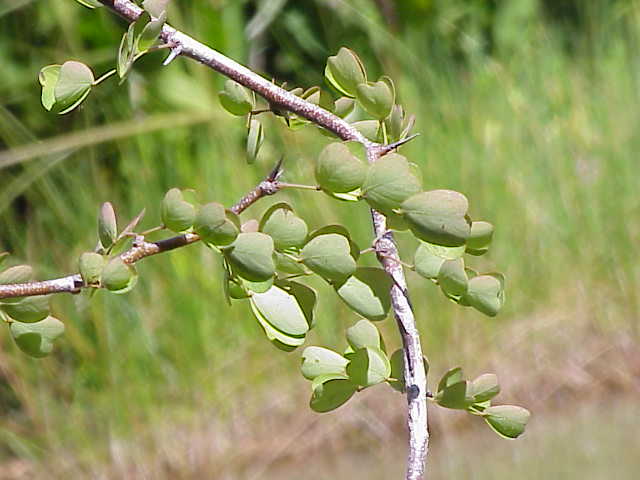
A tree whose wood yields a dye once vital for textiles and scienceColour named from nature · 🇲🇽 Mexico +3

#8A3324
Umber
A natural brown pigment from earth, valued for its warmth and versatility in artPigment · 🇨🇾 Cyprus +2

Red
Kermes
A deep red dye made from Mediterranean scale insects, once prized for scarlet clothDye · 🇪🇬 Egypt +5