Kermes
A deep red dye made from Mediterranean scale insects, once prized for scarlet cloth
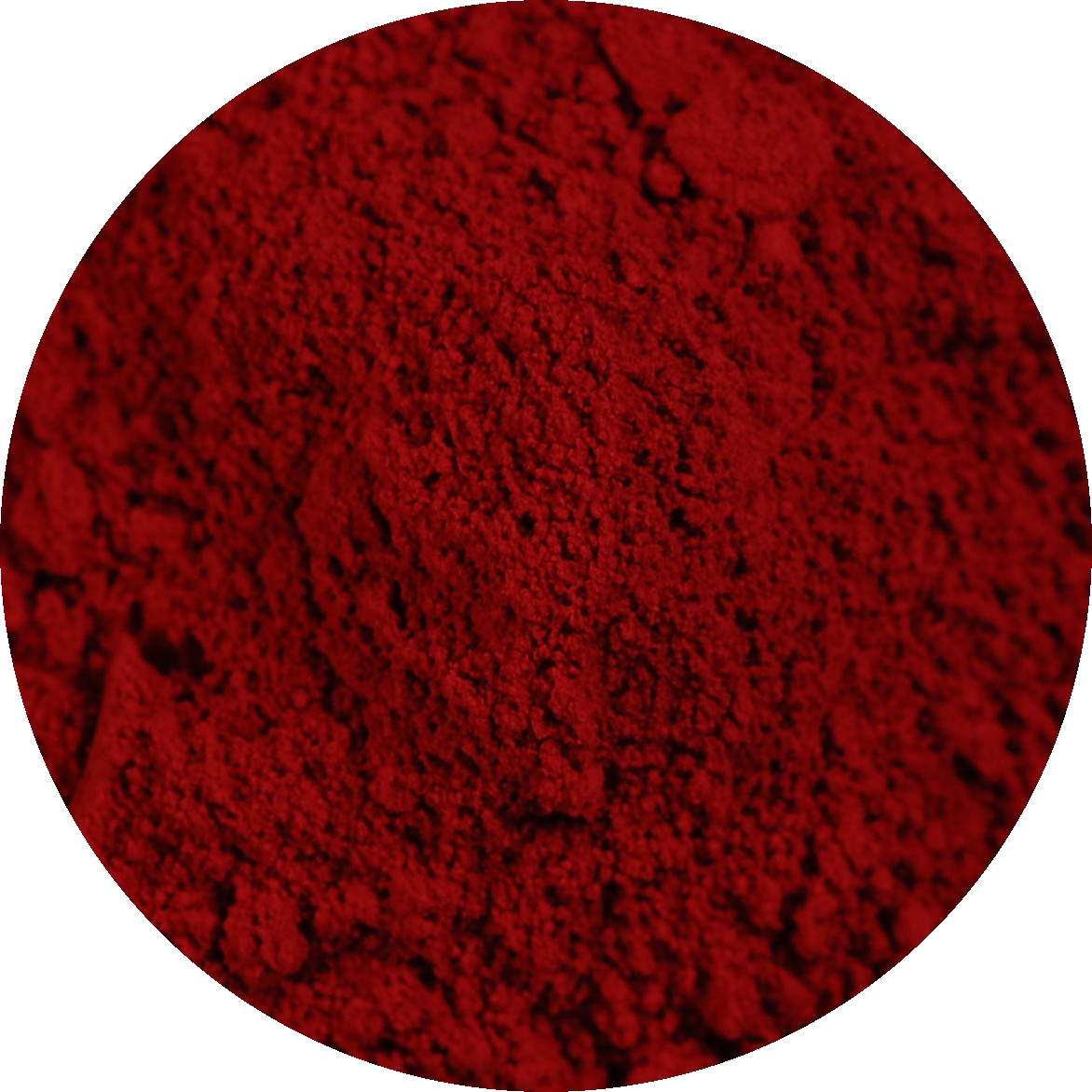
No single value: Kermes is a material, and its colour varies. The background shows its family, red.

Kermes is a natural red dye made from the dried bodies of female scale insects living on Mediterranean oaks. Known for its rich crimson to scarlet colour, it was highly valued in ancient and medieval times for dyeing silk and wool, especially in ritual and luxury textiles. Its use is recorded in Egypt, Israel, and across Europe, but it was later replaced by cochineal.
- Made from dried female scale insects on Mediterranean oaks
- Used for scarlet cloth in ancient Egypt, Israel, and medieval Europe
- Key ritual dye in the Hebrew Bible and Jewish tradition
- Superseded by cochineal after the 16th century
- Produces a rich, colourfast crimson to scarlet
What colour is Kermes?
Kermes is a dye that gives a rich red, ranging from crimson to scarlet-orange. It is made from the bodies of female scale insects that live on certain Mediterranean oak trees. The colour stands out for its depth and warmth, and for its ability to hold fast to animal fibres like wool and silk. Kermes-dyed cloth was once a symbol of luxury and status, especially before the arrival of cochineal.
Where does Kermes come from?
The name 'kermes' comes from a Sanskrit word meaning 'worm-made', passing through Persian and Arabic before reaching English via French. The dye has been found in Neolithic burials in France and was used by ancient Egyptians, Greeks, Romans, and others. In the Middle Ages, it was called 'grain' because the dried insects looked like seeds. Kermes was the main source of scarlet in Europe until the 16th century, when cochineal from the Americas became more common.
How is Kermes made?
To make kermes dye, female insects are collected from oak trees, dried, and ground into powder. The powder is simmered in water to extract the dye, and alum is often added as a mordant to help the colour bind to fibres and brighten the hue. The process can be repeated for deeper shades. The dye works best on animal fibres like wool and silk. Chemical analysis shows the main colouring agent is kermesic acid.
Where Kermes is used
Kermes was used for dyeing luxury textiles such as silk and wool, especially in Europe and the Mediterranean. It coloured priestly garments and ritual items in ancient Israel and was important in Jewish religious practice. In the Middle Ages, it was the most esteemed red for woollen cloth in places like Italy, France, and Spain. Kermes also played a role in wedding decorations and purification rituals.
What Kermes means
In Jewish tradition, kermes scarlet was a sacred colour, used in temple curtains, priestly garments, and rituals such as the purification of lepers and the Yom Kippur scapegoat ceremony. It decorated bridal chambers at weddings. The colour could also symbolise sin in biblical texts. Its ritual importance was tied to its insect origin, as required by religious law.
Red around the world
What the red family means from country to country.
The ancient Egyptians called the desert deshret, the red land. Red was the colour of the god Set, of chaos and of danger, and scribes wrote unlucky words in red ink.
Danger and warningFearSource: RedThe flag is red, white and black. Red recalls the struggle before the 1952 revolution, white the revolution itself, which was nearly bloodless, and black the end of oppression.
Politics and protestPrideSource: Flag of EgyptThe flag is red and yellow, the rojigualda. The colours were chosen for the navy in 1785 because they stood out at sea, and the men's football team is called La Roja.
Politics and protestPrideSource: Flag of SpainIn the last part of a bullfight the matador uses a small red cape, the muleta. Bulls do not see red as we do. It is the movement that draws them, and the colour hides the blood.
Danger and warningCourageSource: BullfightingAt the San Fermin festival in Pamplona each July, runners and crowds dress in white with a red neckerchief and red sash.
Festival and celebrationJoySource: Festival of San FermínThe red Phrygian cap, a soft cap with the tip pulled forward, became the sign of liberty in the Revolution. Marianne, the figure of the Republic, still wears it.
Politics and protestCourageSource: Phrygian capShades and relatives of Kermes
Kermes produces a range of reds, from brick red to bright scarlet-orange, depending on the process and mordants used. When combined with blue-dyed wool, it could create purples and browns. It is sometimes confused with cochineal, another insect dye that replaced kermes in Europe after the 16th century.
When Kermes is worn and shown
Questions people ask about Kermes
What colour is kermes dye?
Kermes dye gives a deep red, ranging from crimson to scarlet-orange, depending on how it is made and the fibres used.
Where does the name 'kermes' come from?
The name comes from a Sanskrit word for 'worm-made', passing through Persian and Arabic before entering English via French.
How is kermes dye made?
It is made by drying and grinding female scale insects from oak trees, then simmering them in water with alum to dye wool or silk.
What was kermes used for?
Kermes was used to dye luxury textiles, especially scarlet cloth for clothing, ritual items, and decorations in ancient and medieval societies.
Why did kermes fall out of use?
After the Spanish conquest of the Americas, cochineal became available in Europe. It produced a stronger red dye and was easier to obtain, so it replaced kermes.
Good reading and sources
- Kermes (dye) on WikipediaEncyclopedia
- More pictures on Wikimedia CommonsPictures
- Wikidata recordOpen data
The facts on this page come from the Wikipedia article "Kermes (dye)", written by its contributors and used under the CC BY-SA 4.0 licence, and from its Wikidata record (CC0). Rang rewrote the text in its own words, with AI assistance, and compares every page with the article to make sure no passage is copied. It may be reused under the same CC BY-SA 4.0 licence with a link back.
It may contain mistakes. The swatch is an approximation: named colours are not fixed standards, and every screen shows them a little differently. If something is wrong, tell us. Last refreshed 2026-10-03.
More of the red family
All of red
Red
Cinnabar
A scarlet to brick-red mineral and the main source of mercury and vermilion pigmentColour named from nature · 🇪🇸 Spain +5

Red
Realgar
An orange-red arsenic sulfide mineral once used as a pigment and poisonPigment · 🇨🇳 China +5

#E25822
Scarlet
A bright red with a touch of orange, long tied to power, sacrifice and sinNamed shade · 🇹🇷 Turkey +4
Red
Carmine
A deep red pigment made from cochineal insects, once prized across continentsPigment · 🇫🇷 France +2

#E34234
Vermilion
A brilliant orange-red pigment, once made from toxic mercury orePigment · 🇹🇷 Turkey +5

Red
Rubia
A group of plants whose roots once dyed cloth and paint a lasting redColour named from nature · 🇪🇬 Egypt +5

#DC143C
Crimson
A deep red with a hint of purple, once made from insectsNamed shade · 🇳🇵 Nepal

#E32636
Alizarin
A deep red dye first made from madder roots, later produced from coal tarDye · 🇹🇷 Turkey +1
More colours tied to Egypt
The colours of Egypt
#FFFF00
Yellow
A primary colour between green and orange, seen in sunlight, leaves, and pigmentsBasic colour · 🇫🇷 France +5

Blue
Lapis lazuli
A deep blue stone prized for jewellery and the source of ultramarine pigmentColour named from nature · 🇦🇫 Afghanistan +5

Green
Malachite
A banded green mineral and pigment once prized for art and decorationColour named from nature · 🇪🇬 Egypt +4

Blue
Azurite
A deep blue copper mineral once prized as a pigment and gemstonePigment · 🇫🇷 France +5