🇩🇪 The colours of Germany
9 meanings recorded, 23 colours tied to the country.
Germany’s national colours are black, red, and gold. These three appear on the flag as horizontal stripes and are officially linked to the country’s democratic and liberal traditions. The colours recall both medieval imperial symbols and the 19th-century movement for a unified, parliamentary Germany.
Where no official value is given, the swatch shows the colour family, not the exact shade.
- Germany’s flag stripes are always black, red, then gold from top to bottom.
- The gold stripe is officially not called yellow, even though it looks yellow.
- Both East and West Germany used black, red, and gold after 1949.
- The colours recall the 1848 revolution and earlier imperial symbols.
- Using the flag with the federal shield is restricted to government authorities.
The colours of the flag of Germany
The German flag is made up of three equal horizontal bands: black at the top, red in the middle, and gold at the bottom. These colours are officially described as black, red, and gold, not yellow. The flag is a symbol of the constitutional order and is protected by law. Each colour has historical associations: black for the imperial eagle, red for the sacrifices made in the pursuit of freedom, and gold for the imperial banner and the idea of unity. The meanings are both official and rooted in popular tradition.
National colours of Germany
Black, red, and gold are the official national colours of Germany and are used in many contexts beyond the flag. They appear in government insignia, at international sporting events, and on official buildings. The government flag adds the federal shield to the tricolour. These colours are a visible sign of unity and democracy, and their use is regulated for official purposes.
How the colours were chosen of Germany
The black, red, and gold combination dates back to early 19th-century student groups and the 1848 revolution, symbolising the desire for a unified, liberal Germany. Their roots go deeper, referencing the medieval imperial eagle (black on gold) and, possibly, the uniforms of the Lützow Free Corps. The colours were revived in the Weimar Republic, opposed by monarchists who favoured black, white, and red. After World War II, black, red, and gold were restored as the national colours of both East and West Germany, and remain so after reunification.
Official shades and rules of Germany
The flag’s proportions are set at 3:5, with three horizontal stripes of equal width. Since 1999, the official shades are black (#000000), red (#DD0000), and gold (#FFCE00). The term 'gold' is used deliberately instead of 'yellow.' The flag is protected by law, and misuse or defamation is punishable. Only federal authorities may use the government version with the shield.
The facts in this overview come from the Wikipedia article "National colours of Germany", written by its contributors and used under the CC BY-SA 4.0 licence, together with "Flag of Germany". Rang rewrote the text in its own words, with AI assistance, and compares every page with the article to make sure no passage is copied. It may be reused under the same CC BY-SA 4.0 licence with a link back.
What colours mean in Germany
Customs vary by region, faith and family; these are the meanings most often recorded.
Red is the colour of the Social Democrats. Coalitions are named by party colours: red, yellow and green make a "traffic light", and black, yellow and green a "Jamaica" coalition.
Politics and protestSource: Political colourYellow is the colour of the liberal Free Democrats. To be "yellow with envy", gelb vor Neid, is the usual German phrase where English says green.
Politics and protestSource: Free Democratic PartyGreen is the colour of Alliance 90/The Greens, one of the first environmental parties to enter a national parliament, in 1983.
Politics and protestNature and renewalSource: Alliance 90/The GreensThe blue flower, die blaue Blume, comes from a novel by Novalis. It became the emblem of German Romanticism and stands for longing for what cannot be reached.
Love and desireNostalgiaSource: Blue flowerPrussian blue, one of the first modern synthetic pigments, was made by accident in Berlin in the early 1700s. It later coloured the coats of the Prussian army.
Nature and renewalSource: Prussian blueBrown is the colour of Nazism in German political speech, after the brown shirts of the party's stormtroopers. To call a view "brown" is to call it far right.
Politics and protestDanger and warningShameSource: SturmabteilungThe national football team plays in white shirts and black shorts, the colours of the old Prussian flag, not those of the national flag.
Festival and celebrationPrideSource: Germany national football teamBlack is the colour of the Christian Democrats and their Bavarian sister party. The usage goes back to the black robes of the Catholic clergy.
Politics and protestSource: Christian Democratic Union of GermanyThe black, red and gold flag goes back to the democratic movement of the early 1800s and the 1848 revolutions. The colours are often traced to the uniforms of the Lutzow volunteers who fought Napoleon.
Politics and protestPrideSource: Flag of GermanyColour and feeling in Germany
French speaks of 'black anger', colère noire, and German of annoying oneself black, sich schwarz ärgern.
Germans can be 'gelb vor Neid', yellow with envy, as well as green. In a 1997 study German respondents chose yellow for envy.
Green is the colour of hope in set phrases: verde esperanza, verde speranza, Grün ist die Hoffnung.
Someone with a spotless record has 'eine weiße Weste', a white waistcoat, with no stain on it.
Someone heading for an unpleasant shock will 'sein blaues Wunder erleben', live to see their blue wonder.
A bleak outlook is 'grau in grau', grey on grey, and the dull daily round is 'grauer Alltag'.
An optimist looks through a 'rosarote Brille', rose-red glasses, while a pessimist is said to 'see black', schwarzsehen.
Colours tied to Germany

#FF00FF
Magenta
A purplish-pink colour named after a battle and key to modern printingNamed shade · 🇫🇷 France +4

Brown
Aniline
A colourless oil that darkens with air and launched the first synthetic dyesPigment · 🇩🇪 Germany

Blue
Woad
A blue dye once vital to Europe's textile trade, made from the leaves of a flowering plantDye · 🇫🇷 France +3

#F5F5DC
Beige
A pale, warm colour named after natural, undyed woolNamed shade · 🇫🇷 France +2
#50C878
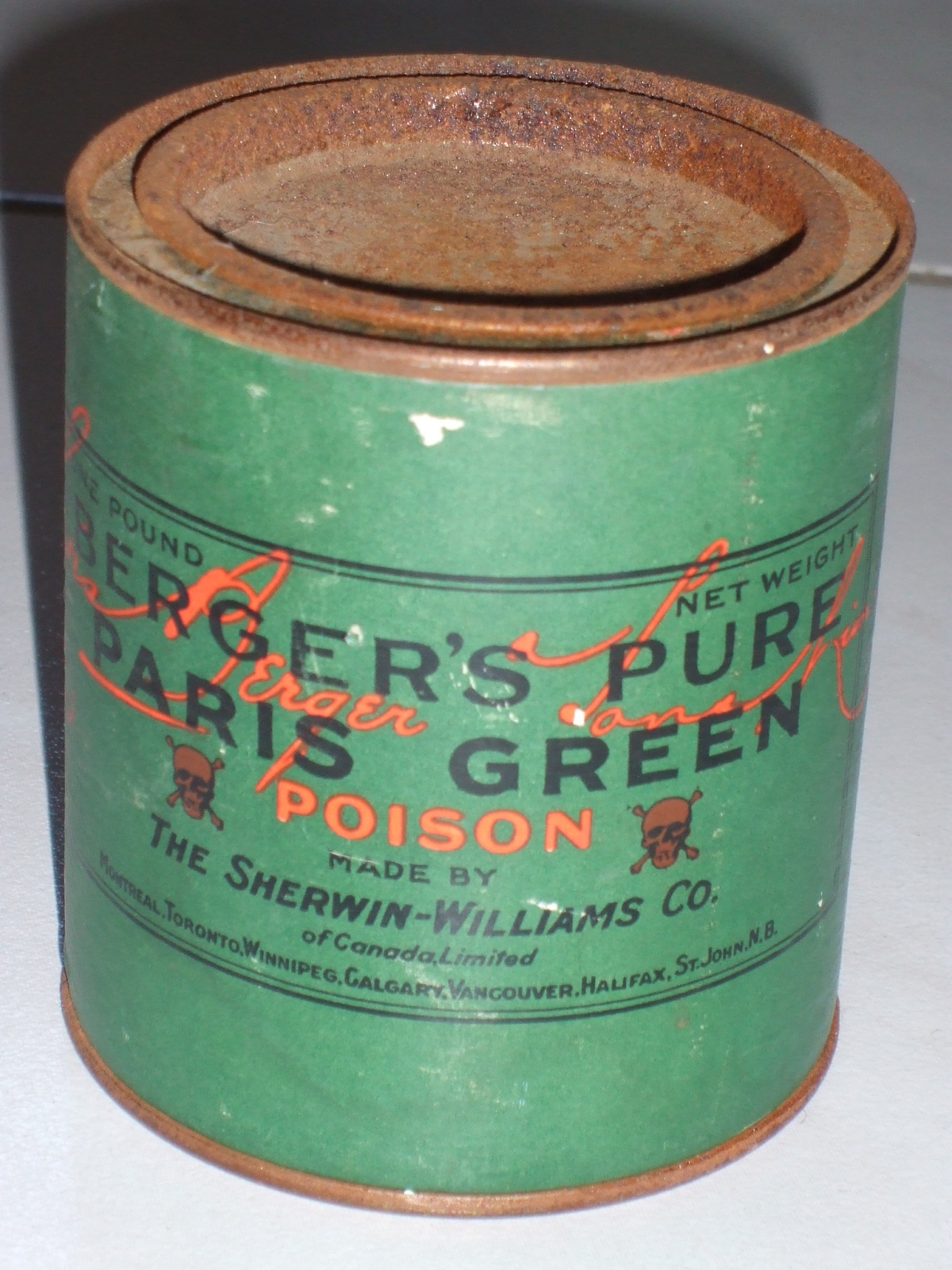
Paris Green
A toxic emerald-green pigment once prized in art and used as an early insecticidePigment · 🇩🇪 Germany +4
#0047AB
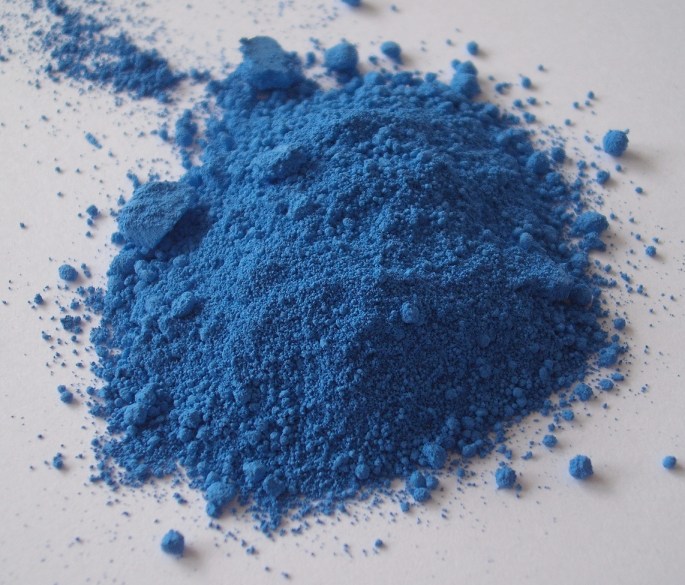
Cobalt blue
A strong, stable blue pigment made from cobalt and alumina since the early 1800sPigment · 🇫🇷 France +3
#664228
Van Dyck brown
A deep, earthy brown once made from German peat and soilPigment · 🇩🇪 Germany

Brown
Goethite
A yellowish to reddish brown mineral used as a pigment since ancient timesPigment · 🇩🇪 Germany +3

Black
Sable
The heraldic name for the colour blackHeraldic colour · 🇩🇪 Germany +3

Red
Blood rain
Rain that appears red, often caused by dust or microalgae in the waterColour named from nature · 🇮🇹 Italy +5

#ADD8E6
Light blue
A pale blue shade found between blue and cyan, seen in flags and daily life worldwideNamed shade · 🇫🇷 France +5

#000F89
Phthalo blue
A strong, synthetic blue pigment made from copper phthalocyaninePigment · 🇩🇪 Germany +1

#4D5D53
Feldgrau
A green-grey shade long used for military uniforms in Germany and beyondNamed shade · 🇩🇪 Germany +5

Brown
Ferrihydrite
A dark brown to yellow-brown iron mineral found in soils and water depositsColour named from nature · 🇩🇪 Germany

#DADD98
Green earth
A natural green pigment from celadonite and glauconite, used since ancient RomePigment · 🇮🇹 Italy +3
#E9D66B
Arylide yellow
A family of semi-transparent yellow pigments used in art and industryPigment · 🇩🇪 Germany +1
Grey
Cendrée
A rare heraldic grey, the colour of ashes, iron, and stone wallsHeraldic colour · 🇩🇪 Germany +1

White
Rügen chalkRügener Kreide
A soft, white chalk from the cliffs of Rügen, GermanyColour named from nature · 🇩🇪 Germany

Blue
Blue pigment
Pigments that give blue colour to paints, inks, and art from ancient times to todayPigment · 🇪🇬 Egypt +5

Red
Rose madder
A red dye and pigment from the roots of a climbing plantDye · 🇮🇳 India +4
Red
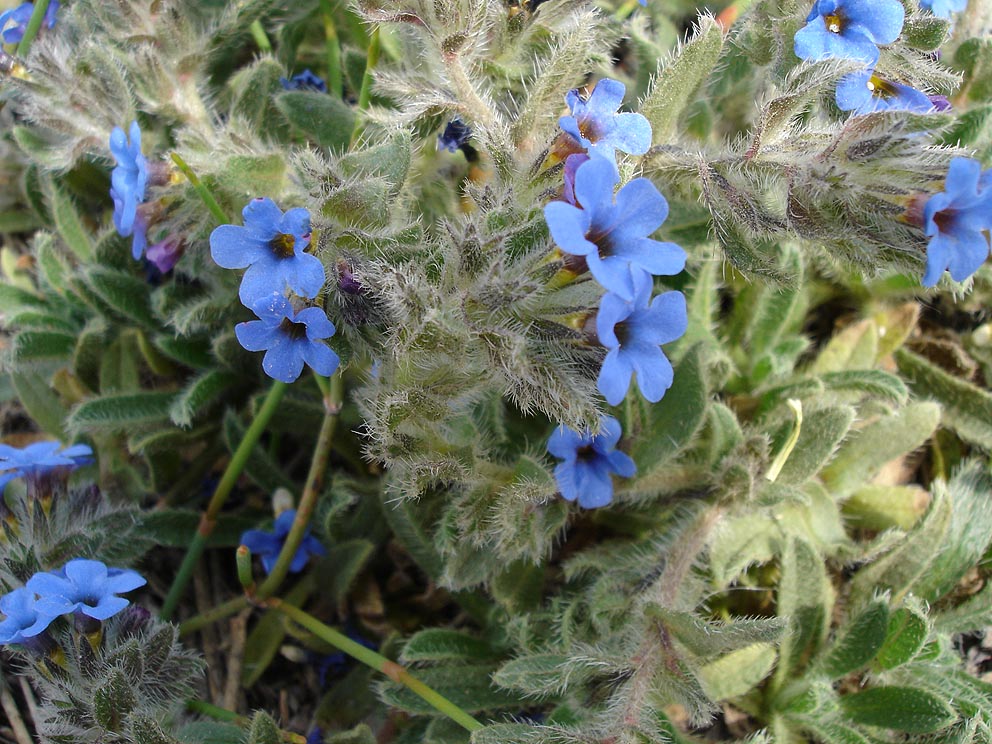
Alkanet
A Mediterranean plant whose root gives a red dye used since ancient timesColour named from nature · 🇺🇦 Ukraine +2

Purple and violet
Murexide
A purple chemical once used as a dye and indicator in chemistryPigment · 🇩🇪 Germany +1
#50C878
Emerald
A bright, light green with a hint of blue, named after the emerald gemstoneNamed shade · 🇮🇪 Ireland +2
Photo credits on this page
The small pictures above come from Wikimedia Commons under free licences. Some are cropped to fit.
- Beige: Krzysztof Golik, CC BY-SA 4.0, source
- Light blue: Yosef Ben Melamed, CC BY-SA 4.0, source
- Magenta: Basile Morin, CC BY-SA 4.0, source
- Paris Green: Chris goulet at English Wikipedia, CC BY-SA 3.0, source
- Phthalo blue: Smokefoot, CC BY-SA 4.0, source
- Woad: Unknown author, CC BY-SA 3.0, source
- Aniline: Smokefoot, CC BY-SA 4.0, source
- Blood rain: Hans Glaser (Druck), Public domain, source
- Sable: Mickey Bohnacker, Presse-Fotograf, Frankfurt/Main, Public domain, source
- Goethite: Raimond Spekking, CC BY-SA 4.0, source
- Ferrihydrite: Henk Smeets – tomeikminerals.com, CC BY 4.0, source
- Rügen chalk: DJACHO, CC BY-SA 4.0, source
- Feldgrau: Unknown, CC BY-SA 3.0 de, source
- Green earth: Marco Almbauer, CC BY-SA 3.0, source
- Cobalt blue: FK1954, Public domain, source
- Blue pigment: David Stroe, CC BY-SA 3.0, source
- Rose madder: Carstor, CC BY-SA 3.0, source
- Alkanet: Unknown author, CC BY-SA 3.0, source
- Murexide: Shaddack, Public domain, source