Rose madder
A red dye and pigment from the roots of a climbing plant
No single value: Rose madder is a material, and its colour varies. The background shows its family, red.

Rose madder is a red colour and dye made from the roots of Rubia tinctorum, a climbing plant in the Rubiaceae family. Its roots have been used for thousands of years to colour textiles, leather, and paint, and the dye is known for its rich, lasting red shades. The pigment alizarin, which gives rose madder its colour, was first isolated from the plant in the 19th century.
- Rose madder dye comes from the roots of Rubia tinctorum.
- Archaeological finds show madder-dyed cloth in ancient India.
- The pigment alizarin was first isolated from madder in 1826.
- Turkey red, a famous dye, was made from madder roots.
- Synthetic alizarin replaced natural madder in the late 1800s.
What colour is Rose madder?
Rose madder is a deep red dye and pigment made from the roots of the Rubia tinctorum plant. The plant itself is a perennial climber with star-shaped leaves and small yellow flowers. Its long roots contain several colour compounds, most notably alizarin, which gives the dye its distinctive red. Rose madder stands out for its ability to produce a range of reds, from soft pinkish tones to strong, vivid shades, depending on how it is processed.
Where does Rose madder come from?
The name 'madder' comes from the plant Rubia tinctorum, which has been used for dyeing since ancient times. Archaeological finds in India show its use as early as the 3rd millennium BCE. The plant was known in Roman times as 'rubia passiva', and it appears in early European texts and herbals. The famous Turkey red process, which produced a particularly strong and lasting red, was developed in India and later spread to Turkey, France, and England.
How is Rose madder made?
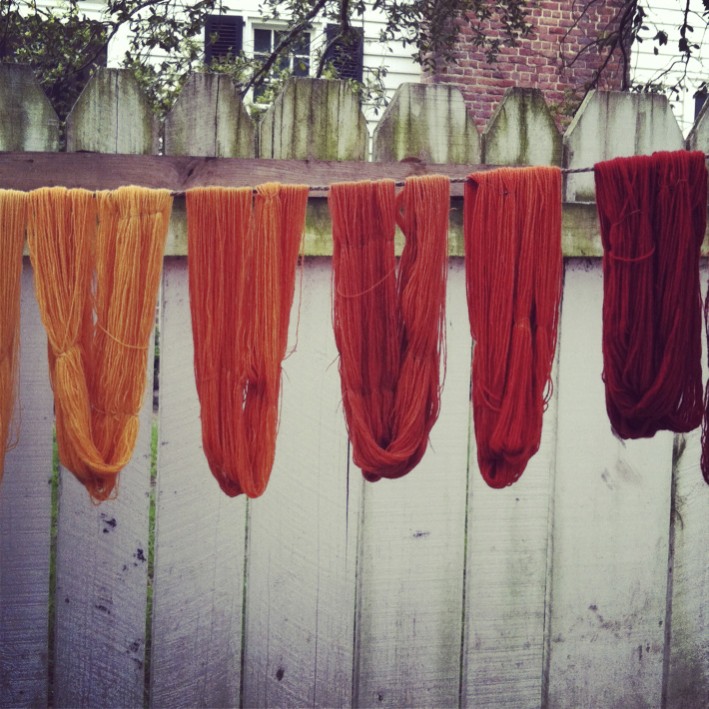
To make the dye, the roots of the madder plant are dug up after a couple of years of growth. The outer part of the root is used for the common dye, while the inner part gives a more refined colour. The roots are dried, ground, and treated with substances like alum to fix the dye to cloth. The main colouring agent, alizarin, can also be extracted and used to make madder lake pigment for artists. In the late 1800s, alizarin began to be made synthetically, which largely replaced the use of the plant for dye.

Where Rose madder is used
Rose madder has coloured wool, cotton, silk, and leather for centuries. It was used to dye the uniforms of British soldiers and to create the Turkey red cloths popular in Europe. Artists used madder lake pigment in their paints. The dye also found its way into food, cosmetics, and even medicine. In some places, the leftover plant material was used to make spirits.
What Rose madder means
The sources do not tie rose madder to any particular symbolic meaning or emotion. Its main importance lies in its use as a dye and pigment across many cultures and times.
Red around the world
What the red family means from country to country.
Red is the colour of the Social Democrats. Coalitions are named by party colours: red, yellow and green make a "traffic light", and black, yellow and green a "Jamaica" coalition.
Politics and protestSource: Political colourThe red Phrygian cap, a soft cap with the tip pulled forward, became the sign of liberty in the Revolution. Marianne, the figure of the Republic, still wears it.
Politics and protestCourageSource: Phrygian capMany Hindu brides marry in a red sari or lehenga. In much of north India a married woman wears sindoor, a red powder, along the parting of her hair.
Weddings and marriageLuck and prosperityJoyLoveSource: SindoorOn the last Tuesday night before Nowruz, people jump over small bonfires and chant a line that gives their yellow, meaning sickness, to the fire and takes its red, meaning health.
Festival and celebrationProtection and healingEnergySource: Chaharshanbe SuriOn Yalda, the longest night of the year, families sit up late eating pomegranates and watermelon. The red fruit stands for the glow of dawn and of life.
Festival and celebrationHopeSource: Yalda NightThe flag is red with a white crescent and star, and is called al bayrak, the red flag. It comes down from the late Ottoman flag.
Politics and protestPrideSource: Flag of TurkeyShades and relatives of Rose madder
Rose madder can produce a range of reds, depending on how the root is processed and what mordant is used. The famous Turkey red is a strong, lasting red made with a complex process. Madder can also be combined with indigo or iron to create purple or brownish shades. Synthetic alizarin, introduced in the 19th century, closely matches the colour of the natural dye.
Questions people ask about Rose madder
What colour is rose madder?
Rose madder is a red dye and pigment, ranging from soft pinkish red to deep, strong red, depending on how it is made and used.
Where does the name rose madder come from?
The name comes from the Rubia tinctorum plant, known as madder, whose roots are used to make the dye. 'Rose' refers to the reddish colour it produces.
How has rose madder been used?
It has coloured textiles like wool, cotton, and silk, as well as leather and artists' paints. It was also used in food, cosmetics, and medicine.
What is the main colouring substance in rose madder?
The main colouring agent is alizarin, a compound found in the roots of the madder plant.
When did people start using synthetic versions of this dye?
Synthetic alizarin was first made in 1869 and began to replace natural madder dye from the 1870s onwards.
Good reading and sources
- Rubia tinctorum on WikipediaEncyclopedia
- More pictures on Wikimedia CommonsPictures
- Wikidata recordOpen data
The facts on this page come from the Wikipedia article "Rubia tinctorum", written by its contributors and used under the CC BY-SA 4.0 licence, and from its Wikidata record (CC0). Rang rewrote the text in its own words, with AI assistance, and compares every page with the article to make sure no passage is copied. It may be reused under the same CC BY-SA 4.0 licence with a link back.
It may contain mistakes. The swatch is an approximation: named colours are not fixed standards, and every screen shows them a little differently. If something is wrong, tell us. Last refreshed 2026-10-03.
More of the red family
All of red
Red
Cinnabar
A scarlet to brick-red mineral and the main source of mercury and vermilion pigmentColour named from nature · 🇪🇸 Spain +5

Red
Realgar
An orange-red arsenic sulfide mineral once used as a pigment and poisonPigment · 🇨🇳 China +5
Red
Carmine
A deep red pigment made from cochineal insects, once prized across continentsPigment · 🇫🇷 France +2

#E25822
Scarlet
A bright red with a touch of orange, long tied to power, sacrifice and sinNamed shade · 🇹🇷 Turkey +4

#E34234
Vermilion
A brilliant orange-red pigment, once made from toxic mercury orePigment · 🇹🇷 Turkey +5

Red
Rubia
A group of plants whose roots once dyed cloth and paint a lasting redColour named from nature · 🇪🇬 Egypt +5

#E32636
Alizarin
A deep red dye first made from madder roots, later produced from coal tarDye · 🇹🇷 Turkey +1

#801818
Falu redfalu rödfärg
A deep red paint pigment from the Falun copper mine, used on wooden houses in SwedenPigment · 🇸🇪 Sweden +2
More colours tied to India
The colours of India
Yellow
Turmeric
A golden yellow dye and spice from the rhizome of a tropical plantColour named from nature · 🇮🇳 India +5
#6A5DFF
Indigo
A deep blue named for the dye once exported from IndiaNamed shade · 🇮🇳 India +5

Brown
Terracotta
A clay-based material and colour, known for its reddish-brown toneColour named from nature · 🇮🇳 India +4
White
Zinc oxide
A white inorganic powder used in pigments, ointments, ceramics and electronicsPigment · 🇮🇳 India +2