Indigo
A deep blue named for the dye once exported from India
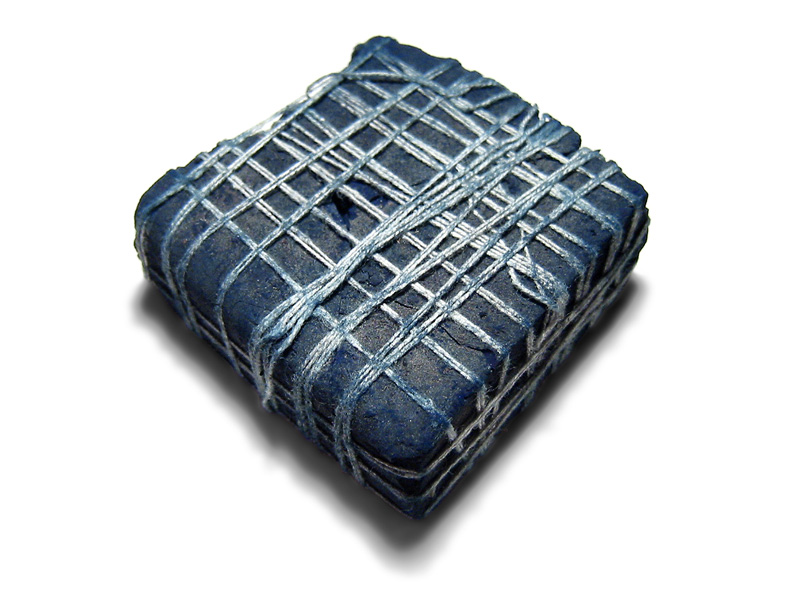
Indigo is a blue colour named after the dye made from plants like Indigofera tinctoria, once traded from India and other regions. It can mean the dye’s colour, a spectral colour between blue and violet, or a range of blue and purple shades in art and design. Its definition has shifted over time and across cultures.
Share on WhatsAppOpen in the lab
- Named after the indigo dye once exported from India
- First recorded as a colour name in English in 1289
- A traditional colour of the rainbow between blue and violet
- Indigo dye was a major cash crop in colonial America
- The web colour 'indigo' is more purple than the dye
What colour is Indigo?
Indigo refers to a group of blue hues, sometimes shading towards violet or green-blue. It is best known as the colour of the dye made from plants like Indigofera tinctoria, but can also mean a spectral colour between blue and violet, or a range of blue and purple shades in art and digital design. Its exact position on the colour wheel is debated, and it is not a basic colour term in English.
Where does Indigo come from?
The name comes from the Latin 'indicum', meaning 'Indian', because the dye was first sent to Europe from India. In English, 'indigo' originally meant the dye itself, not the colour. The plant sources for the dye were grown in India, West Africa, East Asia, Egypt, and the Americas. The word entered English via Greek and Latin, and through Portuguese traders.


Where Indigo is used
Indigo dye has coloured textiles for thousands of years, with evidence from Peru dating to 4000 BC. It was a major export from India and later grown in the Americas, especially in the southern United States, where it became a key cash crop. In modern times, indigo is also a colour name in digital design, though its shade may differ from the traditional dye.
Blue around the world
What the blue family means from country to country.
The flag has two sky-blue bands with white between. The blue stands for the Pacific and the Caribbean on either side of the land, and for the sky.
Politics and protestSource: Flag of GuatemalaKrishna, Rama and Vishnu are painted with blue skin, the colour of the sky and the deep sea. The wheel at the centre of the national flag, the Ashoka Chakra, is navy blue.
Sacred and holyAweSource: KrishnaBlue is the colour of Dalit politics. Followers of B. R. Ambedkar carry blue flags, and the Bahujan Samaj Party campaigns under a blue flag with an elephant.
Politics and protestPrideSource: Bahujan Samaj PartyIndigo dyeing, called aizome, clothed ordinary people in deep blue through the Edo period. The men's national football team plays in blue and is nicknamed Samurai Blue.
Festival and celebrationPrideSource: Japan national football teamMaya blue is a bright, lasting pigment made by heating indigo with a special clay. Maya painters used it on murals, pottery and offerings to the rain god.
Sacred and holySource: Maya blueThe flag's colours have no official meaning. For the Great Seal of 1782, though, blue was said to stand for vigilance, perseverance and justice, white for purity and red for hardiness and valour.
Politics and protestTrustSource: Flag of the United StatesShades and relatives of Indigo
Indigo can mean the colour of the plant dye, a spectral colour between blue and violet, or a web colour that is more purple. Related shades include ultramarine, blue-green, and violet. The colour of indigo dye is darker than the spectral or web versions, and some sources equate pigment indigo with Prussian blue or ultramarine.
Colours that go with Indigo
Harmonies are worked out from the value #6A5DFF. Contrast ratios follow the WCAG 2 formula.
Questions people ask about Indigo
What colour is indigo?
Indigo is a deep blue, sometimes described as between blue and violet. Its exact shade varies depending on whether it refers to the dye, a spectral colour, or a digital colour standard.
Where does the name indigo come from?
The name comes from the Latin 'indicum', meaning 'Indian', because the dye was originally exported from India.
Is indigo a basic colour?
Indigo is not a basic colour term in English. It was introduced as a distinct colour by Isaac Newton, but its status as a separate colour is debated.
What is indigo dye made from?
Indigo dye is made from several plants, mainly Indigofera tinctoria, but also Japanese indigo, woad, and others.
Why does indigo look different on screens?
In web and digital design, 'indigo' often refers to a more purple shade, due to how colour names were assigned in early computer systems.
Good reading and sources
The facts on this page come from the Wikipedia article "Indigo", written by its contributors and used under the CC BY-SA 4.0 licence, and from its Wikidata record (CC0). Rang rewrote the text in its own words, with AI assistance, and compares every page with the article to make sure no passage is copied. It may be reused under the same CC BY-SA 4.0 licence with a link back.
It may contain mistakes. The swatch is an approximation: named colours are not fixed standards, and every screen shows them a little differently. If something is wrong, tell us. Last refreshed 2026-10-03.
More of the blue family
All of blue
Blue
Lapis lazuli
A deep blue stone prized for jewellery and the source of ultramarine pigmentColour named from nature · 🇦🇫 Afghanistan +5

Blue
Azurite
A deep blue copper mineral once prized as a pigment and gemstonePigment · 🇫🇷 France +5

Blue
Woad
A blue dye once vital to Europe's textile trade, made from the leaves of a flowering plantDye · 🇫🇷 France +3
Blue
Indigo
A deep blue dye from plants, now mostly made synthetically and known for colouring denimDye · 🇮🇳 India +5

#003153
Prussian blue
A deep blue pigment first made in Berlin in the early 1700sPigment · 🇯🇵 Japan
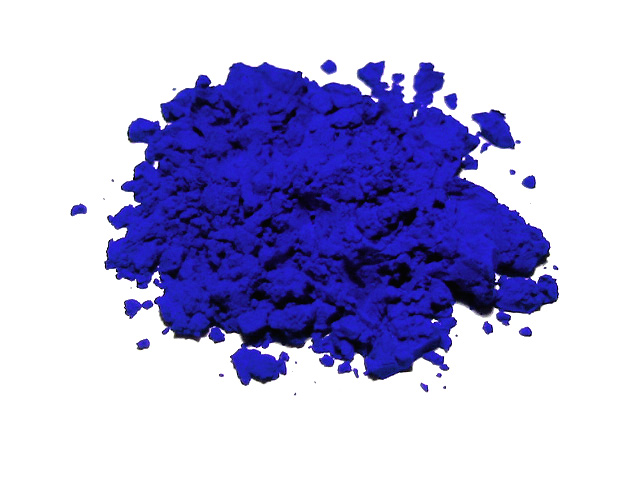
#120A8F
Ultramarine
A deep blue pigment once made from lapis lazuli, prized for centuries in artPigment · 🇦🇫 Afghanistan +2

#007FFF
Azure
A clear sky blue, halfway between blue and cyan on the colour wheelNamed shade · 🇮🇹 Italy +2

#87CEEB
Sky blue
A light blue named for the colour of a clear daytime skyNamed shade · 🇦🇷 Argentina +5
More colours tied to India
The colours of India
Yellow
Turmeric
A golden yellow dye and spice from the rhizome of a tropical plantColour named from nature · 🇮🇳 India +5

Red
Cinnabar
A scarlet to brick-red mineral and the main source of mercury and vermilion pigmentColour named from nature · 🇪🇸 Spain +5

Brown
Terracotta
A clay-based material and colour, known for its reddish-brown toneColour named from nature · 🇮🇳 India +4
White
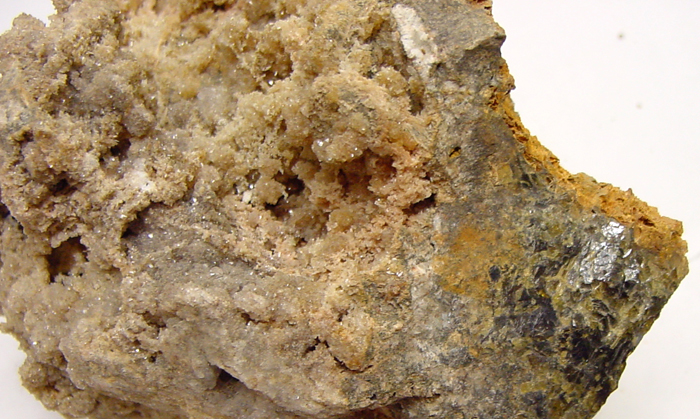
Zinc oxide
A white inorganic powder used in pigments, ointments, ceramics and electronicsPigment · 🇮🇳 India +2