Woad
A blue dye once vital to Europe's textile trade, made from the leaves of a flowering plant
No single value: Woad is a material, and its colour varies. The background shows its family, blue.

Woad is a plant in the mustard family whose leaves yield a blue dye. Grown across Europe since ancient times, it was the main source of blue for textiles and art before indigo and synthetic dyes took over. Woad left its mark on the economies and crafts of regions like southern France, England, and Germany.
- Woad was Europe's main blue dye before indigo and synthetics.
- The dye comes from the leaves of a mustard-family plant.
- Toulouse and Lauragais in France grew wealthy from woad trade.
- Woad blue appears in medieval tapestries and manuscripts.
- It is biodegradable and used in craft dyeing today.
What colour is Woad?
Woad is a flowering plant in the mustard family, known for the blue dye made from its leaves. The colour it produces ranges from grey-blue to deep midnight blue, depending on how it is processed. Woad blue is darker than many modern blues and was prized for its lasting quality on textiles and in art. The plant itself has yellow flowers and was once a common sight in European fields.
Where does Woad come from?
The name 'woad' comes from its use as a dye and a medicinal plant. 'Isatis' refers to its ancient role in treating wounds, while 'tinctoria' points to its dyeing properties. Woad has been used since the Neolithic period, with seeds found in ancient France and Germany. It became central to European dyeing from ancient times through the Middle Ages, especially before indigo arrived from Asia.
How is Woad made?
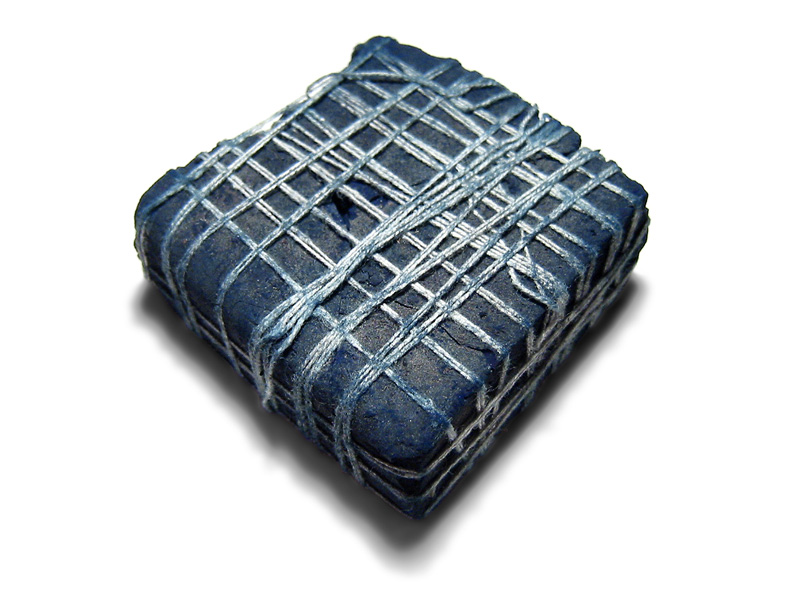
The blue dye is extracted from the leaves of the woad plant. Leaves are harvested, crushed, and fermented to release the dye chemical, indigo, though in lower concentration than in true indigo plants. The resulting paste or powder is then used to dye textiles or make pigment for paint. The process is environmentally safe, and woad is biodegradable.


Where Woad is used
Woad was once the main blue dye for textiles in Europe, used in cloth, tapestries, and even illuminated manuscripts. Regions like Languedoc in France and Lincolnshire in England grew rich from its trade. It was also used in art, such as the Lindisfarne Gospels, and in traditional fabric printing in Germany. Today, it is still used by craft dyers and for some inks.
Blue around the world
What the blue family means from country to country.
The blue flower, die blaue Blume, comes from a novel by Novalis. It became the emblem of German Romanticism and stands for longing for what cannot be reached.
Love and desireNostalgiaSource: Blue flowerPrussian blue, one of the first modern synthetic pigments, was made by accident in Berlin in the early 1700s. It later coloured the coats of the Prussian army.
Nature and renewalSource: Prussian blueBlue was the colour of the French kings, whose arms were gold lilies on blue. It is the first band of the tricolour, and national sports teams are called Les Bleus.
Politics and protestRoyalty and powerPrideSource: Bleu de France (colour)At Oxford and Cambridge a blue is the award given to those who represent the university in sport. Oxford's is dark blue and Cambridge's light blue, as worn in the Boat Race.
Festival and celebrationPrideSource: Blue (university sport)National sports teams play in blue and are called the Azzurri. Blue was the colour of the House of Savoy, which ruled Italy until 1946, and does not appear on the flag.
Royalty and powerFestival and celebrationPrideSource: National colours of ItalyLapis lazuli has been mined in the mountains of Badakhshan for more than six thousand years. Ground to powder it gave ultramarine, the costliest blue in European painting.
Royalty and powerSacred and holyAweSource: Lapis lazuliShades and relatives of Woad
Woad dye produces a blue similar to indigo, but usually darker and less intense. It can range from grey-blue to nearly black, depending on the binder and method. Woad is sometimes confused with indigo, but the two come from different plants and woad contains less of the dye chemical. The term 'pastel' in southern France refers to woad blue.
Questions people ask about Woad
What colour is woad?
Woad produces a blue dye, ranging from grey-blue to deep midnight blue, depending on how it is processed and what binders are used.
Where does the name 'woad' come from?
The name reflects its use as both a dye and a medicinal plant. 'Isatis' is linked to wound treatment, and 'tinctoria' means 'used for dyeing'.
How is woad dye made?
The dye is extracted by crushing and fermenting the leaves of the woad plant, which releases the indigo pigment used for colouring textiles and art.
Where was woad most important?
Woad was central to the economies of regions like Languedoc in France, Lincolnshire in England, and parts of Germany and Italy, especially before the arrival of indigo.
Is woad still used today?
Though mostly replaced by synthetic dyes, woad is still grown in small amounts in the UK and France for craft dyeing and some ink production.
Good reading and sources
- Isatis tinctoria on WikipediaEncyclopedia
- More pictures on Wikimedia CommonsPictures
- Wikidata recordOpen data
The facts on this page come from the Wikipedia article "Isatis tinctoria", written by its contributors and used under the CC BY-SA 4.0 licence, and from its Wikidata record (CC0). Rang rewrote the text in its own words, with AI assistance, and compares every page with the article to make sure no passage is copied. It may be reused under the same CC BY-SA 4.0 licence with a link back.
It may contain mistakes. The swatch is an approximation: named colours are not fixed standards, and every screen shows them a little differently. If something is wrong, tell us. Last refreshed 2026-10-03.
More of the blue family
All of blue
Blue
Lapis lazuli
A deep blue stone prized for jewellery and the source of ultramarine pigmentColour named from nature · 🇦🇫 Afghanistan +5
#6A5DFF
Indigo
A deep blue named for the dye once exported from IndiaNamed shade · 🇮🇳 India +5

Blue
Azurite
A deep blue copper mineral once prized as a pigment and gemstonePigment · 🇫🇷 France +5
Blue
Methylene blue
A synthetic blue dye and medicine first made in 1876Dye
Blue
Indigo
A deep blue dye from plants, now mostly made synthetically and known for colouring denimDye · 🇮🇳 India +5
#120A8F
Ultramarine
A deep blue pigment once made from lapis lazuli, prized for centuries in artPigment · 🇦🇫 Afghanistan +2

#003153
Prussian blue
A deep blue pigment first made in Berlin in the early 1700sPigment · 🇯🇵 Japan

#007FFF
Azure
A clear sky blue, halfway between blue and cyan on the colour wheelNamed shade · 🇮🇹 Italy +2
More colours tied to France
The colours of France
#FFFF00
Yellow
A primary colour between green and orange, seen in sunlight, leaves, and pigmentsBasic colour · 🇫🇷 France +5

#800080
Purple
A cool colour between red and blue, long linked with royalty and rarityBasic colour · 🇱🇧 Lebanon +5

#FF00FF
Magenta
A purplish-pink colour named after a battle and key to modern printingNamed shade · 🇫🇷 France +4

Brown
Terracotta
A clay-based material and colour, known for its reddish-brown toneColour named from nature · 🇮🇳 India +4