🇦🇫 The colours of Afghanistan
3 meanings recorded, 9 colours tied to the country.
Afghanistan’s current flag is white with black Arabic script, representing the Taliban’s emphasis on purity of faith and government. The previous tricolour flag, still used internationally, features black, red, and green, which stand for the country’s past, sacrifices for independence, and hope or prosperity.
Where no official value is given, the swatch shows the colour family, not the exact shade.
- The current flag is plain white with the black Shahada in the centre.
- White stands for purity of faith and government under Taliban rule.
- The tricolour of black, red, and green dates back to 1928.
- Black symbolises Afghanistan’s troubled past or history.
- The tricolour is still used at international sporting events.
The colours of the flag of Afghanistan
Afghanistan’s current official flag is a plain white field with the black Shahada, the Islamic declaration of faith, at its centre. The Taliban state that white stands for the purity of their faith and government. Previously, the internationally recognised flag was a vertical tricolour of black, red, and green, with a white national emblem in the centre. Each colour in the tricolour has its own meaning: black for the country’s troubled past, red for the blood of those who fought for independence, and green for hope and prosperity. These meanings are widely accepted, though some interpretations vary, especially for green, which can also represent Islam or agriculture.
National colours of Afghanistan
The black, red, and green tricolour remains a symbol of Afghanistan in international events, such as the Olympics and the Paralympics, and is used by the Afghan diaspora and groups opposing Taliban rule. The tricolour is also displayed by protesters within Afghanistan as a sign of resistance. Although the Taliban have outlawed its use in official settings, it continues to be associated with Afghan identity abroad and in sporting contexts.
How the colours were chosen of Afghanistan
Afghanistan’s flags have changed many times since the early 20th century, reflecting shifts in government and ideology. The black, red, and green tricolour was first introduced in 1928, inspired by King Amanullah Khan’s visit to Europe and the Weimar Republic’s flag. Over the decades, these colours have remained central, though their arrangement and the emblem have varied. The current white flag with black script was adopted by the Taliban in 2021, drawing inspiration from early Islamic banners and the Umayyad caliphate, which brought Islam to Afghanistan. Black banners have also been used historically by various Afghan dynasties and Islamic movements.
Official shades and rules of Afghanistan
There are no official shade specifications or proportions for the current white flag with black script. The tricolour flag’s arrangement—vertical black, red, and green stripes with a white emblem—has been consistent since 1928, but the emblem’s details and colours have changed with different governments. The Taliban have decreed that only their white flag is to be used officially, banning the tricolour in all state contexts.
The facts in this overview come from the Wikipedia article "Flag of Afghanistan", written by its contributors and used under the CC BY-SA 4.0 licence. Rang rewrote the text in its own words, with AI assistance, and compares every page with the article to make sure no passage is copied. It may be reused under the same CC BY-SA 4.0 licence with a link back.
What colours mean in Afghanistan
Customs vary by region, faith and family; these are the meanings most often recorded.
Lapis lazuli has been mined in the mountains of Badakhshan for more than six thousand years. Ground to powder it gave ultramarine, the costliest blue in European painting.
Royalty and powerSacred and holyAweSource: Lapis lazuliThe chadari is a full-length covering for women with a mesh panel over the eyes. In Kabul and the north it is most often a light blue.
Protection and healingSource: BurqaThe Taliban flag is white with the Muslim declaration of faith in black. It replaced the black, red and green tricolour of the republic in 2021.
Politics and protestSacred and holySource: Flag of AfghanistanColour and feeling in Afghanistan
Colour cities of Afghanistan
Colours tied to Afghanistan

Blue
Lapis lazuli
A deep blue stone prized for jewellery and the source of ultramarine pigmentColour named from nature · 🇦🇫 Afghanistan +5
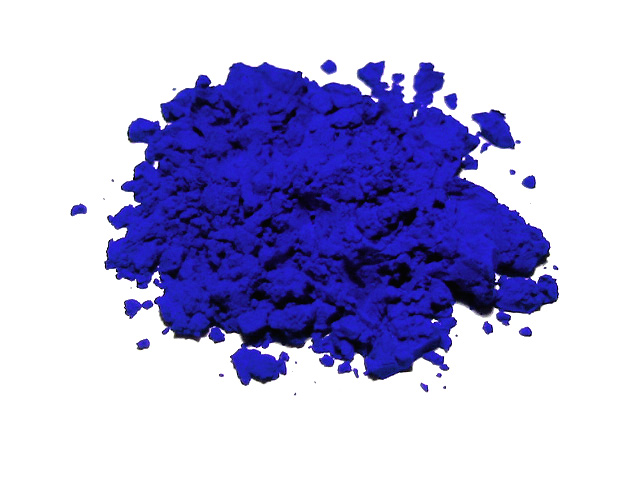
#120A8F
Ultramarine
A deep blue pigment once made from lapis lazuli, prized for centuries in artPigment · 🇦🇫 Afghanistan +2

#1C39BB
Persian blue
A vivid blue inspired by Persian tiles and lapis lazuliNamed shade · 🇮🇷 Iran +1

Blue
Lazurite
A deep blue mineral that gives lapis lazuli its colourColour named from nature · 🇦🇫 Afghanistan +2

Blue
Blue
A colour long prized in art, faith and dress, from ancient Egypt to modern flagsBasic colour · 🇪🇬 Egypt +5
#00488B
Marian blue
A deep blue shade linked with images of the Virgin Mary in Christian artNamed shade · 🇦🇫 Afghanistan

Blue
Blue pigment
Pigments that give blue colour to paints, inks, and art from ancient times to todayPigment · 🇪🇬 Egypt +5

Yellow
Saffronزعفران
A golden-yellow colour from the dried stigmas of the saffron crocus flowerColour named from nature · 🇮🇷 Iran +5

Red
Kamala dye
A golden red dye from the fruit of the kamala treeDye · 🇵🇭 Philippines +3
Photo credits on this page
The small pictures above come from Wikimedia Commons under free licences. Some are cropped to fit.
- Persian blue: Diego Delso, CC BY-SA 4.0, source
- Lazurite: Didier Descouens, CC BY-SA 4.0, source
- Kamala dye: Poyt448 Peter Woodard, Public domain, source
- Ultramarine: Unknown author, Public domain, source
- Lapis lazuli: Adam Ognisty, CC BY-SA 3.0, source
- Blue: Marie-Lan Nguyen, Public domain, source
- Blue pigment: David Stroe, CC BY-SA 3.0, source
- Saffron: Hubertl, CC BY-SA 4.0, source