Prussian blue
A deep blue pigment first made in Berlin in the early 1700s

Prussian blue is a dark blue pigment made by oxidising iron salts with cyanide, first created in Berlin in the early 18th century. It became the first modern synthetic pigment, widely used in painting, Japanese prints, and blueprints, and is also used as a medicine for certain poisonings.
Share on WhatsAppOpen in the lab
- First synthetic blue pigment, made in Berlin around 1706
- Used in Japanese woodblock prints like Hokusai's Great Wave
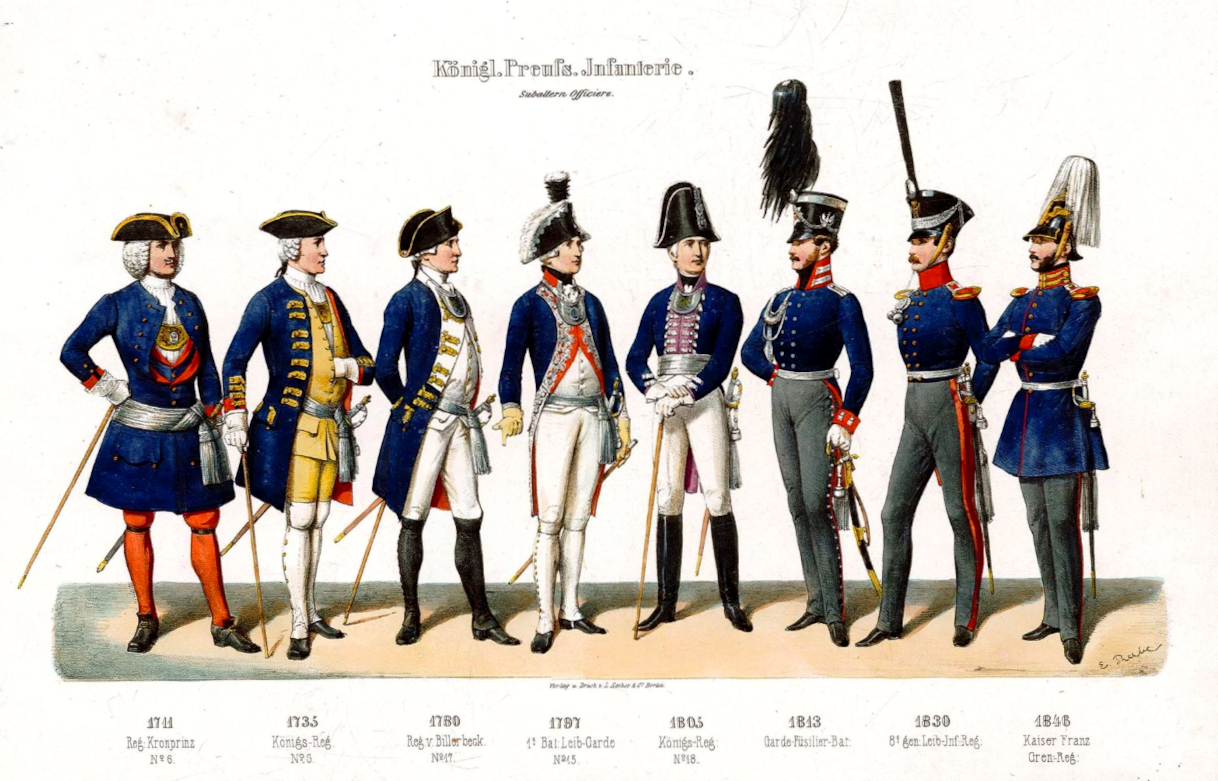
- Traditional blue of Prussian and German military uniforms
- Still used as a medicine for certain poisonings
- Gave its name to prussic acid (hydrogen cyanide)
What colour is Prussian blue?
Prussian blue is a strong, dark blue pigment. It stands out for its intensity and depth compared to earlier blues, which were often duller or faded quickly. The colour is made from iron and cyanide compounds, resulting in a blue that is both stable and rich. Its appearance can vary slightly depending on how it is made, but it is always a deep blue, sometimes with a greenish or greyish cast.
Where does Prussian blue come from?
The pigment was first made in Berlin around 1706, probably by accident when a paint maker used potash contaminated with blood while trying to make a red dye. Instead, the reaction produced a blue compound. It was soon named after Prussia and Berlin, and quickly spread across Europe. Prussian blue replaced the much more expensive ultramarine and became popular with artists and in industry. The pigment also gave its name to prussic acid (hydrogen cyanide), which was first isolated from it.
How is Prussian blue made?
Prussian blue is made by oxidising ferrous ferrocyanide salts, which are white solids containing iron, nitrogen, and carbon. The process involves mixing iron salts with potassium or sodium ferrocyanide and then oxidising the mixture, often with hydrogen peroxide or sodium chlorate. The resulting blue compound is not soluble in water but forms a fine dispersion. Despite being made from cyanide, the pigment is not toxic because the cyanide is tightly bound to the iron.


Where Prussian blue is used
Artists have used Prussian blue since the early 1700s, with the earliest known painting dating to 1709. It quickly became a standard pigment in European painting and was widely used by French and Japanese artists. In Japan, it was important for woodblock prints, especially in the 19th century. Prussian blue was also the traditional blue in technical blueprints. In medicine, it is used as an antidote for certain heavy metal poisonings.
What Prussian blue means
Prussian blue does not have a single symbolic meaning across cultures. In Jewish tradition, it was used in the 19th century by Rabbi Gershon Henoch Leiner to dye ritual fringes (tzitziyot), believing it to be the true techeiles dye, though this is debated. In Prussia and Germany, the colour became strongly associated with military uniforms.
Blue around the world
What the blue family means from country to country.
Indigo dyeing, called aizome, clothed ordinary people in deep blue through the Edo period. The men's national football team plays in blue and is nicknamed Samurai Blue.
Festival and celebrationPrideSource: Japan national football teamLapis lazuli has been mined in the mountains of Badakhshan for more than six thousand years. Ground to powder it gave ultramarine, the costliest blue in European painting.
Royalty and powerSacred and holyAweSource: Lapis lazuliThe chadari is a full-length covering for women with a mesh panel over the eyes. In Kabul and the north it is most often a light blue.
Protection and healingSource: BurqaThe blue band of the flag stands for the wish of the Armenian people to live under peaceful skies. The red above it is for the highlands and the struggle to survive.
Politics and protestHopeSource: Flag of ArmeniaThe flag is sky blue, white and sky blue, created by Manuel Belgrano in 1812. National teams are called the Albiceleste, the white and sky blue.
Politics and protestPrideSource: Flag of ArgentinaBoca Juniors play in blue and gold. The club's story is that in 1907 it took the colours of the flag of the next ship into port, which was Swedish.
Festival and celebrationPrideSource: Boca JuniorsShades and relatives of Prussian blue
Turnbull's blue is chemically almost the same as Prussian blue, but made with different starting materials, giving it a slightly different shade. Prussian white is a related compound, but it is pale and used in battery technology rather than as a pigment. Prussian blue can sometimes be confused with other blue pigments, but its depth and stability set it apart.
Colours that go with Prussian blue
Harmonies are worked out from the value #003153. Contrast ratios follow the WCAG 2 formula.
Questions people ask about Prussian blue
What colour is Prussian blue?
Prussian blue is a deep, strong blue that can sometimes look slightly greenish or greyish. It is much darker and more intense than earlier blue pigments.
Where does the name Prussian blue come from?
The pigment was first made in Berlin, in the Kingdom of Prussia, in the early 18th century. It was named after the region and city where it was discovered.
How is Prussian blue made?
It is made by oxidising iron salts with ferrocyanide, resulting in a blue compound. The process uses iron, nitrogen, and carbon, and produces a pigment that is not soluble in water.
What is Prussian blue used for?
It is used in painting, Japanese prints, blueprints, and as a medicine for certain kinds of heavy metal poisoning. It was also the colour of Prussian military uniforms.
Is Prussian blue toxic?
No, Prussian blue is not toxic. Although it is made from cyanide compounds, the cyanide is tightly bound to iron and cannot be released easily.
Good reading and sources
- Prussian blue on WikipediaEncyclopedia
- More pictures on Wikimedia CommonsPictures
- Wikidata recordOpen data
The facts on this page come from the Wikipedia article "Prussian blue", written by its contributors and used under the CC BY-SA 4.0 licence, and from its Wikidata record (CC0). Rang rewrote the text in its own words, with AI assistance, and compares every page with the article to make sure no passage is copied. It may be reused under the same CC BY-SA 4.0 licence with a link back.
It may contain mistakes. The swatch is an approximation: named colours are not fixed standards, and every screen shows them a little differently. If something is wrong, tell us. Last refreshed 2026-10-03.
More of the blue family
All of blue
Blue
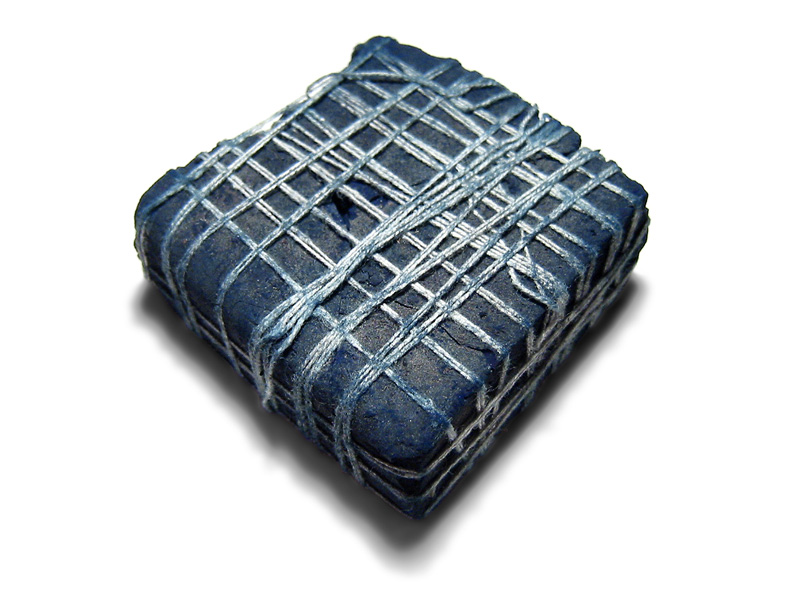
Lapis lazuli
A deep blue stone prized for jewellery and the source of ultramarine pigmentColour named from nature · 🇦🇫 Afghanistan +5
#6A5DFF
Indigo
A deep blue named for the dye once exported from IndiaNamed shade · 🇮🇳 India +5

Blue
Azurite
A deep blue copper mineral once prized as a pigment and gemstonePigment · 🇫🇷 France +5

Blue
Woad
A blue dye once vital to Europe's textile trade, made from the leaves of a flowering plantDye · 🇫🇷 France +3
Blue
Indigo
A deep blue dye from plants, now mostly made synthetically and known for colouring denimDye · 🇮🇳 India +5
Blue
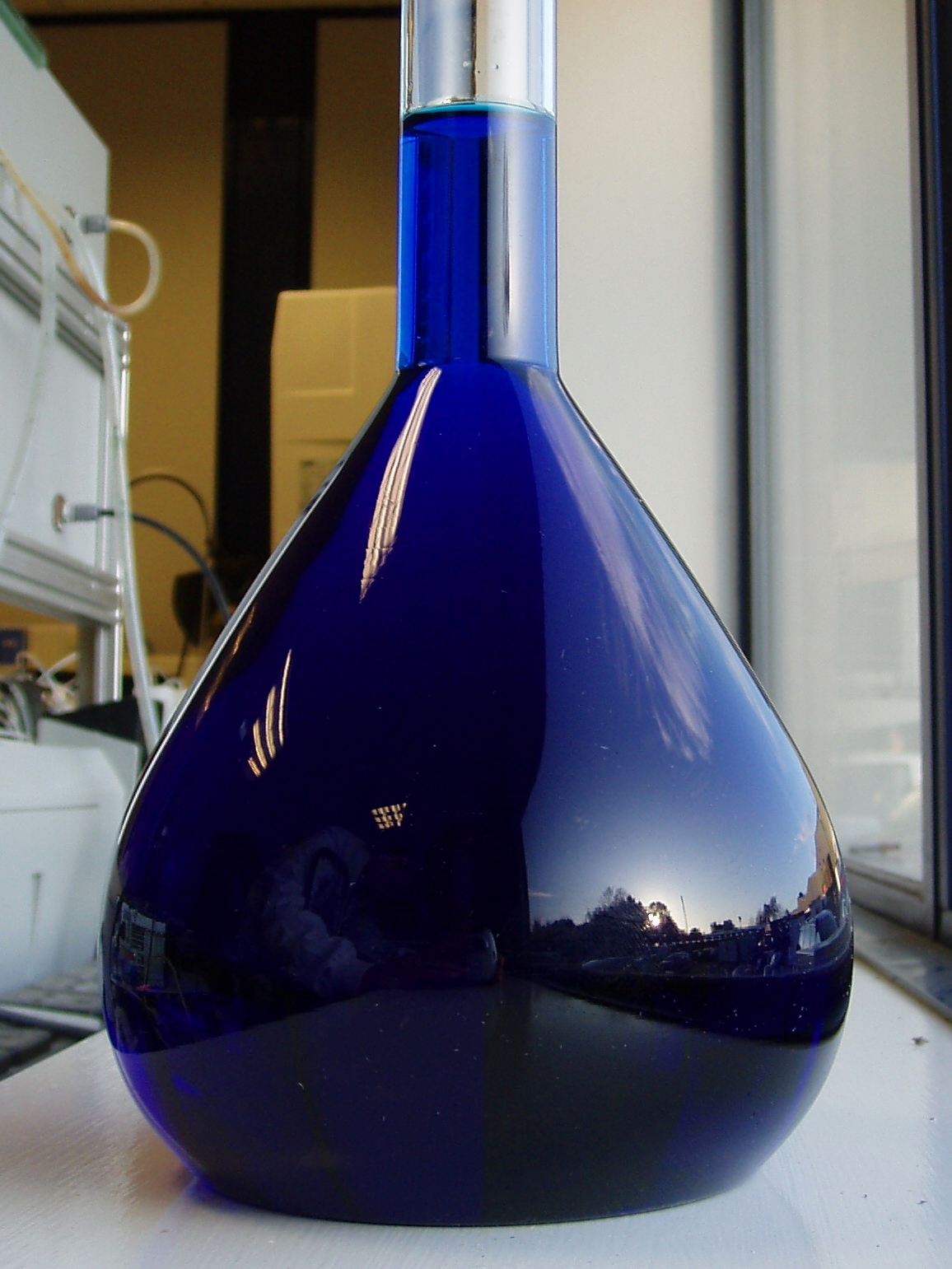
Methylene blue
A synthetic blue dye and medicine first made in 1876Dye
#120A8F
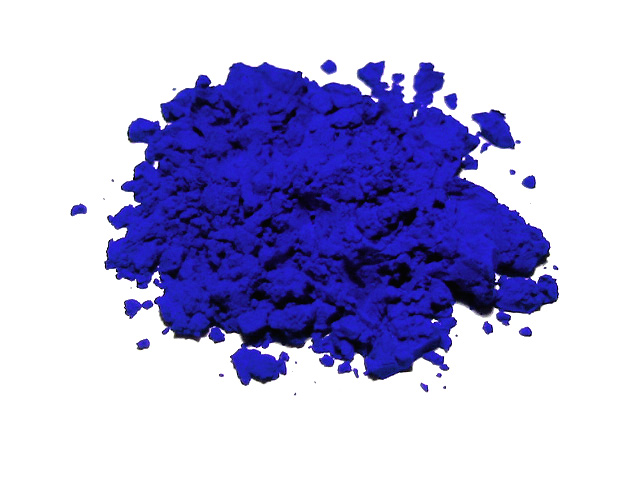
Ultramarine
A deep blue pigment once made from lapis lazuli, prized for centuries in artPigment · 🇦🇫 Afghanistan +2

#007FFF
Azure
A clear sky blue, halfway between blue and cyan on the colour wheelNamed shade · 🇮🇹 Italy +2
More colours tied to Japan
The colours of Japan
#FF0000
Red
A primary colour seen in light, pigment, and tradition worldwideBasic colour · 🇺🇸 United States +5

#800080
Purple
A cool colour between red and blue, long linked with royalty and rarityBasic colour · 🇱🇧 Lebanon +5

#F5F5DC
Beige
A pale, warm colour named after natural, undyed woolNamed shade · 🇫🇷 France +2

#E34234
Vermilion
A brilliant orange-red pigment, once made from toxic mercury orePigment · 🇹🇷 Turkey +5