Rügen chalk
In its own language: Rügener Kreide
A soft, white chalk from the cliffs of Rügen, Germany
No single value: Rügen chalk is a material, and its colour varies. The background shows its family, white.

Rügen chalk is a soft, fine white limestone found on the Jasmund peninsula of Rügen island in Germany. Made mostly of ancient algae remains, it is valued for its purity and has been used in cement, agriculture, and as a pigment for paints and cosmetics.
- Formed from ancient algae remains about 70 million years ago
- Found in the white cliffs of Jasmund, Rügen island, Germany
- Contains flint nodules called 'Sassnitz flower pots'
- Used in cement, agriculture, and as a white pigment
- Area is now part of a protected national park
What colour is Rügen chalk?
Rügen chalk is a soft, crumbly white rock found in the cliffs of the Jasmund peninsula on Rügen island. It is made up of very fine particles, mostly from the remains of tiny algae that lived in ancient seas. Unlike many other limestones, it is not layered and is highly porous. When dry, it breaks easily; when wet, it can be shaped and cut. Its purity and texture set it apart from other chalks.
Where does Rügen chalk come from?
The name comes from the island of Rügen in Germany, where these chalk deposits are found. The chalk formed about 70 million years ago from the remains of single-celled algae and other plankton that settled on the sea floor. Over time, these remains built up into thick layers, which are now exposed in the famous white cliffs. The area is now protected as part of Jasmund National Park.
How is Rügen chalk made?
Rügen chalk is dug from open pits and cliffs. In the past, workers used pickaxes to break it out, then mixed it with water to separate the chalk from flint and other impurities. The mixture was allowed to settle, and the pure chalk was dried and shaped for use. Modern methods use machines to speed up extraction and processing, but the basic steps remain similar.


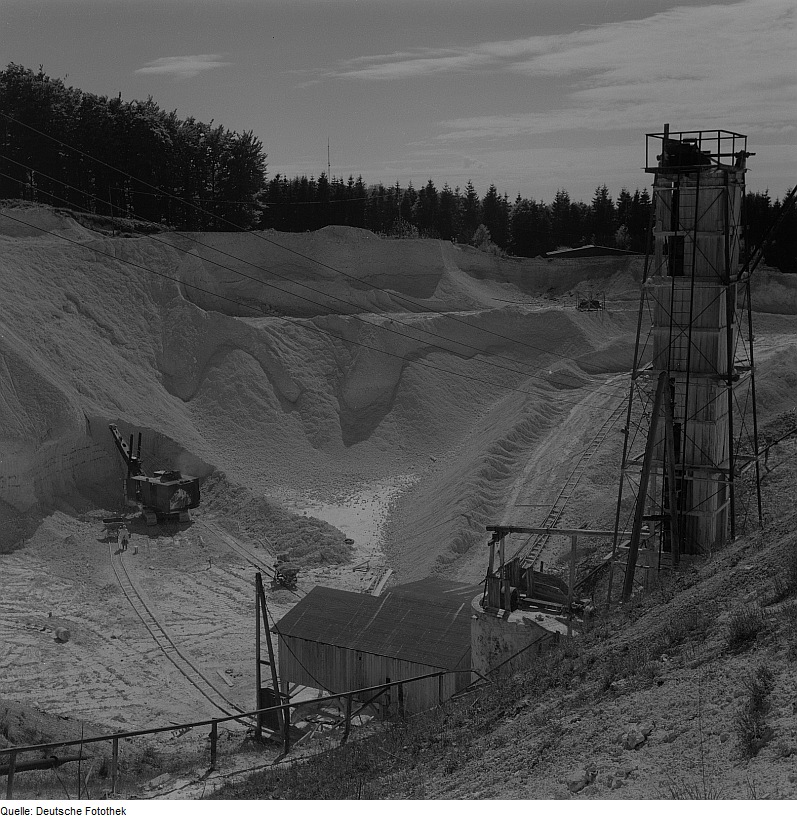
Where Rügen chalk is used
This chalk has been used for making cement and agricultural lime, and as a pigment in paints and cosmetics. It was also important in the electrical and chemical industries. In the 20th century, it became a major export under the name 'Three Crown Chalk'. Lower quality chalk is used in power plants to remove sulphur from flue gases.
White around the world
What the white family means from country to country.
The national football team plays in white shirts and black shorts, the colours of the old Prussian flag, not those of the national flag.
Festival and celebrationPrideSource: Germany national football teamThe Taliban flag is white with the Muslim declaration of faith in black. It replaced the black, red and green tricolour of the republic in 2021.
Politics and protestSacred and holySource: Flag of AfghanistanThe Mothers of the Plaza de Mayo wore white headscarves as they marched to demand news of children who disappeared under the dictatorship of 1976 to 1983.
Politics and protestMourning and deathCourageSource: Mothers of Plaza de MayoThe wiphala, a square flag of 49 small squares in seven colours with a white diagonal, stands for the Andean peoples. It has been a second national flag since 2009.
Politics and protestPrideSource: WiphalaOn New Year's Eve crowds on the beaches dress in white for peace in the year ahead. The custom comes from the Afro-Brazilian religions, whose followers wear white.
Luck and prosperityFestival and celebrationSacred and holyHopeSource: New Year's EveAn ordinary citizen's kabney is white with fringes. It must be worn to enter a dzong, the fortress that houses both monks and government offices.
Purity and peaceSource: KabneyShades and relatives of Rügen chalk
Rügen chalk is sometimes confused with other types of chalk, but its fine grain and high purity make it distinct. It contains flint nodules, which can be large and cylindrical, known locally as 'Sassnitz flower pots'. The main pigment form is a bright white, but grain size and flint content can vary.
Questions people ask about Rügen chalk
What colour is Rügen chalk?
Rügen chalk is bright white, with a very fine and soft texture. Its whiteness comes from its high purity and the tiny calcite plates that make up most of the rock.
Where does the name Rügen chalk come from?
The name refers to the island of Rügen in Germany, where this chalk is found in large deposits, especially along the Jasmund peninsula's cliffs.
What is Rügen chalk made of?
It is mostly composed of calcium carbonate from the remains of ancient plankton, especially coccolithophores, along with some flint nodules formed from other microscopic sea life.
How is Rügen chalk used?
It is used in making cement, agricultural lime, as a pigment in paints and cosmetics, and for cleaning flue gases in power plants.
What makes Rügen chalk different from other chalks?
It is much finer and more porous than most other chalks, with a high content of pure calcium carbonate and distinctive flint nodules.
Good reading and sources
- Rügen chalk on WikipediaEncyclopedia
- More pictures on Wikimedia CommonsPictures
- Wikidata recordOpen data
The facts on this page come from the Wikipedia article "Rügen chalk", written by its contributors and used under the CC BY-SA 4.0 licence, and from its Wikidata record (CC0). Rang rewrote the text in its own words, with AI assistance, and compares every page with the article to make sure no passage is copied. It may be reused under the same CC BY-SA 4.0 licence with a link back.
It may contain mistakes. The swatch is an approximation: named colours are not fixed standards, and every screen shows them a little differently. If something is wrong, tell us. Last refreshed 2026-10-03.
More of the white family
All of white
White
Zinc oxide
A white inorganic powder used in pigments, ointments, ceramics and electronicsPigment · 🇮🇳 India +2

#FDF8FF
Zinc white
A cool, low-toxicity white pigment made from zinc oxidePigment

#FFFEEF
Titanium white
A bright white pigment made from titanium dioxide, valued for its strong coveragePigment · 🇺🇸 United States +1

White
Lead white
A dense, opaque white pigment once used in art, home, and cosmetics worldwidePigment · 🇨🇳 China +2
White
Titanium dioxide
A brilliant white pigment made from titanium, used in paints, food and sunscreenPigment · 🇨🇳 China +5

White
Barium sulfate
A dense, white mineral used in pigments, X-rays, and industryPigment
White
Antimony trioxide
A white antimony compound used in flame retardants and glassmakingPigment · 🇨🇳 China +4

White
White lead
A historic opaque white pigment once made from lead and vinegarPigment
More colours tied to Germany
The colours of Germany
#FF00FF
Magenta
A purplish-pink colour named after a battle and key to modern printingNamed shade · 🇫🇷 France +4

Brown
Aniline
A colourless oil that darkens with air and launched the first synthetic dyesPigment · 🇩🇪 Germany

Blue
Woad
A blue dye once vital to Europe's textile trade, made from the leaves of a flowering plantDye · 🇫🇷 France +3

#F5F5DC
Beige
A pale, warm colour named after natural, undyed woolNamed shade · 🇫🇷 France +2