Titanium dioxide
A brilliant white pigment made from titanium, used in paints, food and sunscreen
No single value: Titanium dioxide is a material, and its colour varies. The background shows its family, white.
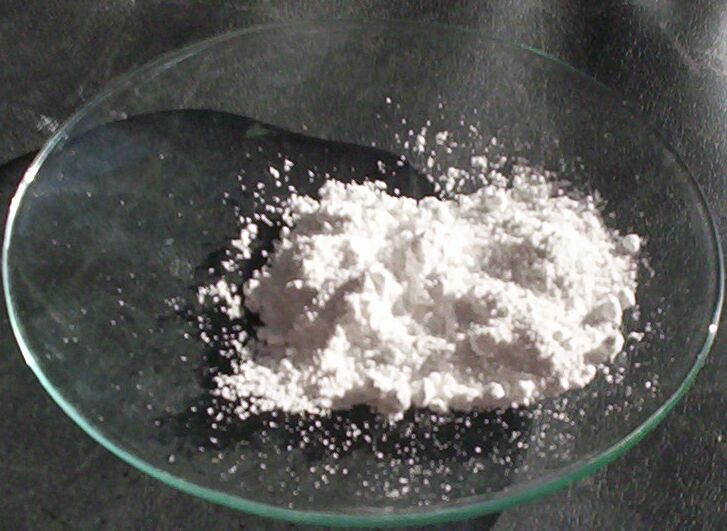
Titanium dioxide is a bright white powder made from titanium, used widely as a pigment in paints, coatings, plastics, food, and sunscreen. It occurs naturally as rutile and anatase minerals, but most pigment is produced from ilmenite ore using industrial chemical processes. Its high opacity and brightness make it the most common white pigment in the world.
- Most widely used white pigment in the world
- First mass-produced as a pigment in 1916
- Found in paints, food, sunscreen, plastics and toothpaste
- Mainly made from ilmenite ore
- Blocks UV light in sunscreens and coatings
What colour is Titanium dioxide?
Titanium dioxide is a white, inorganic compound made from titanium and oxygen. In its pure form, it appears as a fine, bright white powder that does not dissolve in water. This pigment stands out for its strong ability to reflect light, making it much brighter and more opaque than most other white pigments. It is found in several natural mineral forms, but most of what is used today is made in factories from titanium-rich ores.
Where does Titanium dioxide come from?
The name 'titanium dioxide' comes from its chemical makeup: titanium and two oxygen atoms. The pigment was first produced on a large scale in 1916. While rutile and anatase are natural mineral forms, most pigment is made from ilmenite, a common ore. The use of titanium dioxide grew quickly because of its brightness and covering power, replacing older white pigments in many products.
How is Titanium dioxide made?
Titanium dioxide pigment is mainly produced from ilmenite ore using two main industrial methods. In the chloride process, the ore is reacted with chlorine and carbon to create titanium tetrachloride, which is then purified and converted to titanium dioxide. The sulfate process uses sulfuric acid to extract titanium from the ore. Both methods yield a fine white powder, usually in the rutile form, though the sulfate process can also produce anatase for certain uses.


Where Titanium dioxide is used
This pigment is found in paints, coatings, plastics, paper, inks, and ceramics, giving them a strong, opaque white. It is also used in sunscreens and cosmetics for its ability to block ultraviolet light. In food, it is known as E171 and used to whiten products like sweets and chewing gum, though some regions have banned it in food. Thin films of titanium dioxide are used for optical coatings and decorative effects.
White around the world
What the white family means from country to country.
White is the traditional colour of death and mourning. Families wore undyed white cloth at funerals, and condolence money is still given in white envelopes.
Mourning and deathGriefSource: Color in Chinese cultureWhite was the colour of the Bourbon kings. In the tricolour it sits between the blue and red of Paris, and after 1815 the restored monarchy flew a plain white flag.
Royalty and powerPolitics and protestSource: Flag of FranceFrench queens once mourned in white, a custom called deuil blanc. Mary, Queen of Scots, was painted in white mourning after the death of her husband, Francis II.
Mourning and deathRoyalty and powerGriefSource: MourningWomen campaigning for the vote marched in white dresses. Women in Congress have worn white to presidential addresses in memory of them.
Politics and protestPurity and peaceCourageSource: Women's suffrage in the United StatesThe Taliban flag is white with the Muslim declaration of faith in black. It replaced the black, red and green tricolour of the republic in 2021.
Politics and protestSacred and holySource: Flag of AfghanistanThe Mothers of the Plaza de Mayo wore white headscarves as they marched to demand news of children who disappeared under the dictatorship of 1976 to 1983.
Politics and protestMourning and deathCourageSource: Mothers of Plaza de MayoShades and relatives of Titanium dioxide
Titanium dioxide exists in several forms, mainly rutile and anatase, which differ in crystal structure and use. Rutile is the most stable and common in pigments, while anatase is softer and used in paper and fibres. There are also rare forms like brookite and several high-pressure or synthetic variants, but these are not used as pigments.
Questions people ask about Titanium dioxide
What colour is titanium dioxide?
Titanium dioxide is a bright, opaque white powder. It is used to give whiteness and opacity to many products, including paint, food, and sunscreen.
Where does the name 'titanium dioxide' come from?
The name comes from its chemical composition: it is an oxide made from titanium and oxygen. The pigment is also called titanium white.
How is titanium dioxide made?
It is mainly produced from the mineral ilmenite using industrial chemical processes, such as the chloride process and the sulfate process, which extract and purify the titanium to make a fine white powder.
What is titanium dioxide used for?
It is used as a white pigment in paints, plastics, paper, inks, ceramics, sunscreen, cosmetics, and as a food colourant (E171).
Is titanium dioxide natural or synthetic?
Titanium dioxide occurs naturally as the minerals rutile and anatase, but most pigment is made synthetically from titanium-rich ores.
Good reading and sources
- Encyclopaedia BritannicaArticle
- E171: EU watchdog says food colouring widely used in UK is unsafeThe Guardian, Article
- Skittles-maker Mars phases out controversial colour additiveBBC, Article
- These Grocery Store Foods Contain Elevated Levels of Additives and Contaminants, Consumer Reports FindsFood & Wine, Article
- Titanium dioxide on WikipediaEncyclopedia
- More pictures on Wikimedia CommonsPictures
- Wikidata recordOpen data
The facts on this page come from the Wikipedia article "Titanium dioxide", written by its contributors and used under the CC BY-SA 4.0 licence, and from its Wikidata record (CC0). Rang rewrote the text in its own words, with AI assistance, and compares every page with the article to make sure no passage is copied. It may be reused under the same CC BY-SA 4.0 licence with a link back.
It may contain mistakes. The swatch is an approximation: named colours are not fixed standards, and every screen shows them a little differently. If something is wrong, tell us. Last refreshed 2026-10-03.
More of the white family
All of white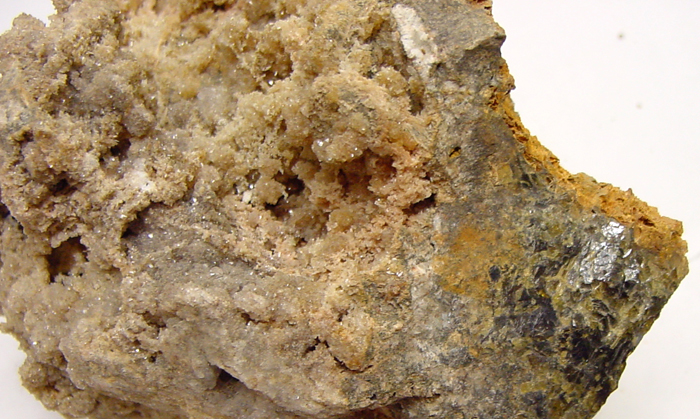
White
Zinc oxide
A white inorganic powder used in pigments, ointments, ceramics and electronicsPigment · 🇮🇳 India +2

#FDF8FF
Zinc white
A cool, low-toxicity white pigment made from zinc oxidePigment

#FFFEEF
Titanium white
A bright white pigment made from titanium dioxide, valued for its strong coveragePigment · 🇺🇸 United States +1

White
Lead white
A dense, opaque white pigment once used in art, home, and cosmetics worldwidePigment · 🇨🇳 China +2

White
Barium sulfate
A dense, white mineral used in pigments, X-rays, and industryPigment
White
Antimony trioxide
A white antimony compound used in flame retardants and glassmakingPigment · 🇨🇳 China +4

White
White lead
A historic opaque white pigment once made from lead and vinegarPigment
White
Zinc phosphate
A white inorganic compound used to protect metal and in dental cementPigment
More colours tied to China
The colours of China
#FF0000
Red
A primary colour seen in light, pigment, and tradition worldwideBasic colour · 🇺🇸 United States +5

#FFFF00
Yellow
A primary colour between green and orange, seen in sunlight, leaves, and pigmentsBasic colour · 🇫🇷 France +5

#800080
Purple
A cool colour between red and blue, long linked with royalty and rarityBasic colour · 🇱🇧 Lebanon +5

Red
Cinnabar
A scarlet to brick-red mineral and the main source of mercury and vermilion pigmentColour named from nature · 🇪🇸 Spain +5