Alkanet
A Mediterranean plant whose root gives a red dye used since ancient times
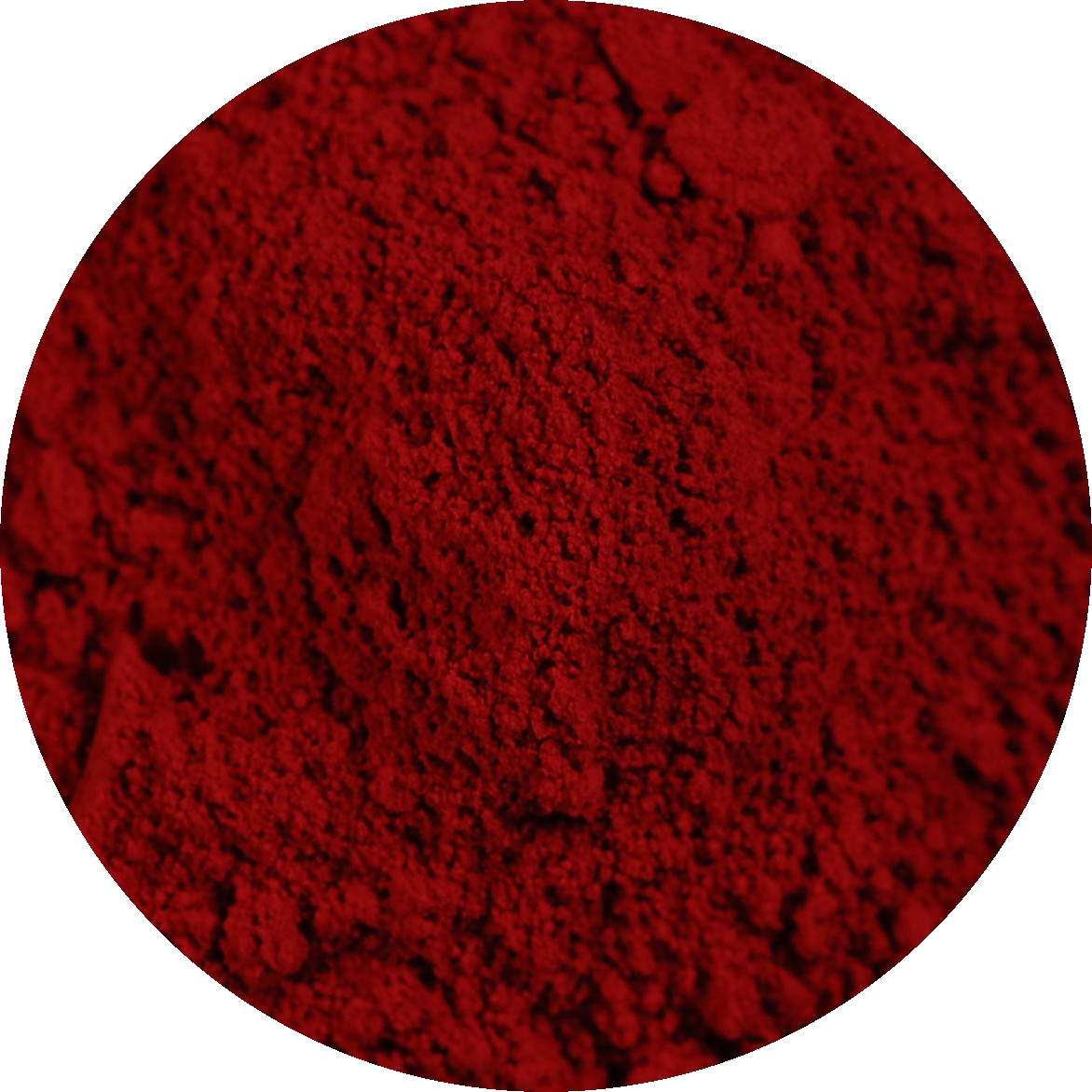
No single value: Alkanet is a material, and its colour varies. The background shows its family, red.
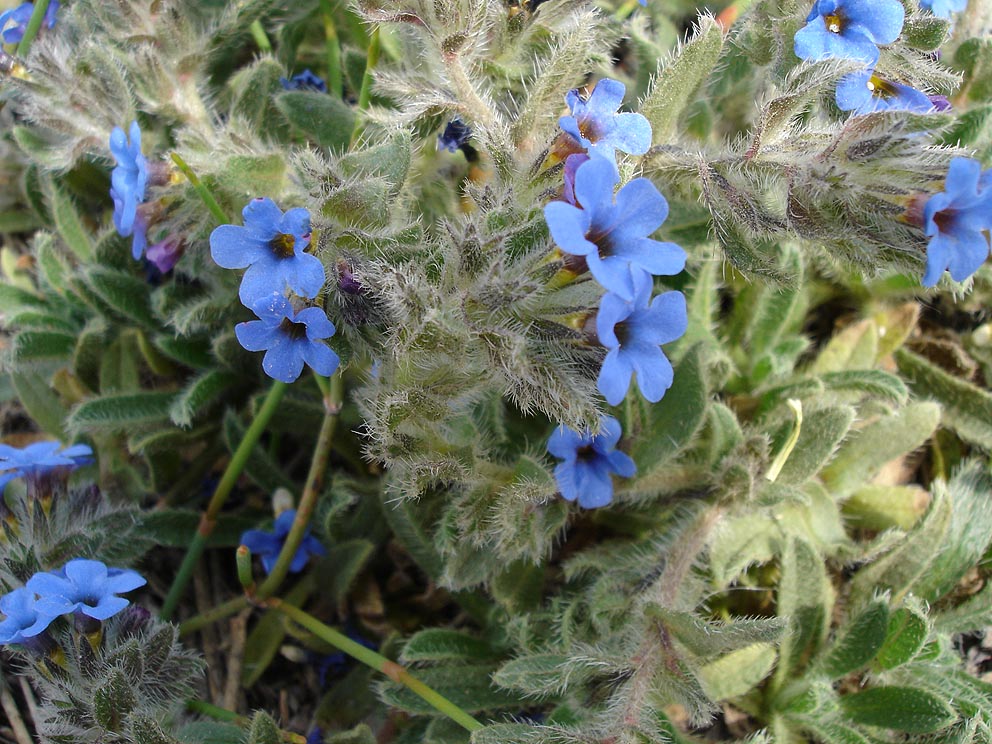
Alkanet is a herb from the Mediterranean whose roots yield a red dye called alkannin. The dye is used for colouring oils, wood, some cheeses, and cosmetics, and changes colour depending on acidity. The plant has bright blue flowers, but it is the root that is prized for its dye.
- Alkanet root gives a red dye used since ancient Mediterranean times
- The dye, alkannin, is oil-soluble and not water-soluble
- Colour changes from blue (alkaline) to crimson (acidic)
- Used to colour wood, food, and cosmetics
- Bright blue flowers, but dye comes from the root
What colour is Alkanet?
Alkanet is a flowering herb native to the Mediterranean, known for its bright blue flowers and a root that is blackish on the outside and blue-red inside. The root contains a red dye that is not water-soluble but can be extracted with alcohol or oils. This dye shifts colour depending on the environment, appearing blue in alkaline settings and crimson in acidic ones. The plant stands out for its use as a natural dye source rather than for its flowers.
Where does Alkanet come from?
The name alkanet was used in late medieval English for Alkanna tinctoria. Over time, the term has also been applied to other related plants. The plant itself has been used for dyeing in the Mediterranean since ancient times. Its scientific name was first recorded as Anchusa tinctoria by Linnaeus in 1762. Alkanet is native to the Mediterranean and the Balkans, and has spread east to Ukraine and been introduced to Germany.
How is Alkanet made?
The dye comes from the root of Alkanna tinctoria. The colouring agent, alkannin, is extracted using alcohol or oils, as it does not dissolve in water. When mixed with oil, the root powder gives a crimson tint to the oil, which can be used to stain wood or colour foods and cosmetics. The dye’s colour changes with acidity: blue in alkaline, crimson in acidic conditions.
Where Alkanet is used
Alkanet dye is used to colour oils, wood, cheeses, and some wines. It is also found in cosmetics like lipstick. In woodworking, oil infused with alkanet root gives a dark red-brown tint and enhances the wood grain. In Australia, alkannin is approved as a food colouring, but in the European Union, its use as E103 has been withdrawn. The dye has a long history in Mediterranean textile and food traditions.
Red around the world
What the red family means from country to country.
Red ochre is used in Aboriginal rock art and ceremony, and is traded over long distances. In the Aboriginal flag the red half stands for the earth and for that ochre.
Sacred and holyNature and renewalAweSource: Australian Aboriginal flagRed is the colour of the Social Democrats. Coalitions are named by party colours: red, yellow and green make a "traffic light", and black, yellow and green a "Jamaica" coalition.
Politics and protestSource: Political colourTraditional embroidered shirts, vyshyvanky, are most often stitched in red and black. A well-loved song says that red is for love and black is for sorrow.
Love and desireProtection and healingLoveSource: VyshyvankaThe red berries of the viburnum, kalyna, are a national symbol. The song Oi u luzi chervona kalyna, the red viburnum in the meadow, became an anthem of resistance after 2022.
Nature and renewalPolitics and protestPrideSource: Oi u luzi chervona kalynaThe flag uses the four Pan-Arab colours: a red bar at the hoist with green, white and black bands. It was designed by a young Emirati, Abdullah Al Maainah, in 1971.
Politics and protestPrideSource: Flag of the United Arab EmiratesThe flag is a black double-headed eagle on red, the banner of the fifteenth-century hero Skanderbeg. Fans chant Kuq e Zi, red and black.
Politics and protestPrideSource: Flag of AlbaniaShades and relatives of Alkanet
Alkanet dye can appear blue or crimson depending on the acidity of its environment. The name alkanet may also refer to other related plants, but Alkanna tinctoria is the main source of the traditional dye. The root’s dye is sometimes confused with other red plant dyes, but its oil-soluble nature and colour-changing property set it apart.
Questions people ask about Alkanet
What colour is alkanet dye?
Alkanet dye is red, but it can appear blue in alkaline conditions and crimson in acidic ones. The dye is extracted from the root of the plant.
Where does the name alkanet come from?
The name alkanet was used in late medieval English for Alkanna tinctoria, and over time has also been used for related plants.
What is alkanet used for?
Alkanet dye is used to colour oils, wood, cheeses, some wines, and cosmetics such as lipstick. It has a long history in Mediterranean regions.
How is alkanet dye made?
The dye is extracted from the root of Alkanna tinctoria using alcohol or oils, as it is not soluble in water. The main colouring agent is called alkannin.
Good reading and sources
- Alkanna tinctoria on WikipediaEncyclopedia
- More pictures on Wikimedia CommonsPictures
- Wikidata recordOpen data
The facts on this page come from the Wikipedia article "Alkanna tinctoria", written by its contributors and used under the CC BY-SA 4.0 licence, and from its Wikidata record (CC0). Rang rewrote the text in its own words, with AI assistance, and compares every page with the article to make sure no passage is copied. It may be reused under the same CC BY-SA 4.0 licence with a link back.
It may contain mistakes. The swatch is an approximation: named colours are not fixed standards, and every screen shows them a little differently. If something is wrong, tell us. Last refreshed 2026-10-03.
More of the red family
All of red
Red
Cinnabar
A scarlet to brick-red mineral and the main source of mercury and vermilion pigmentColour named from nature · 🇪🇸 Spain +5

Red
Realgar
An orange-red arsenic sulfide mineral once used as a pigment and poisonPigment · 🇨🇳 China +5
Red
Carmine
A deep red pigment made from cochineal insects, once prized across continentsPigment · 🇫🇷 France +2

#E25822
Scarlet
A bright red with a touch of orange, long tied to power, sacrifice and sinNamed shade · 🇹🇷 Turkey +4

#E34234
Vermilion
A brilliant orange-red pigment, once made from toxic mercury orePigment · 🇹🇷 Turkey +5

Red
Rubia
A group of plants whose roots once dyed cloth and paint a lasting redColour named from nature · 🇪🇬 Egypt +5

#DC143C
Crimson
A deep red with a hint of purple, once made from insectsNamed shade · 🇳🇵 Nepal

#E32636
Alizarin
A deep red dye first made from madder roots, later produced from coal tarDye · 🇹🇷 Turkey +1
More colours tied to Ukraine
The colours of Ukraine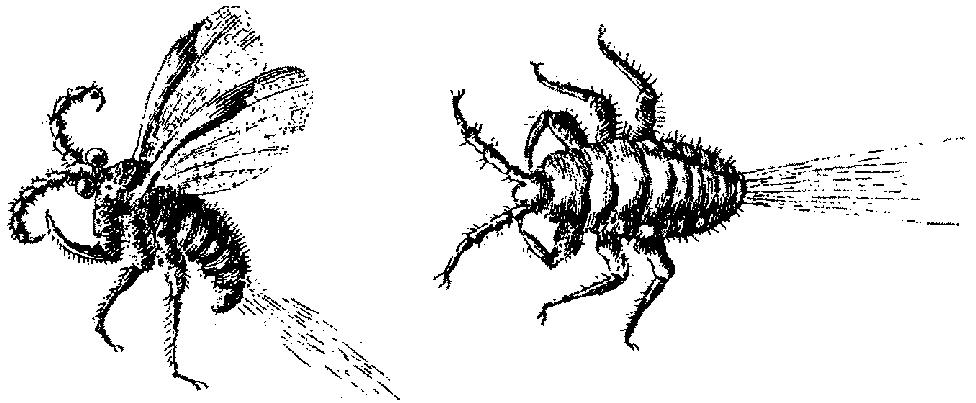
Red
Polish cochinealczerwiec polski
A crimson dye once vital to Poland, made from a native scale insectDye · 🇵🇱 Poland +5
Blue
National colours of Ukraine
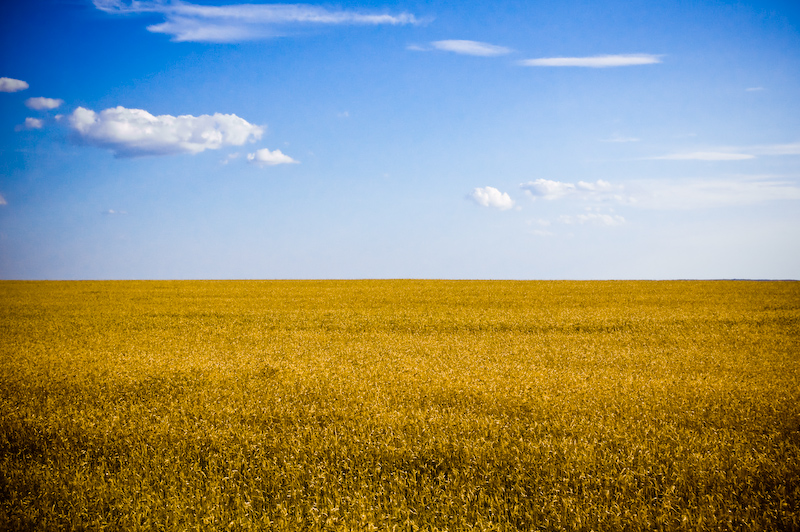
Blue and gold as the colours of Ukraine’s flag, arms and national teamsNational or team colour · 🇺🇦 Ukraine

Red
Tormentil red
A red dye for leather made from the root of the tormentil plantDye · 🇺🇦 Ukraine