Tormentil red
A red dye for leather made from the root of the tormentil plant
No single value: Tormentil red is a material, and its colour varies. The background shows its family, red.

Tormentil red is a dye extracted from the root of Potentilla erecta, a small yellow-flowered plant found across Europe and western Asia. The dye is used to colour leather and is known for its astringent properties due to high tannin content in the root.
- Extracted from the root of Potentilla erecta
- Used as a red dye for leather
- Root is high in tannins and very astringent
- Ingredient in Bavarian and Black Forest liqueurs
- Used in Ukraine with honey in horilka
What colour is Tormentil red?
Tormentil red is a natural dye obtained from the root of Potentilla erecta, a low-growing plant with small yellow flowers. The dye is notable for its use in colouring leather and is produced from compounds called phlobaphenes found in the root. The plant itself is widespread in Europe and western Asia, thriving in acidic soils and open habitats.
Where does Tormentil red come from?
The dye takes its name from the common tormentil plant, also known as Potentilla erecta. The plant has been used in traditional practices across Europe, especially in regions like Bavaria and the Black Forest, where its root is a key ingredient in local liqueurs. The red dye, called tormentil red, is extracted from the root and has a history in leatherworking.
How is Tormentil red made?
Tormentil red is made by extracting phlobaphenes from the thick root of Potentilla erecta. The root is rich in tannins, which contribute to its astringent quality and dyeing ability. The dye is typically obtained through aqueous extraction, making use of water to draw out the colouring compounds.


Where Tormentil red is used
The main use of tormentil red is as a dye for leather. The root is also used in herbal medicine for its astringent properties and in the making of traditional liqueurs in Bavaria and the Black Forest. In Ukraine, the root is used with honey in a spirit called horilka.
Red around the world
What the red family means from country to country.
Traditional embroidered shirts, vyshyvanky, are most often stitched in red and black. A well-loved song says that red is for love and black is for sorrow.
Love and desireProtection and healingLoveSource: VyshyvankaThe red berries of the viburnum, kalyna, are a national symbol. The song Oi u luzi chervona kalyna, the red viburnum in the meadow, became an anthem of resistance after 2022.
Nature and renewalPolitics and protestPrideSource: Oi u luzi chervona kalynaThe flag uses the four Pan-Arab colours: a red bar at the hoist with green, white and black bands. It was designed by a young Emirati, Abdullah Al Maainah, in 1971.
Politics and protestPrideSource: Flag of the United Arab EmiratesThe flag is a black double-headed eagle on red, the banner of the fifteenth-century hero Skanderbeg. Fans chant Kuq e Zi, red and black.
Politics and protestPrideSource: Flag of AlbaniaArmenian scribes painted manuscripts with vordan karmir, a crimson dye made from an insect that lives on the roots of grasses in the Ararat plain.
Sacred and holySource: Armenian cochinealUnder Juan Manuel de Rosas in the 1830s and 1840s, everyone had to wear a scarlet ribbon to show loyalty to his Federalist party. His enemies, the Unitarians, were tied to sky blue.
Politics and protestFearSource: Juan Manuel de RosasShades and relatives of Tormentil red
Tormentil red is specifically the dye from Potentilla erecta root. The plant itself is sometimes confused with other cinquefoils, but its four-petalled yellow flowers and use as a dye set it apart. No other major dye variants from this plant are noted in the sources.
Questions people ask about Tormentil red
What colour is tormentil red?
Tormentil red is a red dye obtained from the root of the Potentilla erecta plant, used mainly for colouring leather.
Where does the name tormentil red come from?
The name comes from the tormentil plant, also called Potentilla erecta, whose root is the source of the dye.
How is tormentil red made?
It is made by extracting phlobaphenes and tannins from the root of Potentilla erecta, usually with water.
What is tormentil red used for?
It is mainly used as a dye for leather. The root is also used in herbal medicine and in traditional drinks.
Where is tormentil red traditionally used?
It is used in regions like Bavaria and the Black Forest in Germany, and in Ukraine for flavouring spirits.
Good reading and sources
- Potentilla erecta on WikipediaEncyclopedia
- More pictures on Wikimedia CommonsPictures
- Wikidata recordOpen data
The facts on this page come from the Wikipedia article "Potentilla erecta", written by its contributors and used under the CC BY-SA 4.0 licence, and from its Wikidata record (CC0). Rang rewrote the text in its own words, with AI assistance, and compares every page with the article to make sure no passage is copied. It may be reused under the same CC BY-SA 4.0 licence with a link back.
It may contain mistakes. The swatch is an approximation: named colours are not fixed standards, and every screen shows them a little differently. If something is wrong, tell us. Last refreshed 2026-10-03.
More of the red family
All of red
Red
Cinnabar
A scarlet to brick-red mineral and the main source of mercury and vermilion pigmentColour named from nature · 🇪🇸 Spain +5

Red
Realgar
An orange-red arsenic sulfide mineral once used as a pigment and poisonPigment · 🇨🇳 China +5
Red
Carmine
A deep red pigment made from cochineal insects, once prized across continentsPigment · 🇫🇷 France +2

#E25822
Scarlet
A bright red with a touch of orange, long tied to power, sacrifice and sinNamed shade · 🇹🇷 Turkey +4

#E34234
Vermilion
A brilliant orange-red pigment, once made from toxic mercury orePigment · 🇹🇷 Turkey +5

Red
Rubia
A group of plants whose roots once dyed cloth and paint a lasting redColour named from nature · 🇪🇬 Egypt +5

#DC143C
Crimson
A deep red with a hint of purple, once made from insectsNamed shade · 🇳🇵 Nepal

#E32636
Alizarin
A deep red dye first made from madder roots, later produced from coal tarDye · 🇹🇷 Turkey +1
More colours tied to Ukraine
The colours of Ukraine
Red
Polish cochinealczerwiec polski
A crimson dye once vital to Poland, made from a native scale insectDye · 🇵🇱 Poland +5
Blue
National colours of Ukraine
Blue and gold as the colours of Ukraine’s flag, arms and national teamsNational or team colour · 🇺🇦 Ukraine
Red
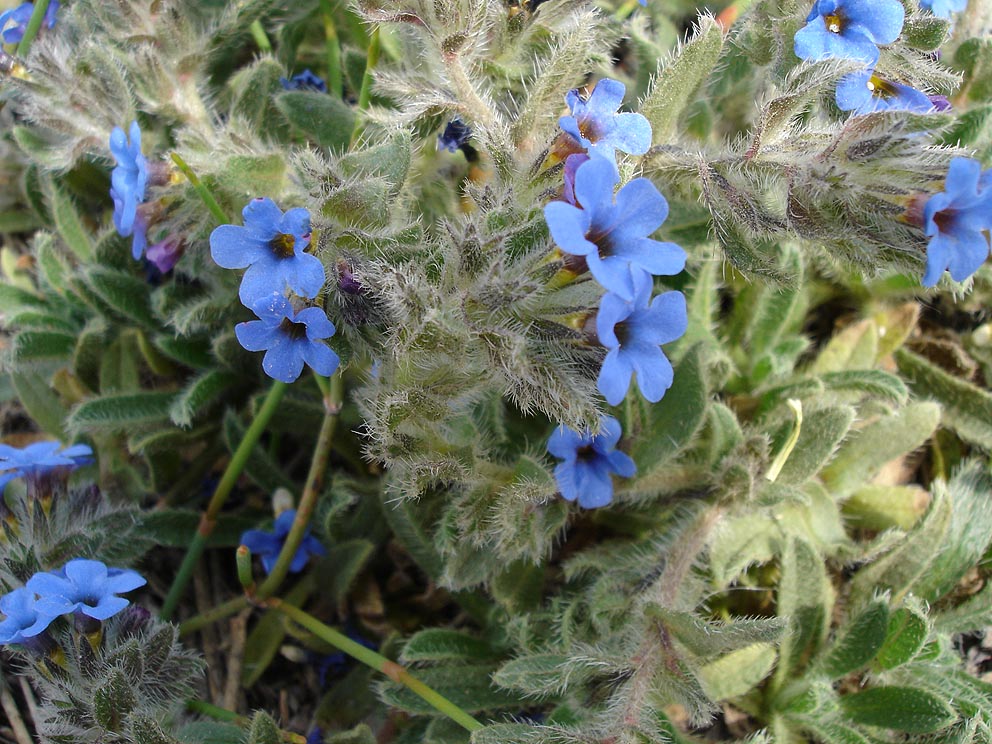
Alkanet
A Mediterranean plant whose root gives a red dye used since ancient timesColour named from nature · 🇺🇦 Ukraine +2