Sable
The heraldic name for the colour black
No single value: Sable is a material, and its colour varies. The background shows its family, black.

Sable is the term used in heraldry for the colour black. Its name comes from the fur of the sable, a small marten found in Eurasia. Sable is one of the main dark colours in coats of arms and is shown by solid black or by a pattern of criss-crossed lines. It appears in the heraldry of many European countries.
- Sable is the heraldic word for black.
- Its name comes from the sable marten's fur.
- Shown by solid black or a grid of lines in heraldry.
- Used in coats of arms across Europe.
- Associated with Saturn and the diamond in tradition.
What colour is Sable?
Sable is the heraldic word for black, one of the main colours used in coats of arms. In heraldry, it stands out by its deep darkness and is often set against lighter colours called metals, like silver (argent) or gold (Or). Sable is shown either by filling an area with solid black or by drawing a grid of perpendicular lines, a method called hatching. It is one of five main dark colours, known as tinctures, in heraldic tradition.
Where does Sable come from?
The word sable comes from the name of a small animal, the sable marten, whose fur is dark and valuable. The name travelled through several languages: from Slavic and Russian, through German and French, into English. Since at least the 14th century, 'sable' has meant black in heraldry. The spelling and use vary in different European languages, but the meaning stays the same.


Where Sable is used
Sable is widely used in heraldry, the system of coats of arms. It appears as backgrounds, animals, and symbols on shields and banners. In Britain and France, sable is always set against lighter colours for contrast. In Central Europe, such as Germany, Poland, Hungary, and Lithuania, it is sometimes placed on coloured backgrounds like red or blue, which is less common in Western heraldry.
What Sable means
Sable is linked with certain poetic meanings in heraldry, though these are not always taken seriously by experts. It is associated with the planet Saturn, the diamond as a jewel, the flower nightshade, and the virtues of constancy or prudence. These links are traditional rather than widely believed today.
Black around the world
What the black family means from country to country.
Black is the colour of the Christian Democrats and their Bavarian sister party. The usage goes back to the black robes of the Catholic clergy.
Politics and protestSource: Christian Democratic Union of GermanyAfter Russian troops fired on crowds in Warsaw in 1861, women across Poland put on black dresses and black jewellery as a sign of national mourning. It lasted for years.
Mourning and deathPolitics and protestGriefSource: MourningThe Black Madonna of Czestochowa is an icon of Mary and the child Jesus with darkened faces. It is the most revered image in the country, and pilgrims walk for days to see it.
Sacred and holyAweSource: Black Madonna of CzęstochowaThe black eagle gives the country its own name for itself: Shqiperia is commonly read as the land of the eagles.
Politics and protestPrideSource: AlbaniaBlack and yellow were the colours of the Habsburg monarchy. They come from the black double-headed eagle on a gold ground used by the Holy Roman Emperors.
Royalty and powerSource: Flag of the Habsburg monarchyThe black upper half of the Aboriginal flag stands for the Aboriginal people of Australia.
Politics and protestPrideSource: Australian Aboriginal flagShades and relatives of Sable
Sable is simply black in heraldry, but in some countries, other words like 'negro' (Spanish, Portuguese) or 'Schwarz' (German) are used for black. It may be confused with other dark tinctures, but its meaning is fixed. Sable is shown by solid black or by a special hatching pattern.
Questions people ask about Sable
What colour is sable in heraldry?
Sable means black in heraldry. It is one of the main colours, called tinctures, used in coats of arms.
Where does the name sable come from?
The name comes from the sable, a small marten with dark fur. The word travelled into English from Slavic and German languages.
How is sable shown on a coat of arms?
Sable is shown by filling an area with solid black or by drawing a criss-cross pattern of lines, called hatching.
Is sable used outside Britain and France?
Yes, sable appears in heraldry across Europe, including Germany, Poland, Hungary, and Lithuania, sometimes on coloured backgrounds.
Good reading and sources
- Sable (tincture) on WikipediaEncyclopedia
- More pictures on Wikimedia CommonsPictures
- Wikidata recordOpen data
The facts on this page come from the Wikipedia article "Sable (tincture)", written by its contributors and used under the CC BY-SA 4.0 licence, and from its Wikidata record (CC0). Rang rewrote the text in its own words, with AI assistance, and compares every page with the article to make sure no passage is copied. It may be reused under the same CC BY-SA 4.0 licence with a link back.
It may contain mistakes. The swatch is an approximation: named colours are not fixed standards, and every screen shows them a little differently. If something is wrong, tell us. Last refreshed 2026-10-03.
More of the black family
All of black
#000000
Black
The colour seen when no visible light is present or all light is absorbedBasic colour

Black
India ink
A deep black ink made from carbon soot, used for writing, drawing and calligraphyPigment · 🇨🇳 China +1

Black
Kohlكُحْل
A dark eye cosmetic made from minerals like galena and stibniteTraditional colour · 🇪🇬 Egypt +5
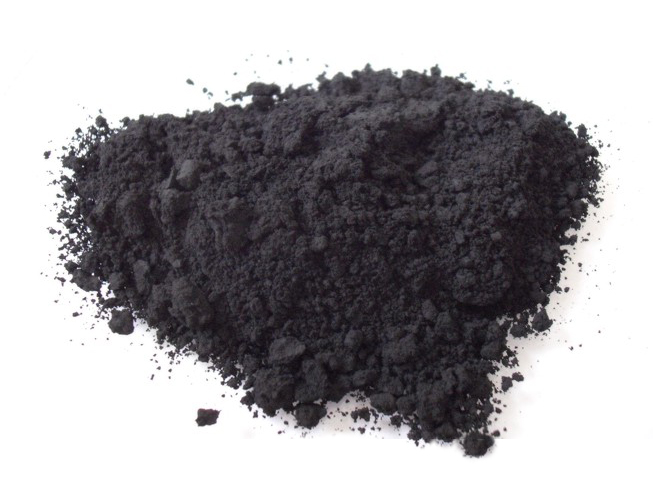
Black
Carbon black
A deep black pigment and filler made by burning carbon-rich materials with little airPigment

Black
Vantablack
A super-black coating made from carbon nanotubes that absorbs nearly all visible lightPigment

Black
Bone char
A deep black pigment and filter made by charring animal bonesPigment

Black
Magnetite
A naturally magnetic black mineral and a major source of ironColour named from nature

Black
Ebony
A jet-black hardwood valued for its smooth finish and rarityColour named from nature · 🇪🇬 Egypt +5
More colours tied to Germany
The colours of Germany
#FF00FF
Magenta
A purplish-pink colour named after a battle and key to modern printingNamed shade · 🇫🇷 France +4

Brown
Aniline
A colourless oil that darkens with air and launched the first synthetic dyesPigment · 🇩🇪 Germany

Blue
Woad
A blue dye once vital to Europe's textile trade, made from the leaves of a flowering plantDye · 🇫🇷 France +3

#F5F5DC
Beige
A pale, warm colour named after natural, undyed woolNamed shade · 🇫🇷 France +2