Black
The colour seen when no visible light is present or all light is absorbed

Black is an achromatic colour, seen when visible light is absent or fully absorbed. Its name comes from Old English and ancient words for burning or darkness. Black has been used in art since the Stone Age, and is linked with mourning, authority, and secrecy in many cultures. It is the standard ink for print and screens due to its high contrast with white.
Share on WhatsAppOpen in the lab
- Black is the absence or full absorption of visible light.
- It was one of the first colours used in Stone Age cave art.
- Judges and magistrates wear black to symbolise authority.
- Black ink is standard for printing and writing.
- In ancient Egypt, black meant fertility and protection.
What colour is Black?
Black is the colour that appears when no visible light reaches the eye, or when a surface absorbs all visible light without reflecting any. It is an achromatic colour, meaning it has no hue, like white and grey. Black stands apart from other colours for its depth and the way it marks the boundary between light and darkness. In everyday life, black is seen in shadows, the night sky, and in many animals’ fur or feathers.
Where does Black come from?
The English word 'black' comes from Old English 'blæc', meaning dark or ink, and is related to ancient words for burning or shining. In Ancient Rome, two words described black: 'ater' for dull black and 'niger' for a deep, rich black. The word 'sable', used in heraldry, refers to the black fur of the sable animal. Black has been named and recognised in many languages, often with separate words for different kinds of black.
How Black is defined
Black is not made from a single pigment or dye in its most basic sense, but is defined by the absence or absorption of visible light. In art, early humans used charcoal, burnt bones, or manganese oxide to create black marks. For printing and writing, black ink was traditionally made from soot and oils. On screens, black is the result of pixels emitting no light.


Where Black is used
Black has been used in art since the Stone Age, appearing in cave paintings made with charcoal and burnt bone. Ancient Egyptians and Greeks used black for symbolic and decorative purposes, including pottery and depictions of gods. In Europe, black became a colour of authority, worn by judges, clergy, and officials. Today, black is the main ink for printing and is the default text colour on screens, chosen for its clarity and contrast.
What Black means
Black stands for mourning and death in many Western cultures, a tradition dating back to the Roman Empire. It is also linked to authority, solemnity, and secrecy, which is why judges and magistrates often wear black robes. In ancient Egypt, black was a positive colour, tied to fertility and protection. Over time, black has come to symbolise both danger and elegance, and is often associated with fear, magic, and the unknown.
How Black feels
Our sources tie Black to fear. Such links differ from one culture to the next.
Black around the world
What the black family means from country to country.
The black eagle gives the country its own name for itself: Shqiperia is commonly read as the land of the eagles.
Politics and protestPrideSource: AlbaniaBlack and yellow were the colours of the Habsburg monarchy. They come from the black double-headed eagle on a gold ground used by the Holy Roman Emperors.
Royalty and powerSource: Flag of the Habsburg monarchyThe black upper half of the Aboriginal flag stands for the Aboriginal people of Australia.
Politics and protestPrideSource: Australian Aboriginal flagOn 21 February, Language Martyrs' Day, people wear black badges and black and white clothes and walk barefoot to the Shaheed Minar to honour those killed in 1952.
Mourning and deathPolitics and protestGriefSource: Bengali language movementThe black, yellow and red of the flag come from the arms of the Duchy of Brabant: a gold lion with red claws and tongue on black. They were raised in the 1830 revolution.
Politics and protestPrideSource: Flag of BelgiumTwo diagonal stripes cross the yellow of the flag, one white and one black. They stand for the Sultan's two chief ministers.
Politics and protestSource: Flag of BruneiShades and relatives of Black
Black can be described in different ways, such as dull or brilliant, and has been given names like 'sable' in heraldry or 'swart' in older English. In ancient languages, words for black sometimes also meant dark blue. Black is often confused with very dark shades of other colours, but true black contains no hue at all.
Colours that go with Black
Harmonies are worked out from the value #000000. Contrast ratios follow the WCAG 2 formula.
Questions people ask about Black
What colour is black?
Black is the colour seen when no visible light reaches the eye, or when a surface absorbs all visible light. It is an achromatic colour, meaning it has no hue.
Where does the name 'black' come from?
The word 'black' comes from Old English 'blæc', which meant dark or ink, and is related to ancient words for burning or shining.
Why is black used for mourning?
Black has been worn for mourning since the Roman Empire, when it symbolised death and the end. This tradition continued in Europe and North America.
Why is black ink used for printing?
Black ink provides the highest contrast with white paper, making text easiest to read. This is why it is the standard for books, newspapers, and documents.
How was black made in early art?
Early artists used charcoal, burnt bones, or ground manganese oxide to create black marks in cave paintings.
Good reading and sources
- Encyclopaedia BritannicaArticle
- Vantablack, the world’s darkest material, is unveiled by UK firmSouth China Morning Post, Article
The facts on this page come from the Wikipedia article "Black", written by its contributors and used under the CC BY-SA 4.0 licence, and from its Wikidata record (CC0). Rang rewrote the text in its own words, with AI assistance, and compares every page with the article to make sure no passage is copied. It may be reused under the same CC BY-SA 4.0 licence with a link back.
It may contain mistakes. The swatch is an approximation: named colours are not fixed standards, and every screen shows them a little differently. If something is wrong, tell us. Last refreshed 2026-10-03.
More of the black family
All of black
Black
Vantablack
A super-black coating made from carbon nanotubes that absorbs nearly all visible lightPigment

Black
Sable
The heraldic name for the colour blackHeraldic colour · 🇩🇪 Germany +3
#004040
Rich black
A deep black in print made by layering coloured inks under blackNamed shade
Black
Super black
A surface treatment that absorbs nearly all visible lightStandard colour · 🇬🇧 United Kingdom
Black
Brilliant Black BN
A synthetic black dye used in foods and decorations, known as E151 in EuropeDye · 🇺🇸 United States +2

Black
India ink
A deep black ink made from carbon soot, used for writing, drawing and calligraphyPigment · 🇨🇳 China +1

Black
Kohlكُحْل
A dark eye cosmetic made from minerals like galena and stibniteTraditional colour · 🇪🇬 Egypt +5
Black
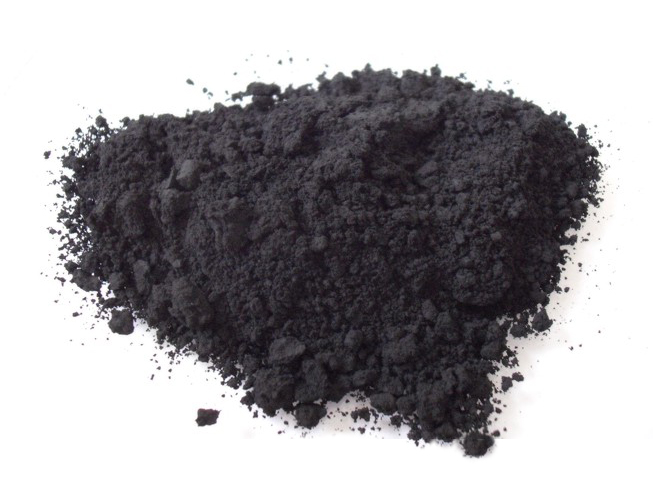
Carbon black
A deep black pigment and filler made by burning carbon-rich materials with little airPigment