Carbon black
A deep black pigment and filler made by burning carbon-rich materials with little air
No single value: Carbon black is a material, and its colour varies. The background shows its family, black.
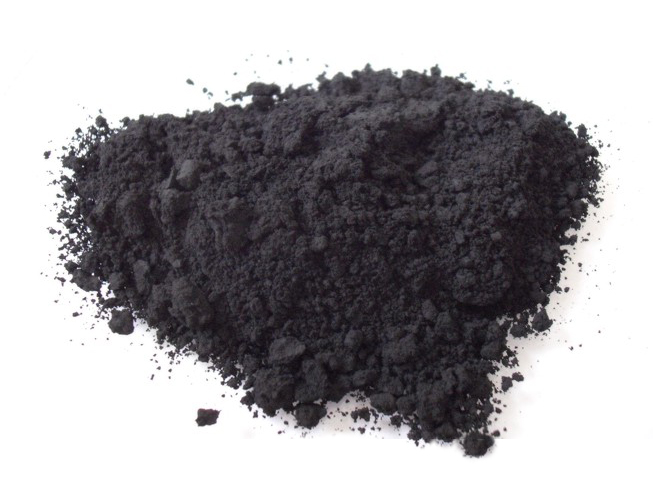
Carbon black is a fine black powder created by burning coal tar, plant matter, or petroleum with limited oxygen. It is mainly used to strengthen rubber in tyres, colour inks and plastics, and as a pigment in paints. Its intense blackness comes from its ability to reflect almost no visible light. Some forms are approved as food colouring in Europe, Australia, and New Zealand.
- Mainly used to make tyres stronger and longer-lasting
- Approved as food colouring E153 in Europe, Australia, and New Zealand
- Used by artists like Rembrandt and Manet for deep black paint
- Helps protect plastics from sunlight damage
- Classified as possibly carcinogenic to humans
What colour is Carbon black?
Carbon black is a very fine black powder that results from burning carbon-rich substances, such as coal tar, oil, or plant material, with very little air. It is known for its deep black colour, which comes from its ability to absorb almost all visible light. Unlike soot, it contains very little of the harmful compounds found in smoke and has a much larger surface area for its size.
Where does Carbon black come from?
The name 'carbon black' refers to its main ingredient, carbon, and its dark appearance. Traditional forms were made by burning materials like bones, wood, or grape vines, each giving rise to names such as ivory black and vine black. Over time, new industrial methods have replaced these old techniques, but the pigment has been used in art and industry for centuries.
How is Carbon black made?
To produce carbon black, carbon-rich materials are burned with a limited supply of air, which prevents them from turning fully to ash. The resulting fine powder can be collected and processed further. Different sources and methods, such as using oil, coal tar, or plant matter, lead to slightly different types of carbon black, each with its own properties.

Where Carbon black is used
Most carbon black is used to reinforce rubber, especially in car tyres, making them stronger and longer-lasting. It is also added to plastics, paints, inks, and coatings for its colouring power and ability to block light. In the food industry, a form made from plants is used as a black food dye in some countries. It also finds use in batteries, electronics, and packaging.
Black around the world
What the black family means from country to country.
The black eagle gives the country its own name for itself: Shqiperia is commonly read as the land of the eagles.
Politics and protestPrideSource: AlbaniaBlack and yellow were the colours of the Habsburg monarchy. They come from the black double-headed eagle on a gold ground used by the Holy Roman Emperors.
Royalty and powerSource: Flag of the Habsburg monarchyThe black upper half of the Aboriginal flag stands for the Aboriginal people of Australia.
Politics and protestPrideSource: Australian Aboriginal flagOn 21 February, Language Martyrs' Day, people wear black badges and black and white clothes and walk barefoot to the Shaheed Minar to honour those killed in 1952.
Mourning and deathPolitics and protestGriefSource: Bengali language movementThe black, yellow and red of the flag come from the arms of the Duchy of Brabant: a gold lion with red claws and tongue on black. They were raised in the 1830 revolution.
Politics and protestPrideSource: Flag of BelgiumTwo diagonal stripes cross the yellow of the flag, one white and one black. They stand for the Sultan's two chief ministers.
Politics and protestSource: Flag of BruneiShades and relatives of Carbon black
There are several traditional types of carbon black, each named for its source or method of production, such as ivory black (from bones), vine black (from grape vines), and lamp black (from oil lamps). These types can differ slightly in shade and texture. Modern industrial carbon blacks are more uniform and are chosen for specific uses.
Questions people ask about Carbon black
What colour is carbon black?
Carbon black is an intense, deep black powder that reflects almost no visible light, making it one of the darkest pigments available.
Where does the name 'carbon black' come from?
The name comes from its main ingredient, carbon, and its black appearance. It is made by burning carbon-rich materials with limited air.
What is carbon black used for?
It is mainly used to reinforce rubber in tyres, colour plastics, inks, and paints, and as a food dye in some countries.
Is carbon black safe?
Carbon black is considered possibly carcinogenic if inhaled as dust, but in most products it is bound in a solid form and not easily released. Some forms are approved for use in food in Europe, Australia, and New Zealand.
How is carbon black different from soot?
Unlike soot, carbon black has a much higher surface area and contains very little of the harmful compounds found in smoke.
Good reading and sources
- Carbon black on WikipediaEncyclopedia
- More pictures on Wikimedia CommonsPictures
- Wikidata recordOpen data
The facts on this page come from the Wikipedia article "Carbon black", written by its contributors and used under the CC BY-SA 4.0 licence, and from its Wikidata record (CC0). Rang rewrote the text in its own words, with AI assistance, and compares every page with the article to make sure no passage is copied. It may be reused under the same CC BY-SA 4.0 licence with a link back.
It may contain mistakes. The swatch is an approximation: named colours are not fixed standards, and every screen shows them a little differently. If something is wrong, tell us. Last refreshed 2026-10-03.
More of the black family
All of black
Black
India ink
A deep black ink made from carbon soot, used for writing, drawing and calligraphyPigment · 🇨🇳 China +1

Black
Kohlكُحْل
A dark eye cosmetic made from minerals like galena and stibniteTraditional colour · 🇪🇬 Egypt +5

Black
Vantablack
A super-black coating made from carbon nanotubes that absorbs nearly all visible lightPigment

Black
Bone char
A deep black pigment and filter made by charring animal bonesPigment

Black
Magnetite
A naturally magnetic black mineral and a major source of ironColour named from nature

Black
Ebony
A jet-black hardwood valued for its smooth finish and rarityColour named from nature · 🇪🇬 Egypt +5
Black
Onyx
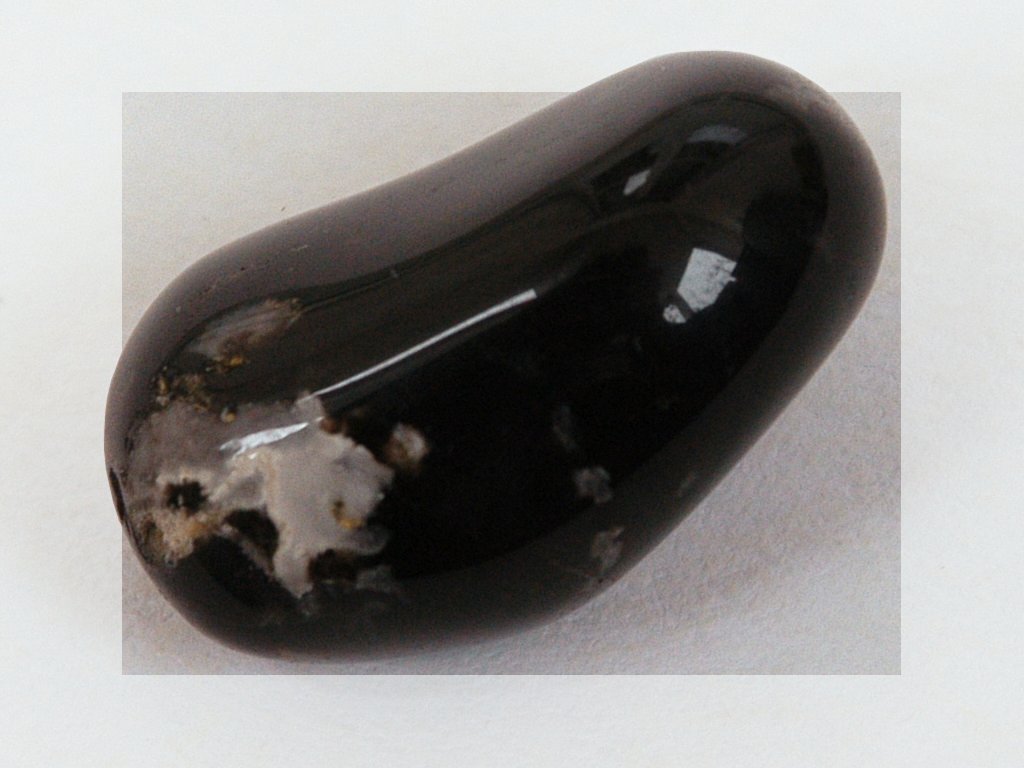
A banded stone, usually black and white, prized for carving and jewelleryColour named from nature · 🇲🇽 Mexico +5

Black
Manganese dioxide
A black-brown mineral oxide used in batteries, pigments, and chemical reactionsPigment