Egyptian blue
A vivid blue pigment first made in ancient Egypt from copper, lime, and sand

Egyptian blue is a bright blue pigment created by heating quartz sand, copper, lime, and alkali. First made in Egypt over 4,000 years ago, it is the earliest known synthetic pigment and was widely used in art and decoration until the end of the Roman era. Its recipe was lost for centuries before being rediscovered by modern scientists.
Share on WhatsAppOpen in the lab
- First synthetic pigment known to history
- Made from sand, copper, lime, and alkali
- Used in Egypt from about 3250 BC to Roman times
- Colour ranges from light to dark blue
- Recipe was lost after the Roman era
What colour is Egyptian blue?
Egyptian blue is a striking blue pigment, notable for its vivid, medium-to-dark blue shade. It stands out for being the first synthetic pigment ever made, with a colour that ranges from deep to light blue depending on how finely it is ground and the exact recipe used. Its unique tone comes from a compound called calcium copper tetrasilicate, which forms blue crystals when heated with sand, copper, and lime. This pigment was highly valued in ancient times for its resemblance to rare blue stones like lapis lazuli.
Where does Egyptian blue come from?
The name 'Egyptian blue' comes from its invention in ancient Egypt, where blue was especially prized. The pigment was first made during Egypt's Fourth Dynasty and used for thousands of years. Ancient Egyptians wanted to imitate the look of turquoise and lapis lazuli, which were rare and costly. The pigment was known as 'caeruleum' by the Romans and 'kyanos' by the Greeks. The original method of making Egyptian blue was forgotten after the Roman era and only rediscovered in the 19th century.
How is Egyptian blue made?
To make Egyptian blue, ancient craftsmen heated a mix of quartz sand, copper (from ore or scrap), lime, and an alkali such as natron or plant ash at high temperatures, usually between 800 and 1,000°C. The process produced blue crystals called cuprorivaite, with unreacted sand and some glass. The exact shade and texture depended on the recipe and how finely the pigment was ground. Modern analysis has allowed scientists to reconstruct the process and understand its chemistry.

Where Egyptian blue is used
Egyptian blue was used widely in ancient Egypt for painting tombs, statues, and wall decorations. It also appeared in ceramics and architectural details. Its use spread to the Near East, Greece, and the Roman Empire. After the Roman period, the pigment fell out of use and was not produced again until modern times, when its recipe was reconstructed by scientists.
What Egyptian blue means
Although blue was highly valued in ancient Egypt, especially for its resemblance to precious stones, the sources do not mention specific symbolic meanings for Egyptian blue itself. Its main importance was as a material that allowed artists and craftsmen to create blue objects and decorations when natural blue minerals were scarce.
Blue around the world
What the blue family means from country to country.
Ancient craftsmen made Egyptian blue, one of the first synthetic pigments, and blue-glazed faience for amulets. Blue stood for the sky and the Nile.
Sacred and holyProtection and healingAweSource: Egyptian blueMany households hang a blue glass bead with an eye on it by the door or in the car to keep off the evil eye, known as hasad. Blue eye beads were already made in ancient Egypt.
Protection and healingSource: Nazar (amulet)The flag is blue and white, with nine stripes and a white cross. The colours are usually read as the sea and sky and the white of the waves and clouds.
Politics and protestNature and renewalPrideSource: Flag of GreeceA blue glass eye, the mati, is worn on a chain or hung in homes and cars against the evil eye. Blue is held to be the colour that turns the harm back.
Protection and healingSource: Evil eyeNational sports teams play in blue and are called the Azzurri. Blue was the colour of the House of Savoy, which ruled Italy until 1946, and does not appear on the flag.
Royalty and powerFestival and celebrationPrideSource: National colours of ItalyLapis lazuli has been mined in the mountains of Badakhshan for more than six thousand years. Ground to powder it gave ultramarine, the costliest blue in European painting.
Royalty and powerSacred and holyAweSource: Lapis lazuliShades and relatives of Egyptian blue
Egyptian blue can appear in several shades, from dark blue in coarse forms to light blue when finely ground or when more glass is present. The colour can also look diluted if a lot of alkali is used in the recipe. If the mixture contains too much lime, the pigment may turn green. The pigment is sometimes confused with blue frit, but the terms are not always used consistently.
Colours that go with Egyptian blue
Harmonies are worked out from the value #1034A6. Contrast ratios follow the WCAG 2 formula.
Questions people ask about Egyptian blue
What colour is Egyptian blue?
Egyptian blue is a vivid blue, ranging from medium to dark shades depending on how it is made and ground. It was prized for its resemblance to rare blue stones.
Where does the name Egyptian blue come from?
The name comes from its invention and use in ancient Egypt, where blue was highly valued and the pigment was first made over 4,000 years ago.
How was Egyptian blue made?
It was made by heating quartz sand, copper (from ore or scrap), lime, and an alkali like natron or plant ash at high temperatures, producing blue crystals called cuprorivaite.
What was Egyptian blue used for?
It was used in ancient Egypt for painting tombs, statues, wall decorations, and in ceramics and architecture. Its use spread to Greece and the Roman Empire.
Why did Egyptian blue fall out of use?
After the Roman era, the knowledge of how to make Egyptian blue was lost, and it was not produced again until scientists reconstructed its recipe in modern times.
Good reading and sources
- Egyptian blue on WikipediaEncyclopedia
- More pictures on Wikimedia CommonsPictures
- Wikidata recordOpen data
The facts on this page come from the Wikipedia article "Egyptian blue", written by its contributors and used under the CC BY-SA 4.0 licence, and from its Wikidata record (CC0). Rang rewrote the text in its own words, with AI assistance, and compares every page with the article to make sure no passage is copied. It may be reused under the same CC BY-SA 4.0 licence with a link back.
It may contain mistakes. The swatch is an approximation: named colours are not fixed standards, and every screen shows them a little differently. If something is wrong, tell us. Last refreshed 2026-10-03.
More of the blue family
All of blue
Blue
Lapis lazuli
A deep blue stone prized for jewellery and the source of ultramarine pigmentColour named from nature · 🇦🇫 Afghanistan +5
#6A5DFF
Indigo
A deep blue named for the dye once exported from IndiaNamed shade · 🇮🇳 India +5

Blue
Azurite
A deep blue copper mineral once prized as a pigment and gemstonePigment · 🇫🇷 France +5

Blue
Woad
A blue dye once vital to Europe's textile trade, made from the leaves of a flowering plantDye · 🇫🇷 France +3
Blue
Indigo
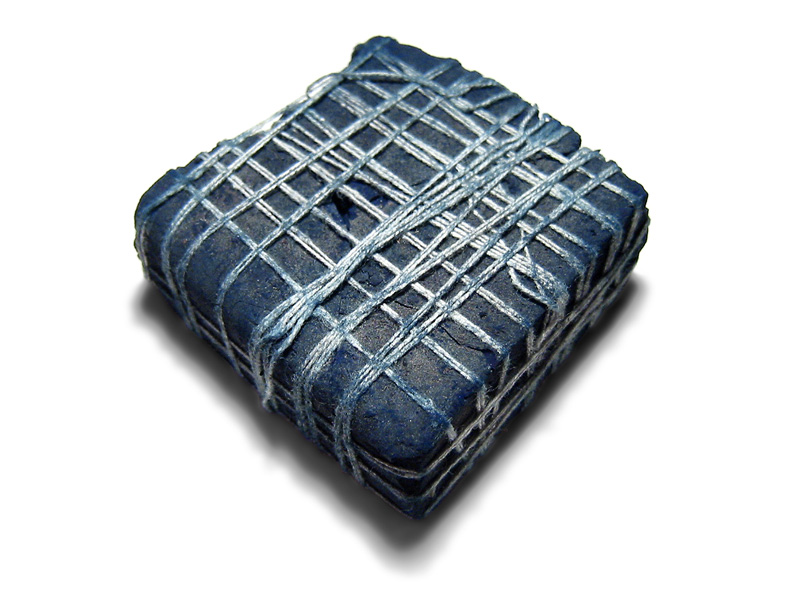
A deep blue dye from plants, now mostly made synthetically and known for colouring denimDye · 🇮🇳 India +5
Blue
Methylene blue
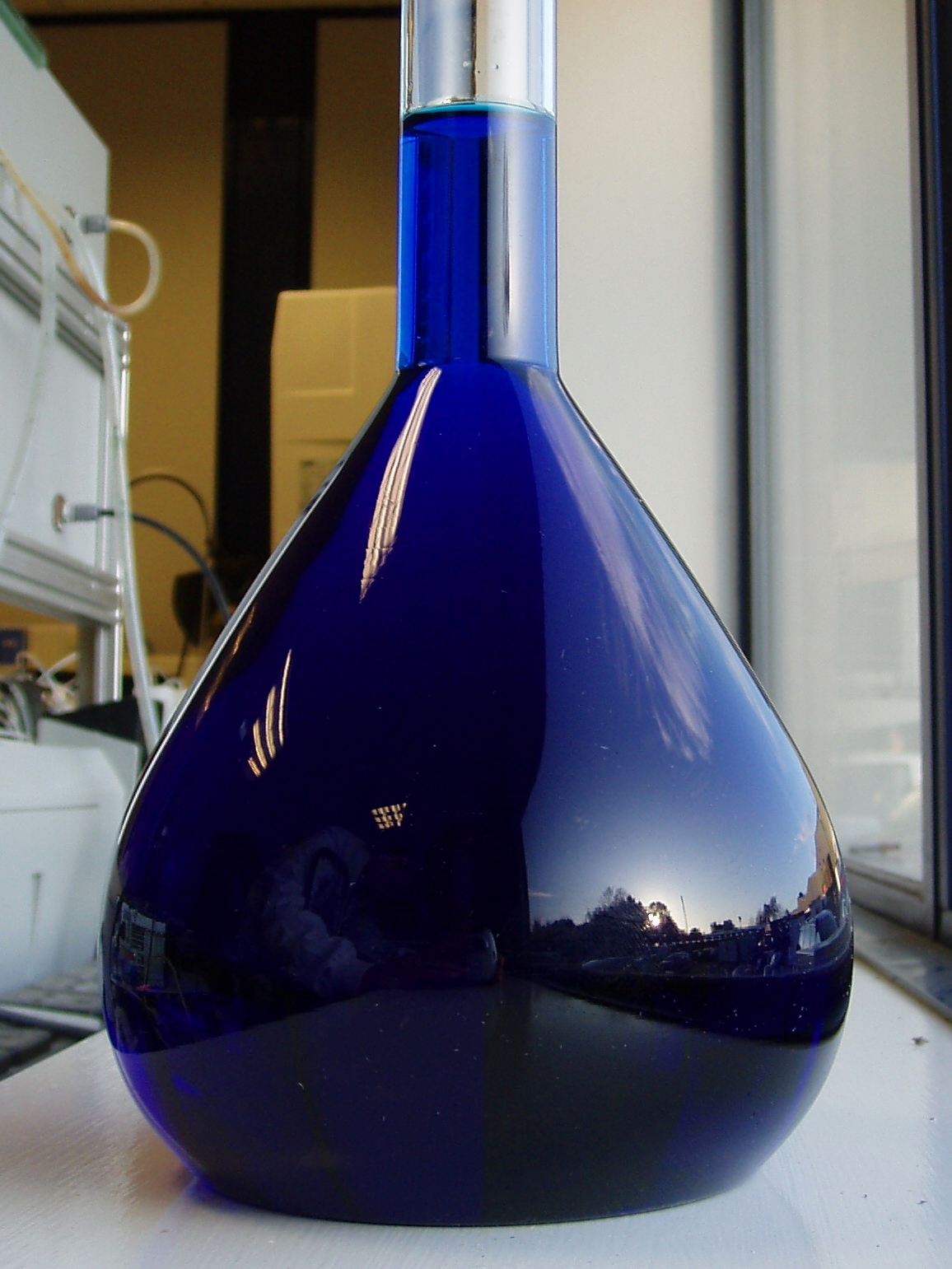
A synthetic blue dye and medicine first made in 1876Dye
#120A8F
Ultramarine
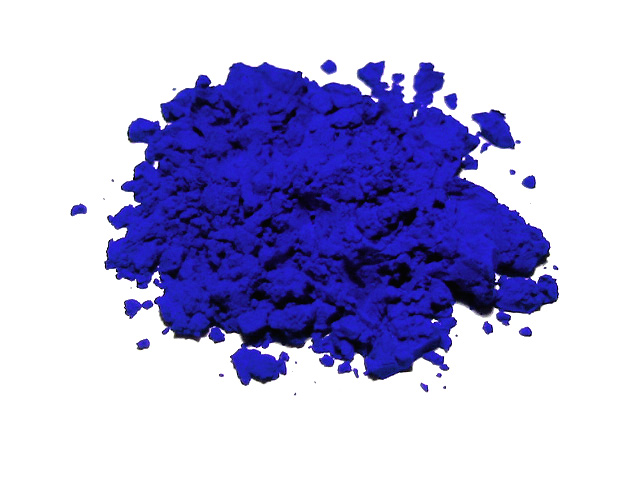
A deep blue pigment once made from lapis lazuli, prized for centuries in artPigment · 🇦🇫 Afghanistan +2

#003153
Prussian blue
A deep blue pigment first made in Berlin in the early 1700sPigment · 🇯🇵 Japan
More colours tied to Egypt
The colours of Egypt
#FFFF00
Yellow
A primary colour between green and orange, seen in sunlight, leaves, and pigmentsBasic colour · 🇫🇷 France +5

Green
Malachite
A banded green mineral and pigment once prized for art and decorationColour named from nature · 🇪🇬 Egypt +4

#CC7722
Ochre
A natural earth pigment ranging from yellow to deep orange or brownPigment · 🇦🇺 Australia +5

#40E0D0
Turquoise
A blue-green colour named after a prized mineral long used for gems and decorationNamed shade · 🇮🇷 Iran +5