Ochre
A natural earth pigment ranging from yellow to deep orange or brown

Ochre is a group of natural clay earth pigments made from ferric oxide mixed with clay and sand, producing colours from yellow to deep orange or brown. Used since prehistoric times, ochre has been important in art, ritual, and decoration in many cultures, with red and yellow varieties especially valued for painting, body marking, and burial rites.
Share on WhatsAppOpen in the lab
- Used as pigment for over 300,000 years
- Ranges from yellow to deep orange or brown
- Red ochre contains more hematite
- Sacred in Māori and Aboriginal Australian cultures
- Found in ancient cave paintings in France and Spain
What colour is Ochre?
Ochre is a natural earth pigment that comes in shades from yellow to deep orange and brown. It is made from clay coloured by ferric oxide, with the exact shade depending on the amount and type of iron minerals present. Red ochre contains more hematite, giving it a reddish tint, while yellow ochre is rich in limonite. Ochre is found in many parts of the world and has been used for thousands of years for its strong, lasting colours.
Where does Ochre come from?
The word 'ochre' comes from the Ancient Greek 'ὤχρα', meaning 'pale'. People have used ochre since prehistoric times, with evidence from Africa dating back 300,000 years. It was important in early art, burial practices, and rituals across many cultures, including Aboriginal Australians, Ancient Egyptians, Greeks, and Māori in New Zealand. Different types of ochre were chosen for their colour and texture, sometimes transported over long distances for special uses.
How is Ochre made?
Ochre is collected as natural clay earth, which contains ferric oxide mixed with clay and sand. The pigment is prepared by grinding the earth and sometimes heating it to deepen the colour. Red ochre is richer in hematite, while yellow ochre contains limonite. Other minerals like goethite, kaolin, or gypsum can also be present, affecting the final shade. Some ochres are used straight from the ground, while others are processed for use in paint or decoration.



Where Ochre is used
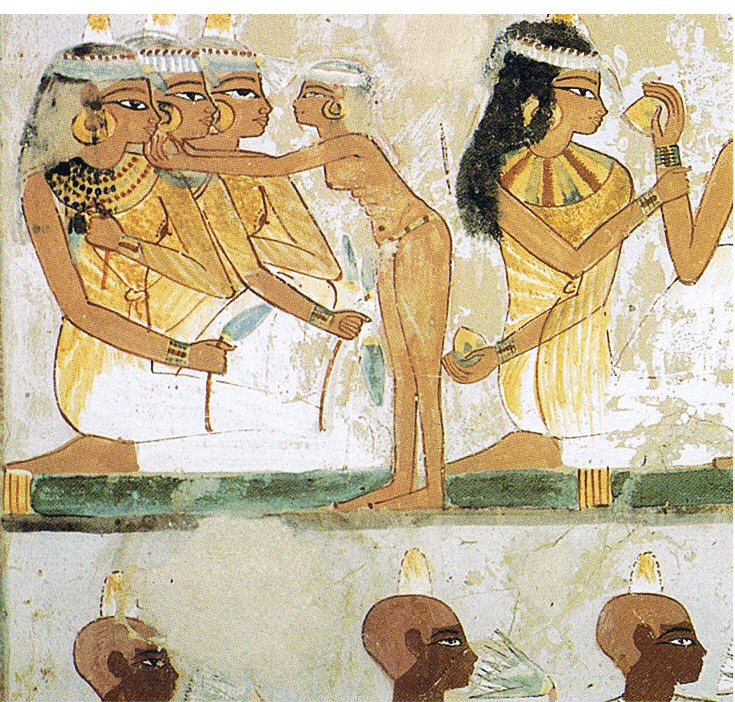
Ochre has been used in painting, body decoration, dyeing textiles, and even in architecture and ceramics. Prehistoric people painted cave walls and objects with ochre, and it was used in burials and rituals. In Ancient Egypt, ochre coloured tomb paintings and was used as a cosmetic. Māori in New Zealand used red ochre mixed with fish oil for body paint and to protect wood. In Europe, ochre was used for painting, marking sheep, and waterproofing structures.
What Ochre means
Ochre has held sacred and symbolic meanings in many cultures. In Ancient Egypt, yellow ochre was linked to gold and the divine, while red ochre was used in burials and as makeup. Among the Māori, red ochre was considered sacred and used for protection. In ancient Phoenicia, red ochre symbolised life, death, and rebirth, and was used in funerary rites. Its use in burials often stood for purity, protection, or a connection to the earth.
Orange around the world
What the orange family means from country to country.
The flag used from 1928 to 1994 was orange, white and blue, after the old Dutch Prince's Flag. It is now tied to the apartheid years, and displaying it has been ruled hate speech.
Politics and protestSource: Flag of South Africa (1928–1994)The lowest band of the flag is orange, often called apricot, after the national fruit. The constitution says it stands for the creative talent and hard work of the people.
Politics and protestNature and renewalPrideSource: Flag of ArmeniaThe flag is split corner to corner. The orange half stands for the Buddhist tradition, and the white dragon across the middle for purity.
Sacred and holySource: Flag of BhutanOn 30 September people wear orange shirts to remember the children sent to residential schools. Phyllis Webstad's new orange shirt was taken from her on her first day at one.
Mourning and deathPolitics and protestGriefSource: National Day for Truth and ReconciliationOrange is also the colour of the New Democratic Party. Its sweep of Quebec seats in the 2011 election was called the Orange Wave.
Politics and protestSource: New Democratic PartyThe flag shows the island in copper orange on white. The colour recalls copper, which was mined here in ancient times and may have taken its name from Cyprus.
Politics and protestNature and renewalSource: Flag of CyprusShades and relatives of Ochre
Ochre includes several related pigments: yellow ochre (limonite), red ochre (hematite), purple ochre, brown ochre (goethite), and others like sienna and umber, which contain manganese. White ochre or pipe clay refers to kaolin or gypsum. The exact colour varies with mineral content and processing, and ochre is sometimes confused with these related earth pigments.
Colours that go with Ochre
Harmonies are worked out from the value #CC7722. Contrast ratios follow the WCAG 2 formula.
Questions people ask about Ochre
What colour is ochre?
Ochre is a natural earth pigment that ranges from yellow to deep orange or brown, depending on the minerals present. Red ochre is a variant with a reddish tint due to more hematite.
Where does the name 'ochre' come from?
The name 'ochre' comes from the Ancient Greek word 'ὤχρα', which means 'pale'.
How is ochre made or collected?
Ochre is gathered as natural clay earth containing ferric oxide mixed with clay and sand. It is ground and sometimes heated to produce pigment for painting or decoration.
What has ochre been used for?
Ochre has been used in painting, body decoration, dyeing textiles, and in rituals and burials. It appears in prehistoric cave art, Ancient Egyptian tombs, and Māori cultural practices.
Does ochre have special meanings?
Yes, ochre has symbolised sacredness, protection, and purity in cultures such as Ancient Egypt, Phoenicia, and among the Māori, often used in rituals and burials.
Good reading and sources
The facts on this page come from the Wikipedia article "Ochre", written by its contributors and used under the CC BY-SA 4.0 licence, and from its Wikidata record (CC0). Rang rewrote the text in its own words, with AI assistance, and compares every page with the article to make sure no passage is copied. It may be reused under the same CC BY-SA 4.0 licence with a link back.
It may contain mistakes. The swatch is an approximation: named colours are not fixed standards, and every screen shows them a little differently. If something is wrong, tell us. Last refreshed 2026-10-03.
More of the orange family
All of orange
Orange
Annatto
A yellow-orange dye and flavour from the seeds of the achiote treeDye · 🇲🇽 Mexico +5

#F4C430
Saffron
A yellow-orange shade named after the colour of saffron crocus threadsNamed shade · 🇮🇳 India +1

#E73501
Chrome orange
A yellowish to deep orange pigment once prized by 19th-century paintersPigment
Orange
Tenné
A rare heraldic stain of orange-tawny, named for tanned leatherNamed shade · 🇫🇷 France +3

#FF4203
Minium
A bright orange-red pigment made by heating lead, once common in medieval manuscriptsPigment · 🇨🇳 China +5

Orange
Perinone
A group of organic pigments with orange and red isomersPigment
Orange
Flexirubin
A yellow-orange pigment found in certain bacteriaPigment
Orange
Pigment Orange 36
A synthetic orange pigment valued for its lasting colour in paints and coatingsPigment
More colours tied to Australia
The colours of Australia
#87CEEB
Sky blue
A light blue named for the colour of a clear daytime skyNamed shade · 🇦🇷 Argentina +5

#800000
Maroon
A deep brownish red named for the French word for chestnutNamed shade · 🇦🇺 Australia +4

#000080
Navy blue
A deep blue shade named for the uniforms of the Royal NavyNamed shade · 🇺🇸 United States +2
#002366
Royal blue
A strong, deep blue linked with royalty and national flagsNamed shade · 🇫🇷 France +4