Brazilwood red
In its own language: ybyrapytanga
A deep orange-red dye from the heartwood of Brazil’s national tree
No single value: Brazilwood red is a material, and its colour varies. The background shows its family, red.

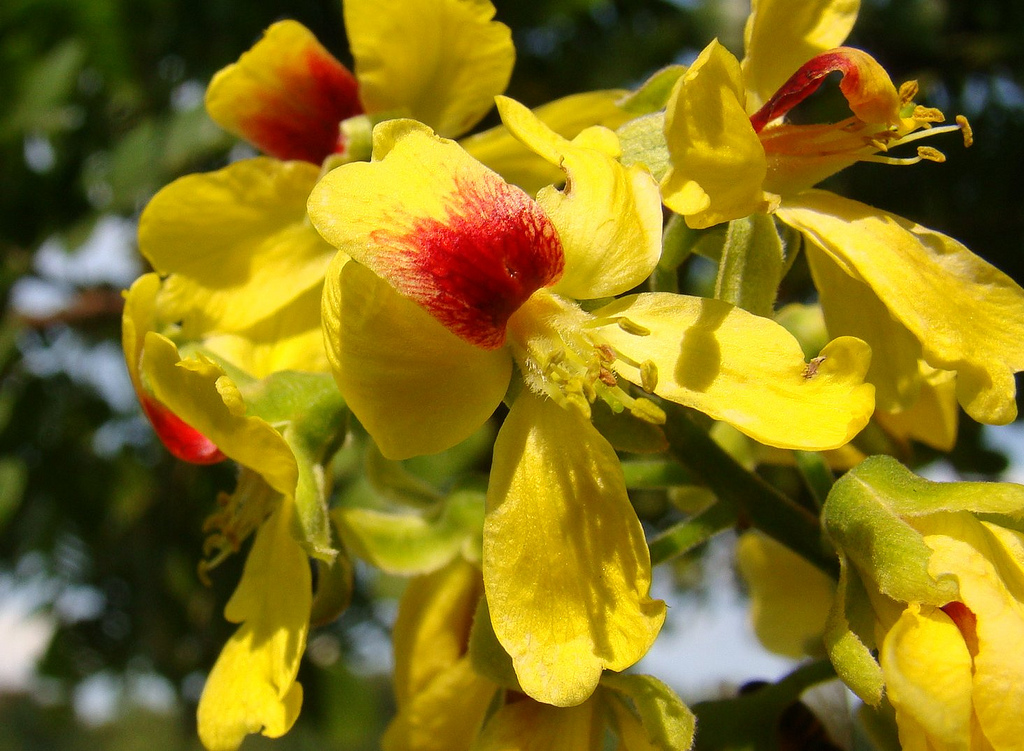
Brazilwood red is a rich orange-red colour obtained from the heartwood of Paubrasilia echinata, a tree native to Brazil’s Atlantic Forest. The dye, called brazilin, was once highly prized in Europe for luxury textiles and gave its name to the country of Brazil.
- Brazilwood red dye gave Brazil its name
- Made from the heartwood of Paubrasilia echinata
- Once a prized dye for luxury European textiles
- Tree is now endangered from overharvesting
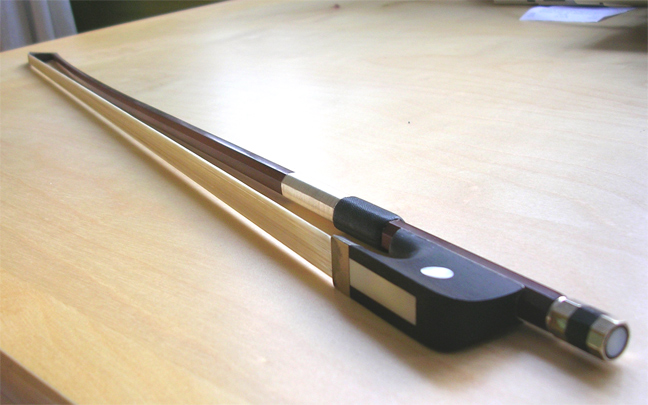
- Pernambuco wood is used for violin bows
What colour is Brazilwood red?
Brazilwood red is a strong orange-red colour that comes from the heartwood of the Paubrasilia echinata tree. The wood itself is dense and takes a high polish, but it is the dye, called brazilin, that stands out for its deep, glowing red. When exposed to air, brazilin turns into brazilein, which gives a lasting red shade. This colour is richer and more intense than most other natural reds, and it was once the standard for luxury red textiles in Europe.
Where does Brazilwood red come from?
The name 'brazilwood' comes from the Portuguese 'pau-brasil', meaning 'ember-like wood', and from the Tupi word 'ybyrapytanga', meaning 'reddish wood'. Portuguese explorers recognised the tree as a source of red dye similar to Asian sappanwood, but soon found it to be superior. The trade in this dye was so important that the country itself was named after the wood: Brazil. The dye was widely exported from the 16th century, and the tree’s scientific name has changed over time as botanists learned more about it.
How is Brazilwood red made?
Brazilwood red dye is made by extracting brazilin from the heartwood of Paubrasilia echinata. The wood is cut and processed to release the dye, which is then used to colour textiles and sometimes for body decoration. When the dye is exposed to air, it oxidises to brazilein, giving a stable red colour. The tree is now endangered due to overharvesting for both dye and bow-making.


Where Brazilwood red is used
The dye from brazilwood was once a major export from Brazil, used in Europe to colour luxury fabrics such as velvet. It was also used in art and for body decoration. In addition, the wood itself is highly valued for making bows for stringed instruments, where it is known as Pernambuco wood. Today, the use of the dye is rare due to the endangered status of the tree.
Red around the world
What the red family means from country to country.
Red is the colour of the Workers' Party, founded in 1980, whose symbol is a red star. Its rallies are a sea of red shirts and flags.
Politics and protestSource: Workers' Party (Brazil)The red Phrygian cap, a soft cap with the tip pulled forward, became the sign of liberty in the Revolution. Marianne, the figure of the Republic, still wears it.
Politics and protestCourageSource: Phrygian capThe flag uses the four Pan-Arab colours: a red bar at the hoist with green, white and black bands. It was designed by a young Emirati, Abdullah Al Maainah, in 1971.
Politics and protestPrideSource: Flag of the United Arab EmiratesThe flag is a black double-headed eagle on red, the banner of the fifteenth-century hero Skanderbeg. Fans chant Kuq e Zi, red and black.
Politics and protestPrideSource: Flag of AlbaniaArmenian scribes painted manuscripts with vordan karmir, a crimson dye made from an insect that lives on the roots of grasses in the Ararat plain.
Sacred and holySource: Armenian cochinealUnder Juan Manuel de Rosas in the 1830s and 1840s, everyone had to wear a scarlet ribbon to show loyalty to his Federalist party. His enemies, the Unitarians, were tied to sky blue.
Politics and protestFearSource: Juan Manuel de RosasShades and relatives of Brazilwood red
Other trees, such as Asian sappanwood and Haematoxylum brasiletto, also produce similar red dyes and are sometimes called brazilwood. In the context of violin bows, 'brazilwood' can refer to several different species, but the most prized is Paubrasilia echinata, known as Pernambuco wood. The colour may be confused with other natural reds, but brazilwood red is noted for its depth and warmth.
Questions people ask about Brazilwood red
What colour is brazilwood red?
It is a deep orange-red dye that comes from the heartwood of the Paubrasilia echinata tree, known for its rich and glowing red shade.
Where does the name brazilwood come from?
The name comes from the Portuguese 'pau-brasil', meaning 'ember-like wood', and from the Tupi word 'ybyrapytanga', meaning 'reddish wood'. The country Brazil was named after this tree.
How was brazilwood red used?
It was mainly used as a dye for luxury textiles in Europe, especially velvet, and also in art and body decoration. The wood is also used for making bows for stringed instruments.
Is brazilwood still used today?
Due to overharvesting, the tree is now endangered and the dye is rarely used. The wood is still valued for making high-quality bows, but trade is strictly controlled.
Good reading and sources
- Paubrasilia on WikipediaEncyclopedia
- More pictures on Wikimedia CommonsPictures
- Wikidata recordOpen data
The facts on this page come from the Wikipedia article "Paubrasilia", written by its contributors and used under the CC BY-SA 4.0 licence, and from its Wikidata record (CC0). Rang rewrote the text in its own words, with AI assistance, and compares every page with the article to make sure no passage is copied. It may be reused under the same CC BY-SA 4.0 licence with a link back.
It may contain mistakes. The swatch is an approximation: named colours are not fixed standards, and every screen shows them a little differently. If something is wrong, tell us. Last refreshed 2026-10-03.
More of the red family
All of red
Red
Cinnabar
A scarlet to brick-red mineral and the main source of mercury and vermilion pigmentColour named from nature · 🇪🇸 Spain +5

Red
Realgar
An orange-red arsenic sulfide mineral once used as a pigment and poisonPigment · 🇨🇳 China +5
Red
Carmine
A deep red pigment made from cochineal insects, once prized across continentsPigment · 🇫🇷 France +2

#E25822
Scarlet
A bright red with a touch of orange, long tied to power, sacrifice and sinNamed shade · 🇹🇷 Turkey +4

#E34234
Vermilion
A brilliant orange-red pigment, once made from toxic mercury orePigment · 🇹🇷 Turkey +5

Red
Rubia
A group of plants whose roots once dyed cloth and paint a lasting redColour named from nature · 🇪🇬 Egypt +5

#DC143C
Crimson
A deep red with a hint of purple, once made from insectsNamed shade · 🇳🇵 Nepal

#E32636
Alizarin
A deep red dye first made from madder roots, later produced from coal tarDye · 🇹🇷 Turkey +1
More colours tied to Brazil
The colours of Brazil
Orange
Annatto
A yellow-orange dye and flavour from the seeds of the achiote treeDye · 🇲🇽 Mexico +5
Red
Brazilin
A red dye from brazilwood and sappanwood, used in textiles and paints since the Middle AgesDye · 🇧🇷 Brazil +4

#86A1A9
Tourmalineටෝරමල්ලි
A mineral group prized for its rainbow of gemstone coloursColour named from nature · 🇱🇰 Sri Lanka +5
Black
Onyx
A banded stone, usually black and white, prized for carving and jewelleryColour named from nature · 🇲🇽 Mexico +5