Henna
In its own language: حِنَّاء
A reddish dye from the henna plant, used for body art and hair since ancient times
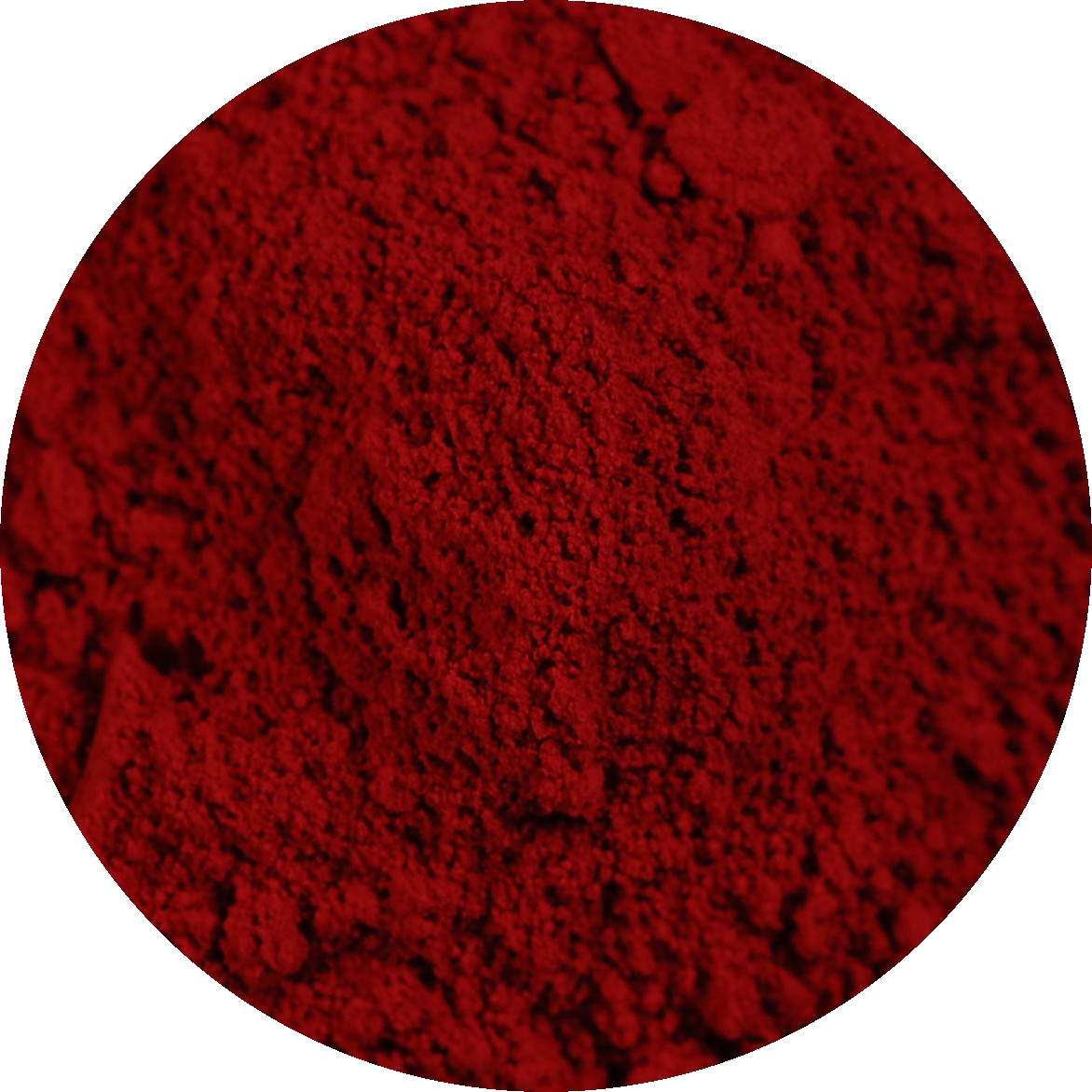
No single value: Henna is a material, and its colour varies. The background shows its family, red.

Henna is a reddish dye made from the powdered leaves of the Lawsonia inermis plant. It has coloured skin, hair, and fabrics in North Africa, the Middle East, and South Asia since ancient times, especially for body art and wedding rituals. Its stain deepens from orange to reddish brown and lasts up to three weeks.
- Henna is made from the dried leaves of Lawsonia inermis.
- It stains skin and hair a reddish brown that deepens over three days.
- Henna is central to wedding and festival rituals in many cultures.
- The dye has been used since ancient Egypt and the Middle East.
- Only true henna gives a reddish brown stain; 'black henna' is different.
What colour is Henna?
Henna is a natural dye that gives a reddish brown stain, most often seen on skin and hair. It is made from the powdered leaves of the Lawsonia inermis shrub. The colour starts as orange and deepens to a rich reddish brown over a few days. Henna is best known for its use in temporary body art, especially for hands and feet, and for dyeing hair and fabrics. Its stain is strongest on palms and soles, where the skin is thickest.
Where does Henna come from?
The word 'henna' comes from Arabic. The dye has been used since ancient times in North Africa and the Middle East, including Egypt and the Maghreb. Its use spread from these regions to the Indian subcontinent, West Africa, and parts of Europe. Ancient Egyptians used henna for hair, nails, and even funeral wrappings. The plant's use in body art and rituals is recorded in early Mediterranean and Near Eastern cultures.
How is Henna made?
Henna dye is made by drying, milling, and sifting the leaves of the henna plant. The powder is mixed with water, lemon juice, or tea, and sometimes sugar or essential oils, to form a paste. The paste is left to rest so the dye can be released. It is then applied to skin or hair and left for several hours. The longer it stays, the deeper the colour. Only the active chemical in the leaves, called lawsone, stains the skin.


Where Henna is used
Henna is most famous for body art, especially in wedding and festival celebrations. It is also used to dye hair, fingernails, and fabrics such as silk, wool, and leather. In North Africa, the Middle East, and South Asia, henna is part of many traditions, with special patterns for brides. It was used in ancient Egypt and is still popular worldwide. Henna designs can be simple or very elaborate, depending on local custom.
What Henna means
Henna is closely linked to weddings, luck, and celebration in many cultures across North Africa, the Middle East, and South Asia. It is believed to bring blessings and joy, especially for brides. In Muslim, Jewish, Hindu, and Sikh communities, henna is applied for festivals and life events. The Night of the Henna is a key pre-wedding ritual, and patterns may also be used for protection and marking special occasions.
How Henna feels
Our sources tie Henna to joy. Such links differ from one culture to the next.
Red around the world
What the red family means from country to country.
The ancient Egyptians called the desert deshret, the red land. Red was the colour of the god Set, of chaos and of danger, and scribes wrote unlucky words in red ink.
Danger and warningFearSource: RedThe flag is red, white and black. Red recalls the struggle before the 1952 revolution, white the revolution itself, which was nearly bloodless, and black the end of oppression.
Politics and protestPrideSource: Flag of EgyptMany Hindu brides marry in a red sari or lehenga. In much of north India a married woman wears sindoor, a red powder, along the parting of her hair.
Weddings and marriageLuck and prosperityJoyLoveSource: SindoorOn the last Tuesday night before Nowruz, people jump over small bonfires and chant a line that gives their yellow, meaning sickness, to the fire and takes its red, meaning health.
Festival and celebrationProtection and healingEnergySource: Chaharshanbe SuriOn Yalda, the longest night of the year, families sit up late eating pomegranates and watermelon. The red fruit stands for the glow of dawn and of life.
Festival and celebrationHopeSource: Yalda NightThe flag is red with a green five-pointed star. Red has been the colour of the ruling Alaouite dynasty since the seventeenth century.
Politics and protestPrideSource: Flag of MoroccoShades and relatives of Henna
Only true henna from Lawsonia inermis gives a reddish brown stain. Other products called 'black henna' or 'neutral henna' do not come from the same plant and may contain different chemicals. Henna stains can vary in shade depending on the crop, how long the paste is left on, and the part of the body. The colour fades as the skin exfoliates, usually within one to three weeks.
When Henna is worn and shown
Questions people ask about Henna
What colour is henna?
Henna stains the skin and hair a reddish brown. The colour starts orange when the paste is removed and deepens to reddish brown over three days.
Where does the name 'henna' come from?
The name comes from the Arabic word حِنَّاء (ḥinnāʾ).
How is henna made?
Henna is made by drying and powdering the leaves of the Lawsonia inermis plant. The powder is mixed with a liquid and sometimes essential oils to make a paste, which is applied to skin or hair.
What is henna used for?
Henna is used for body art, especially in weddings and festivals, and to dye hair, nails, and fabrics like silk and leather.
Is black henna the same as natural henna?
No, black henna is not made from the henna plant and may contain other chemicals. Only natural henna gives a reddish brown stain.
Good reading and sources
The facts on this page come from the Wikipedia article "Henna", written by its contributors and used under the CC BY-SA 4.0 licence, and from its Wikidata record (CC0). Rang rewrote the text in its own words, with AI assistance, and compares every page with the article to make sure no passage is copied. It may be reused under the same CC BY-SA 4.0 licence with a link back.
It may contain mistakes. The swatch is an approximation: named colours are not fixed standards, and every screen shows them a little differently. If something is wrong, tell us. Last refreshed 2026-10-03.
More of the red family
All of red
Red
Cinnabar
A scarlet to brick-red mineral and the main source of mercury and vermilion pigmentColour named from nature · 🇪🇸 Spain +5

Red
Realgar
An orange-red arsenic sulfide mineral once used as a pigment and poisonPigment · 🇨🇳 China +5
Red
Carmine
A deep red pigment made from cochineal insects, once prized across continentsPigment · 🇫🇷 France +2

#E25822
Scarlet
A bright red with a touch of orange, long tied to power, sacrifice and sinNamed shade · 🇹🇷 Turkey +4

#E34234
Vermilion
A brilliant orange-red pigment, once made from toxic mercury orePigment · 🇹🇷 Turkey +5

Red
Rubia
A group of plants whose roots once dyed cloth and paint a lasting redColour named from nature · 🇪🇬 Egypt +5

#DC143C
Crimson
A deep red with a hint of purple, once made from insectsNamed shade · 🇳🇵 Nepal

#E32636
Alizarin
A deep red dye first made from madder roots, later produced from coal tarDye · 🇹🇷 Turkey +1
More colours tied to Egypt
The colours of Egypt
#FFFF00
Yellow
A primary colour between green and orange, seen in sunlight, leaves, and pigmentsBasic colour · 🇫🇷 France +5

Blue
Lapis lazuli
A deep blue stone prized for jewellery and the source of ultramarine pigmentColour named from nature · 🇦🇫 Afghanistan +5

Green
Malachite
A banded green mineral and pigment once prized for art and decorationColour named from nature · 🇪🇬 Egypt +4

Blue
Azurite
A deep blue copper mineral once prized as a pigment and gemstonePigment · 🇫🇷 France +5