Sinopia
A reddish-brown earth pigment once prized for fresco underdrawings

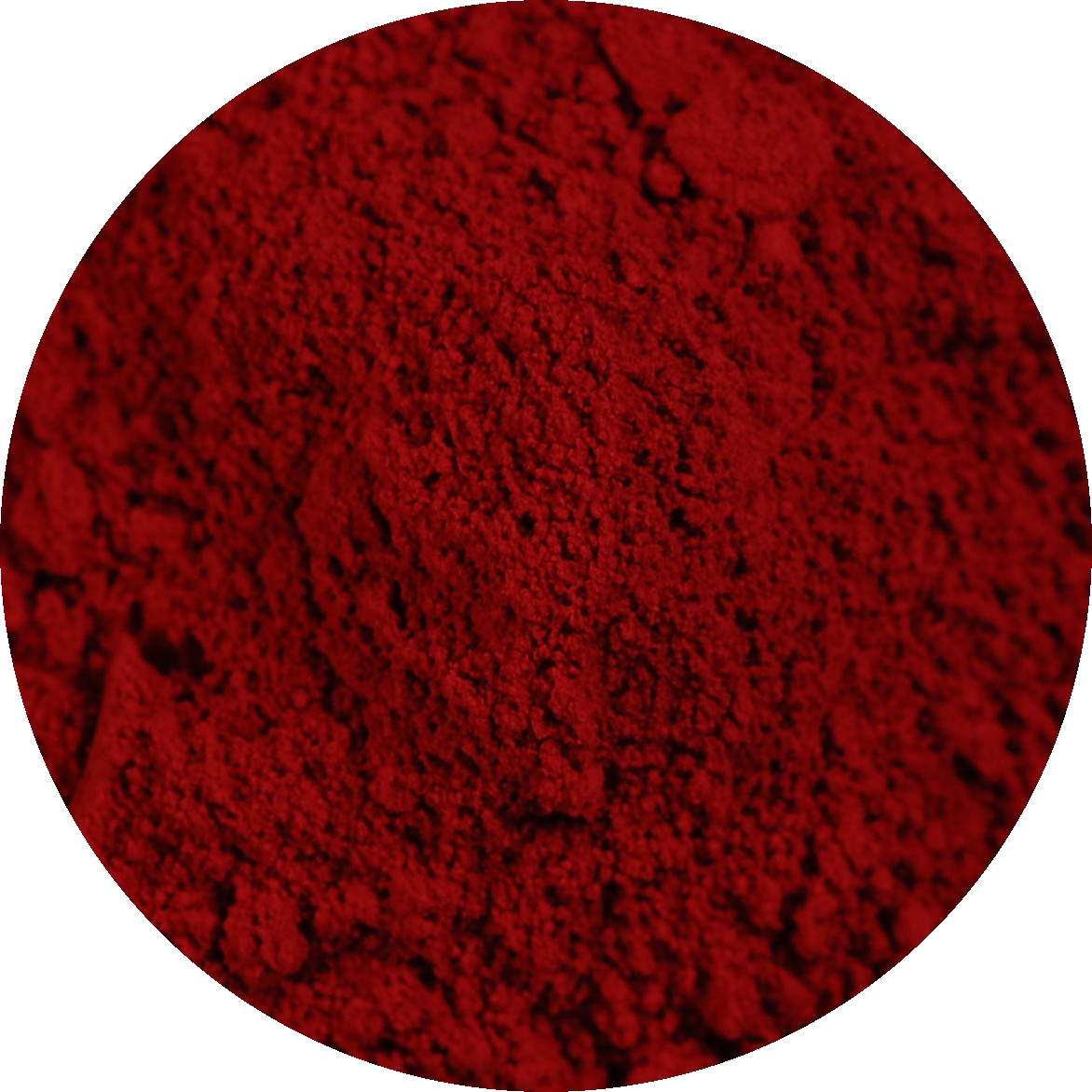
Sinopia is a natural pigment with a deep reddish-brown hue, coloured by hematite, a form of iron oxide. Named after the port of Sinop, it was valued from ancient times through the Renaissance, especially for sketching designs on plaster before painting frescoes. The word also came to mean the preparatory drawing itself.
Share on WhatsAppOpen in the lab
- Named after the port city of Sinop on the Black Sea
- Pigment's colour comes from hematite, a type of iron oxide
- Used for sketching fresco designs on plaster during the Renaissance
- Original sinopia drawings are displayed in Pisa's Museum of Sinopie
What colour is Sinopia?
Sinopia is a natural earth pigment with a rich, reddish-brown tone, created by the presence of hematite, which is a type of iron oxide. Its colour sits between red and brown, and it stands out for its earthy, muted warmth. Sinopia is not only the name of the pigment but also refers to the preparatory sketches artists made on plaster before painting frescoes. These drawings, sometimes revealed when frescos are removed from walls, are known for their subtle outlines and soft, dry appearance.
Where does Sinopia come from?
The name 'sinopia' comes from Sinop, a port city on the Black Sea, which was a key point for shipping the pigment to Europe. The pigment itself was mined in Cappadocia and valued for its quality, with genuine batches marked for authenticity. Over time, the word came to mean any red ochre in Latin and Italian, and entered English as 'sinoper.' During the Renaissance, the term covered a range of similar earthy reds.
How is Sinopia made?
Sinopia is made from hematite, a mineral form of iron oxide. The pigment was traditionally ground from red earths rich in this mineral. Artists would mill the pigment finely, sometimes mixing it with lime white to create lighter shades, especially for painting flesh tones. The dry, lean texture of sinopia made it suitable for drawing directly onto plaster.


Where Sinopia is used
Artists used sinopia mainly for sketching the outlines of frescoes on the first layer of plaster, a practice especially common in Italy. These underdrawings guided the final painting and could be seen again if the fresco was removed. Sinopia was also used in panel painting and for making flesh tones when mixed with lime white. Many original sinopia drawings are now preserved in museums, such as the Museum of Sinopie in Pisa.
Red around the world
What the red family means from country to country.
It is a custom to wear new red underwear on New Year's Eve for luck and love in the coming year. Shop windows fill with it in December.
Luck and prosperityLove and desireSource: New Year's EveRosso corsa, racing red, was the colour given to Italian cars in early international motor racing. Ferrari kept it, and it is now the colour people expect of the brand.
Festival and celebrationPrideEnergySource: Rosso corsaThe flag uses the four Pan-Arab colours: a red bar at the hoist with green, white and black bands. It was designed by a young Emirati, Abdullah Al Maainah, in 1971.
Politics and protestPrideSource: Flag of the United Arab EmiratesThe flag is a black double-headed eagle on red, the banner of the fifteenth-century hero Skanderbeg. Fans chant Kuq e Zi, red and black.
Politics and protestPrideSource: Flag of AlbaniaArmenian scribes painted manuscripts with vordan karmir, a crimson dye made from an insect that lives on the roots of grasses in the Ararat plain.
Sacred and holySource: Armenian cochinealUnder Juan Manuel de Rosas in the 1830s and 1840s, everyone had to wear a scarlet ribbon to show loyalty to his Federalist party. His enemies, the Unitarians, were tied to sky blue.
Politics and protestFearSource: Juan Manuel de RosasShades and relatives of Sinopia
Sinopia has gone by several other names, including Venetian red, Terra di Siena, and Ocra rosso, reflecting its range of shades. A lighter version mixed with lime white was called cinabrese, used especially for flesh tones. The pigment is sometimes confused with other red ochres, but its source and use in fresco underdrawings set it apart.
Colours that go with Sinopia
Harmonies are worked out from the value #CB410B. Contrast ratios follow the WCAG 2 formula.
Questions people ask about Sinopia
What colour is sinopia?
Sinopia is a deep reddish-brown, created by the mineral hematite, which is a form of iron oxide.
Where does the name sinopia come from?
The name comes from Sinop, a port city on the Black Sea, which exported the pigment to Europe.
How was sinopia used in art?
Artists used sinopia mainly to draw the first outlines of frescoes on plaster walls before applying the final colours.
What is sinopia made from?
It is made from hematite, a natural iron oxide mineral found in red earth.
Are there other names for sinopia?
Yes, it has also been called sinoper, Venetian red, Terra di Siena, Ocra rosso, and cinabrese.
Good reading and sources
The facts on this page come from the Wikipedia article "Sinopia", written by its contributors and used under the CC BY-SA 4.0 licence, and from its Wikidata record (CC0). Rang rewrote the text in its own words, with AI assistance, and compares every page with the article to make sure no passage is copied. It may be reused under the same CC BY-SA 4.0 licence with a link back.
It may contain mistakes. The swatch is an approximation: named colours are not fixed standards, and every screen shows them a little differently. If something is wrong, tell us. Last refreshed 2026-10-03.
More of the red family
All of red
Red
Cinnabar
A scarlet to brick-red mineral and the main source of mercury and vermilion pigmentColour named from nature · 🇪🇸 Spain +5

Red
Realgar
An orange-red arsenic sulfide mineral once used as a pigment and poisonPigment · 🇨🇳 China +5
Red
Carmine
A deep red pigment made from cochineal insects, once prized across continentsPigment · 🇫🇷 France +2

#E25822
Scarlet
A bright red with a touch of orange, long tied to power, sacrifice and sinNamed shade · 🇹🇷 Turkey +4

Red
Rubia
A group of plants whose roots once dyed cloth and paint a lasting redColour named from nature · 🇪🇬 Egypt +5

#E34234
Vermilion
A brilliant orange-red pigment, once made from toxic mercury orePigment · 🇹🇷 Turkey +5

#DC143C
Crimson
A deep red with a hint of purple, once made from insectsNamed shade · 🇳🇵 Nepal

#E32636
Alizarin
A deep red dye first made from madder roots, later produced from coal tarDye · 🇹🇷 Turkey +1
More colours tied to Italy
The colours of Italy
Blue
Lapis lazuli
A deep blue stone prized for jewellery and the source of ultramarine pigmentColour named from nature · 🇦🇫 Afghanistan +5

#FF00FF
Magenta
A purplish-pink colour named after a battle and key to modern printingNamed shade · 🇫🇷 France +4

Blue
Woad
A blue dye once vital to Europe's textile trade, made from the leaves of a flowering plantDye · 🇫🇷 France +3
#120A8F
Ultramarine
A deep blue pigment once made from lapis lazuli, prized for centuries in artPigment · 🇦🇫 Afghanistan +2