Weld
A plant once prized for its bright yellow dye
No single value: Weld is a material, and its colour varies. The background shows its family, yellow.

Weld is a flowering plant, Reseda luteola, valued as the main source of a vivid yellow dye for centuries. Rich in the flavonoid luteolin, weld was used to colour linen, wool, and silk, and could be mixed with blue woad to create green shades. Its use dates back to at least the first millennium BC and was widespread in Europe and Western Asia.
- Weld is rich in the yellow pigment luteolin
- It was the main yellow dye in Europe before synthetic dyes
- Used in the Bayeux Tapestry
- Still used for wool dyeing at an art centre in Egypt
What colour is Weld?
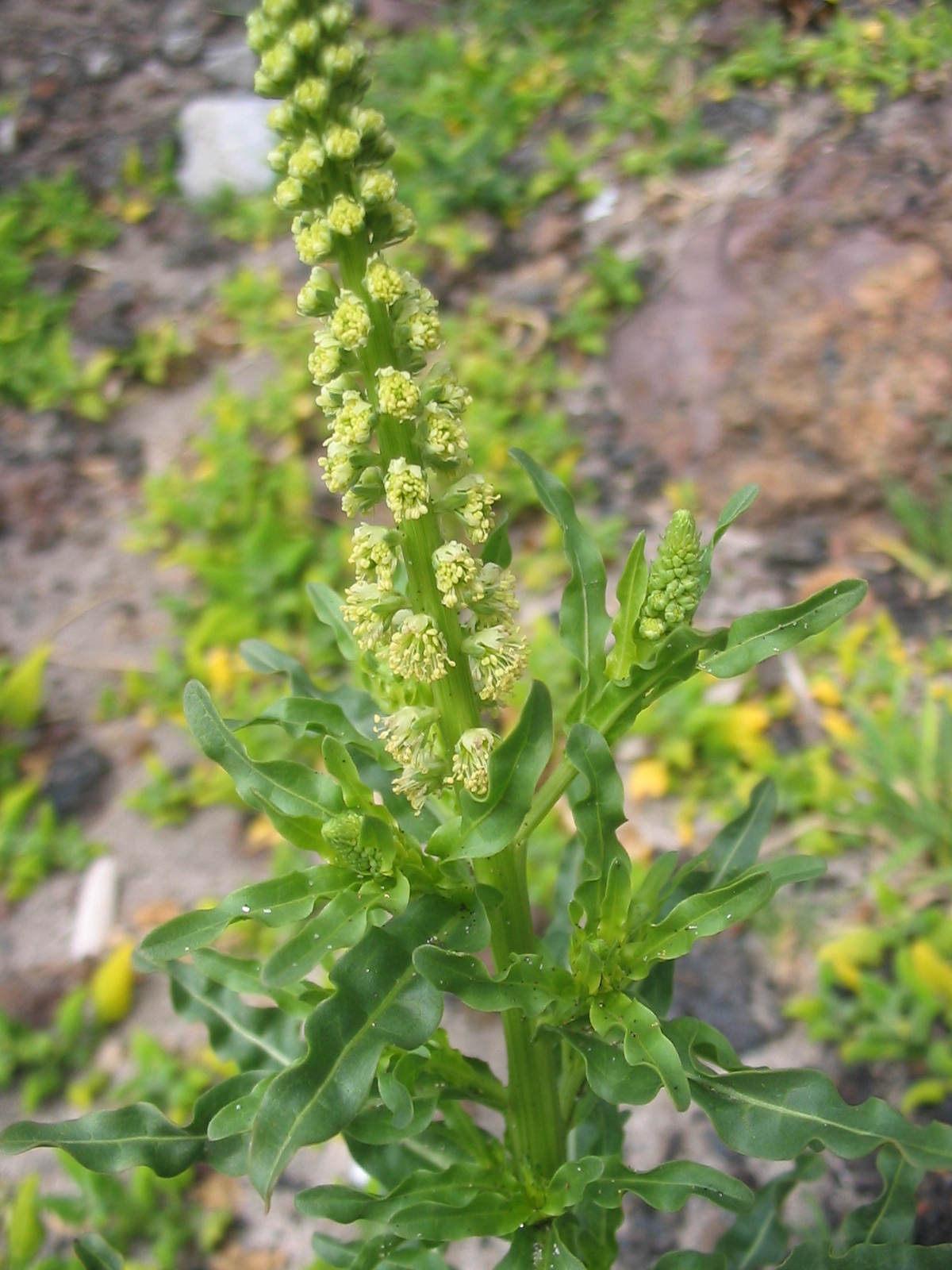
Weld is a plant that produces a bright yellow dye, long used in Europe and Western Asia. The dye comes from the leaves and stems, which are rich in luteolin, a natural yellow colouring. Weld's yellow is clear and strong, and it was often chosen for dyeing linen, wool, and silk. The plant itself has thin stems and yellow or greenish flowers, and grows best in dry, sandy soils.
Where does Weld come from?
The name weld refers to Reseda luteola, a plant native to Europe and Western Asia. It became the most widely used yellow dye plant, with records of its use dating back to the first millennium BC. Weld was used before other famous dyes like woad and madder, and France was once a major exporter. The dye was important enough to be used in the famous Bayeux Tapestry.
How is Weld made?
To make the dye, weld plants are harvested before their fruits mature, as this is when the pigment is strongest. The best dye comes from small, leafy plants grown on dry soils. The yellow colour is mainly due to luteolin, a flavonoid found in the plant. The dye can be used alone or mixed with blue from woad to create green shades.

Where Weld is used
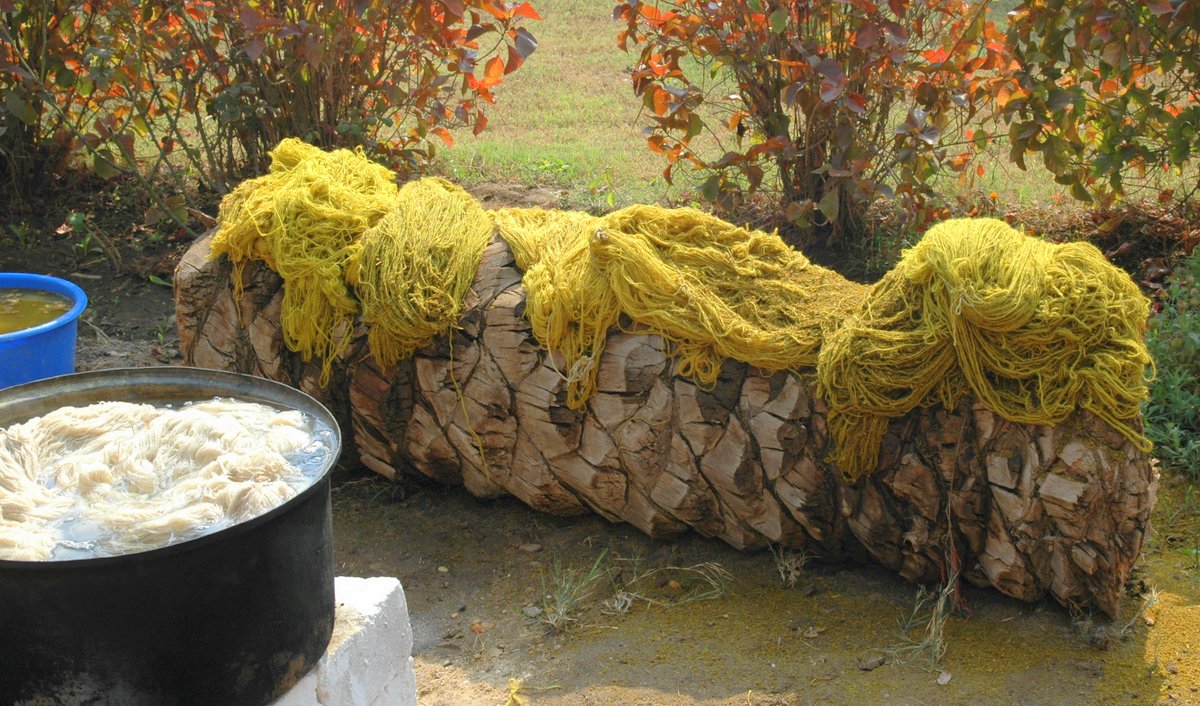
Weld was used to dye linen, wool, and silk, giving a bright yellow colour. It featured in historic textiles such as the Bayeux Tapestry. In modern times, weld is still used at the Ramses Wissa Wassef Art Centre in Egypt, where it is harvested each February for a communal wool dyeing event. Its use declined after cheaper synthetic dyes became available in the 19th century.
Yellow around the world
What the yellow family means from country to country.
From late 2018, protesters against fuel taxes and living costs wore the yellow high-visibility vests that every driver must carry. They became known as the gilets jaunes.
Politics and protestAngerSource: Yellow vests protestsThe leader of the Tour de France wears the yellow jersey. It was introduced in 1919 and matches the yellow paper of L'Auto, the newspaper that ran the race.
Festival and celebrationPrideSource: General classification in the Tour de FranceThe yellow disc of the Aboriginal flag is the sun, giver of life. The flag was designed by the Luritja artist Harold Thomas and first flown in Adelaide in 1971.
Sacred and holySource: Australian Aboriginal flagAt the gaye holud, held a day or two before a wedding, relatives rub turmeric paste on the bride and groom. Guests dress in yellow and orange.
Weddings and marriageFestival and celebrationJoySource: Gaye holudOn Pohela Falgun, the first day of spring, young women wear yellow and orange saris, a shade called basanti, with flowers in their hair.
Festival and celebrationNature and renewalJoySource: Pohela FalgunThe Flemish flag is a black lion on yellow, and the Walloon flag a red cockerel on yellow. The language communities are often shown by these colours.
Politics and protestPrideSource: Flag of FlandersShades and relatives of Weld
Weld yellow could be mixed with blue dye from woad to produce green colours like Lincoln green. Other reseda species were sometimes used for yellow dye, but weld was the most common. After the discovery of quercitron and later synthetic dyes, weld became less important as a dye source.
Questions people ask about Weld
What colour does weld produce?
Weld produces a bright yellow dye, known for its clarity and strength on linen, wool, and silk.
Where does the name weld come from?
Weld is the common name for the plant Reseda luteola, which was widely used for dyeing in Europe and Western Asia.
How was weld used in history?
Weld was used as a primary yellow dye since at least the first millennium BC, including in famous textiles like the Bayeux Tapestry.
What is weld made from?
The dye comes from the leaves and stems of the Reseda luteola plant, which contains the yellow pigment luteolin.
Is weld still used today?
While largely replaced by synthetic dyes, weld is still used in some traditional textile practices, such as at the Ramses Wissa Wassef Art Centre in Egypt.
Good reading and sources
- Reseda luteola on WikipediaEncyclopedia
- More pictures on Wikimedia CommonsPictures
- Wikidata recordOpen data
The facts on this page come from the Wikipedia article "Reseda luteola", written by its contributors and used under the CC BY-SA 4.0 licence, and from its Wikidata record (CC0). Rang rewrote the text in its own words, with AI assistance, and compares every page with the article to make sure no passage is copied. It may be reused under the same CC BY-SA 4.0 licence with a link back.
It may contain mistakes. The swatch is an approximation: named colours are not fixed standards, and every screen shows them a little differently. If something is wrong, tell us. Last refreshed 2026-10-03.
More of the yellow family
All of yellow
Yellow
Turmeric
A golden yellow dye and spice from the rhizome of a tropical plantColour named from nature · 🇮🇳 India +5

Yellow
Orpiment
A golden-yellow mineral pigment once prized for its brilliant colour and rarityPigment · 🇪🇬 Egypt +5

Yellow
Tartrazine
A synthetic lemon yellow dye widely used in food, cosmetics and medicinesDye

#FFFDD0
Cream
A soft yellow-white named after the top layer of milkNamed shade

#E49B0F
Gamboge
A strong yellow pigment tapped from Southeast Asian treesPigment · 🇰🇭 Cambodia +5

#C2B280
Ecru
A pale, greyish yellow once named for unbleached linenNamed shade

#FADA5E
Naples yellow
A historic synthetic yellow pigment once prized by painters and pottersPigment · 🇪🇬 Egypt +1

#E3A857
Indian Yellow
A clear, glowing orange-yellow pigment once made in India from cow urinePigment · 🇮🇳 India
More colours tied to France
The colours of France
#FFFF00
Yellow
A primary colour between green and orange, seen in sunlight, leaves, and pigmentsBasic colour · 🇫🇷 France +5

#800080
Purple
A cool colour between red and blue, long linked with royalty and rarityBasic colour · 🇱🇧 Lebanon +5

#FF00FF
Magenta
A purplish-pink colour named after a battle and key to modern printingNamed shade · 🇫🇷 France +4

Brown
Terracotta
A clay-based material and colour, known for its reddish-brown toneColour named from nature · 🇮🇳 India +4