🇦🇺 The colours of Australia
8 meanings recorded, 34 colours tied to the country and 5 colour cities.
Australia’s national colours are green and gold, chosen to reflect the golden wattle, the country’s national flower. The flag uses blue, white, and red, with blue for the background, white for the stars, and red and white in the Union Jack, symbolising historical ties to Britain and the federation of states.
#00008BblueBackground of the flag, based on the British Blue Ensign#FF0000redAppears in the Union Jack, marking British heritageWhere no official value is given, the swatch shows the colour family, not the exact shade.
- Green and gold were made national colours in 1984.
- Gold stands for the golden wattle, Australia’s national flower.
- The flag’s blue background comes from the British Blue Ensign.
- The Commonwealth Star has seven points for states and territories.
- Almost all Australian sports teams wear green and gold.
The colours of the flag of Australia
The Australian flag features a dark blue field, with the Union Jack in the top left corner, a large white seven-pointed star below it, and five white stars forming the Southern Cross on the right. The blue background comes from the British Blue Ensign, highlighting Australia’s colonial history. The white stars stand for the federation of states (the Commonwealth Star) and the Southern Cross constellation, which is visible in the southern hemisphere and has long been a symbol for Australia. The red and white in the Union Jack refer to England, Scotland, and Ireland. These meanings are officially recognised.
National colours of Australia
Green and gold are the official national colours, widely used in sports uniforms and national symbols. The gold is linked to the golden wattle, Australia’s national flower, while green represents its leaves. These colours have been worn by national teams since the late 19th and early 20th centuries, and are now standard for almost every Australian sporting side. The combination is also seen on the coat of arms and in various government uses.
How the colours were chosen of Australia
Green and gold first appeared on the Australian cricket team’s caps and blazers in 1899, chosen by captain Joe Darling. Before that, teams wore a mix of club or state colours. The cricket team made green and gold official in 1908, and the Olympic team adopted them the same year. Other sports, like soccer and rugby, followed in the 1920s. The colours were officially declared national in 1984. The flag’s design dates to 1901, with changes in the number of points on the Commonwealth Star in 1908 to include territories.
Official shades and rules of Australia
The Australian government specifies exact shades for the national colours: Pantone 348C for green and 116C for gold. On the flag, blue is Pantone 280C, red is Pantone 185C, and white is standard. The flag’s proportions, star sizes, and positions are set by law. Official guidelines require green and gold to be used together, side by side, without any other colour in between.
The facts in this overview come from the Wikipedia article "National colours of Australia", written by its contributors and used under the CC BY-SA 4.0 licence, together with "Flag of Australia". Rang rewrote the text in its own words, with AI assistance, and compares every page with the article to make sure no passage is copied. It may be reused under the same CC BY-SA 4.0 licence with a link back.
What colours mean in Australia
Customs vary by region, faith and family; these are the meanings most often recorded.
Red ochre is used in Aboriginal rock art and ceremony, and is traded over long distances. In the Aboriginal flag the red half stands for the earth and for that ochre.
Sacred and holyNature and renewalAweSource: Australian Aboriginal flagThe yellow disc of the Aboriginal flag is the sun, giver of life. The flag was designed by the Luritja artist Harold Thomas and first flown in Adelaide in 1971.
Sacred and holySource: Australian Aboriginal flagGreen and gold have been the official national colours since 1984 and are worn by national sports teams. They echo the leaves and flowers of the golden wattle.
Festival and celebrationPrideSource: National colours of AustraliaA Test cricketer is given a dark green cap, the baggy green, on first playing for Australia. Many players wear the same faded cap for a whole career.
Festival and celebrationPrideSource: Baggy greenTo be true blue is to be honestly and loyally Australian. The phrase is older than the country, but Australians have made it their own.
Politics and protestTrustSource: True Blue (John Williamson song)The Torres Strait Islander flag has a blue band for the sea between green bands for the land. A white dhari, a dancer's headdress, sits at the centre.
Politics and protestNature and renewalSource: Torres Strait Islander flagThe third day of the New Year's Test at the Sydney Cricket Ground is Jane McGrath Day. The crowd wears pink to raise money for breast cancer nurses.
Protection and healingHopeSource: McGrath FoundationThe black upper half of the Aboriginal flag stands for the Aboriginal people of Australia.
Politics and protestPrideSource: Australian Aboriginal flagColour and feeling in Australia
Many Aboriginal peoples treat white as the colour of the dead. Widows in some regions wore heavy white clay mourning caps, known as kopi.
Since 2012 tobacco has been sold in plain packs of drab dark brown, Pantone 448 C, chosen after research found it the least appealing colour.
Uluru, sacred to the Anangu people, turns deep red and orange at sunrise and sunset as the low sun lights the iron-rich rock.
Colour cities of Australia
 🇦🇺 The Red CentreUluruA great sandstone rock in central Australia that glows orange and red at sunrise and sunset.
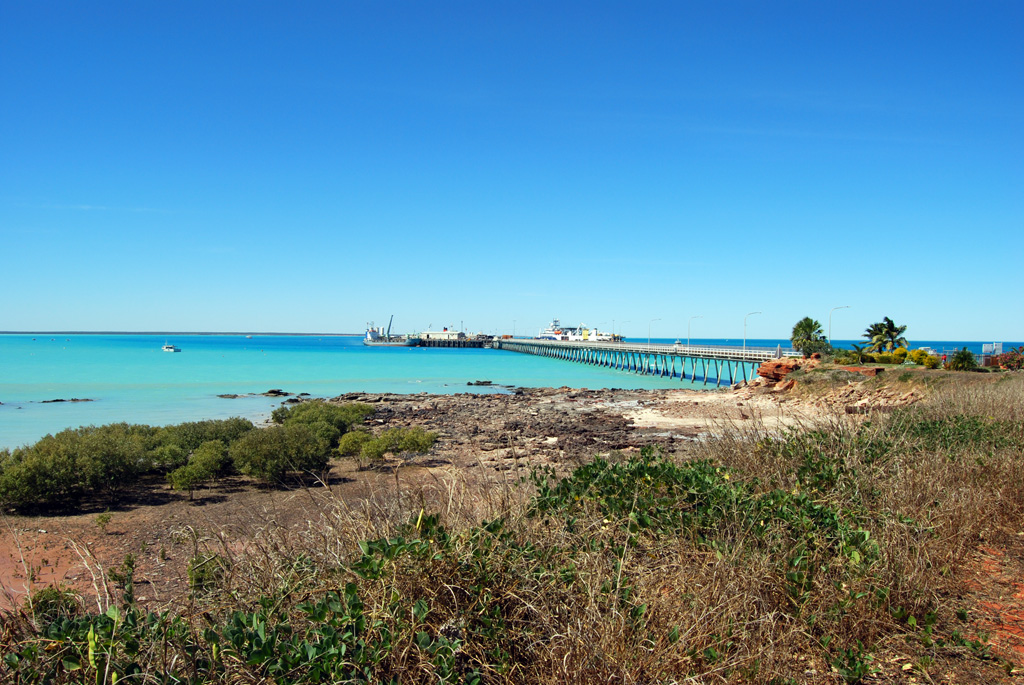 🇦🇺 Red cliffs, white sand, turquoise seaBroomeA pearling town in north-west Australia where rust-red earth meets white beach and bright turquoise water.
 🇦🇺 Melbourne's bathing boxesBrighton BeachA single row of small wooden beach huts, each painted in its own bold design, on the bay south of Melbourne.
 🇦🇺 Sandstone port under the southern lightsHobartTasmania's capital, with honey-coloured sandstone warehouses on the waterfront and, at times, a green and pink night sky.
 🇦🇺 The pink lakeLake HillierA small salt lake on an island off Western Australia whose water is a solid, milky pink.
Colours tied to Australia

Blue
Butterfly pea blue
A vivid blue from the butterfly pea flower, used in Asian food and drinkColour named from nature · 🇮🇩 Indonesia +5

Red
Lycopene
The deep red pigment found in tomatoes and many red fruitsPigment · 🇺🇸 United States +2

Yellow
Lutein
A yellow-orange plant pigment used in food and supplementsPigment · 🇺🇸 United States +2
Red
Alkanet
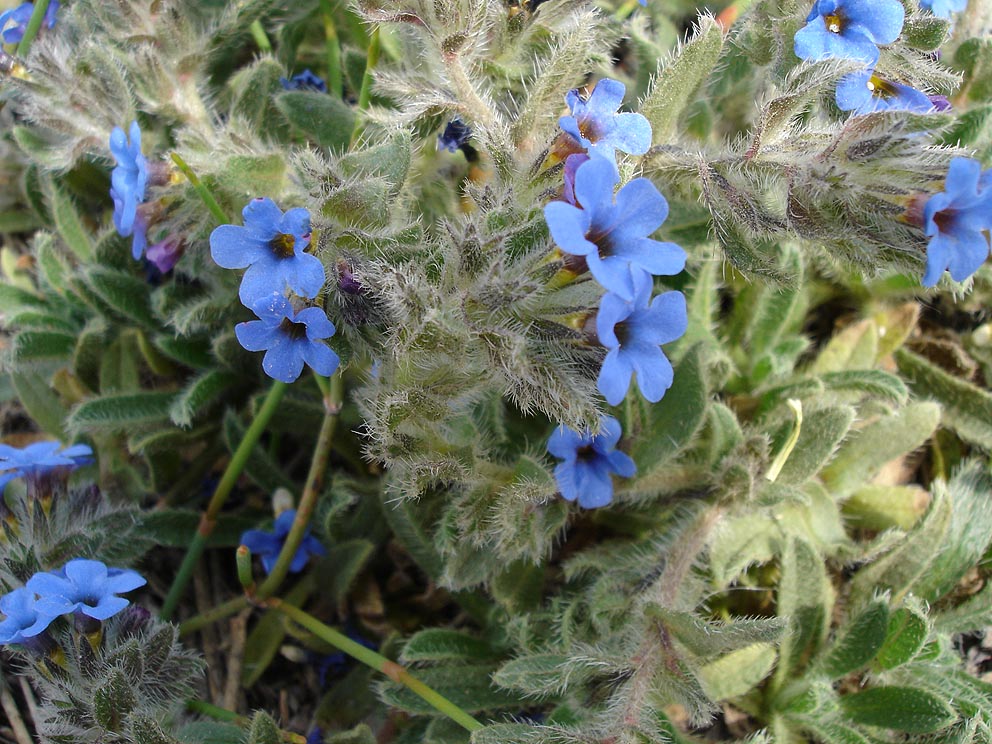
A Mediterranean plant whose root gives a red dye used since ancient timesColour named from nature · 🇺🇦 Ukraine +2

Orange
Violaxanthin
An orange pigment found in many plants and used as a food colouring in some countriesPigment · 🇦🇺 Australia +1

Red
Kamala dye
A golden red dye from the fruit of the kamala treeDye · 🇵🇭 Philippines +3

Blue
Pala indigo
A tree from India whose leaves yield a blue dye like indigoColour named from nature · 🇮🇳 India +4
Yellow
Yellow kamala
A yellow dye from the fruit covering of an Australian rainforest treeDye · 🇦🇺 Australia
Photo credits on this page
The small pictures above come from Wikimedia Commons under free licences. Some are cropped to fit.
- Kamala dye: Poyt448 Peter Woodard, Public domain, source
- Lycopene: Jeff Dahl, CC BY-SA 3.0, source
- Butterfly pea blue: Suyash Dwivedi, CC BY-SA 4.0, source
- Lutein: Jynto ( talk ), CC0, source
- Alkanet: Unknown author, CC BY-SA 3.0, source
- Violaxanthin: Yikrazuul, Public domain, source
- Pala indigo: J.M.Garg, CC BY 3.0, source
- Uluru Au: Thomas Schoch, CC BY-SA 3.0, source
- Broome Au: Kat Clay, CC BY 2.0, source
- Brighton Beach Au: Celco85, CC BY-SA 4.0, source
- Hobart Au: Michael fromholtz, CC BY-SA 4.0, source
- Lake Hillier Au: Aussie Oc, CC BY-SA 4.0, source