Vair
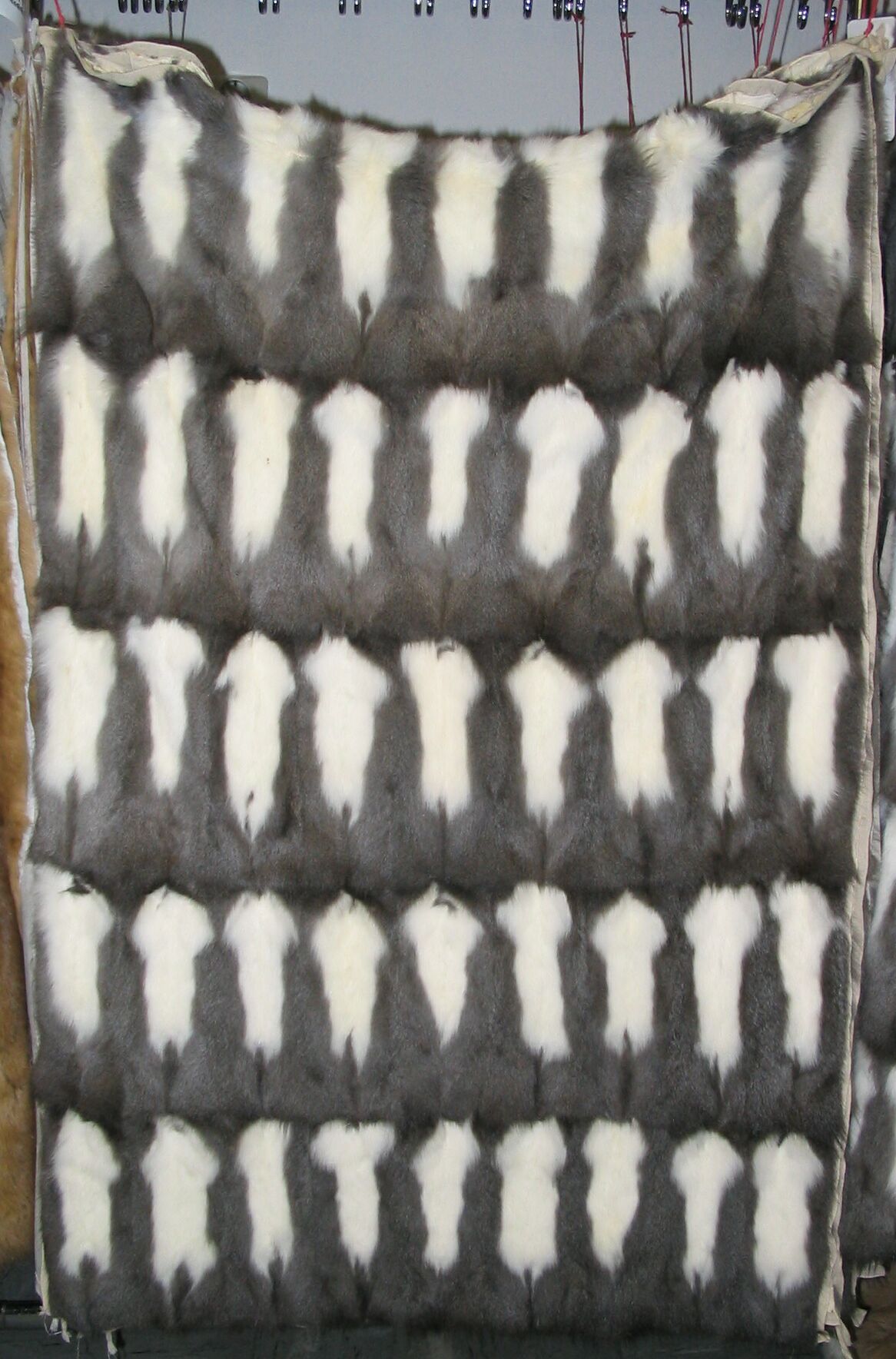
A blue and white heraldic fur pattern based on squirrel pelts
No single value: Vair is a material, and its colour varies. The background shows its family, blue.

Vair is a heraldic fur pattern of alternating blue and white shapes, inspired by the winter coats of Eurasian red squirrels. Once used to line royal mantles, it is now a stylised design in coats of arms, with rows of bell-like or heptagonal shapes in blue (azure) and white (argent).
- Vair is based on the winter fur of Eurasian red squirrels.
- The pattern uses alternating blue and white shapes called panes or bells.
- It was once used for royal and noble cloak linings.
- Vair is a standard fur pattern in heraldic coats of arms.
What colour is Vair?
Vair is a pattern used in heraldry, the art of designing coats of arms. It shows rows of blue and white shapes, usually heptagons or bell-like forms, arranged so that the colours alternate. The pattern stands out from other heraldic furs because it is not a solid colour or a simple spot pattern, but a repeating design meant to recall the look of sewn-together squirrel pelts. The most common version uses blue (called azure) and white (called argent), though other colour pairs can be used.
Where does Vair come from?
The name 'vair' comes from Old French and Latin words meaning 'varied' or 'variegated'. The pattern is based on the winter fur of the Eurasian red squirrel, which has a blue-grey back and white belly. In medieval Europe, especially in the Baltic region, these pelts were sewn together for the linings of noble and royal cloaks, creating a distinctive blue-grey and white pattern. Heraldic artists later simplified this into the blue and white design seen in coats of arms.
How is Vair made?
In heraldry, vair is not a physical material but a drawn or painted pattern. The original fur was made by sewing together alternating pieces of squirrel back and belly, but in armory, it is shown as rows of shapes. The modern form uses tiled heptagons or 'bells', with white shapes on top and blue on the bottom of each row. Other forms, like 'vair ancien', use wavy or straight lines.



Where Vair is used
Vair appears in coats of arms and heraldic art, where it fills backgrounds or sections of shields. It was once a sign of high rank, as real squirrel fur lined the mantles of royalty and nobility. Today, the pattern is purely symbolic, used in heraldic illustration rather than on actual garments.
Blue around the world
What the blue family means from country to country.
Lapis lazuli has been mined in the mountains of Badakhshan for more than six thousand years. Ground to powder it gave ultramarine, the costliest blue in European painting.
Royalty and powerSacred and holyAweSource: Lapis lazuliThe chadari is a full-length covering for women with a mesh panel over the eyes. In Kabul and the north it is most often a light blue.
Protection and healingSource: BurqaThe blue band of the flag stands for the wish of the Armenian people to live under peaceful skies. The red above it is for the highlands and the struggle to survive.
Politics and protestHopeSource: Flag of ArmeniaThe flag is sky blue, white and sky blue, created by Manuel Belgrano in 1812. National teams are called the Albiceleste, the white and sky blue.
Politics and protestPrideSource: Flag of ArgentinaBoca Juniors play in blue and gold. The club's story is that in 1907 it took the colours of the flag of the next ship into port, which was Swedish.
Festival and celebrationPrideSource: Boca JuniorsTo be true blue is to be honestly and loyally Australian. The phrase is older than the country, but Australians have made it their own.
Politics and protestTrustSource: True Blue (John Williamson song)Shades and relatives of Vair
There are many forms of vair. 'Vair ancien' uses wavy lines, while 'counter-vair' reverses the arrangement of rows. 'Vair in pale', 'vair in bend', and 'vair in point' change the direction of the rows. Other colours can be used, called 'vairé' or 'vairy', and some variants use four colours. Related patterns include 'potent', which replaces the bell shapes with T-shapes, and rarer forms like 'plumeté' (feather shapes) and 'papelonné' (scale shapes).
Questions people ask about Vair
What colour is vair?
Vair is a pattern of alternating blue (azure) and white (argent) shapes, usually shown as rows of bell-like or heptagonal forms in heraldry.
Where does the name 'vair' come from?
The name comes from Old French and Latin words meaning 'varied' or 'variegated', referring to the mixed colours of the squirrel fur it copies.
What animal inspired the vair pattern?
The pattern is based on the winter coat of the Eurasian red squirrel, which has a blue-grey back and white belly.
Where is vair used?
Vair is used in heraldic art, especially in coats of arms, to fill backgrounds or sections of shields with a distinctive fur pattern.
Are there different types of vair?
Yes, vair has many variations, including different shapes, arrangements, and colours, such as 'vair ancien', 'counter-vair', and 'vairé' with four colours.
Good reading and sources
The facts on this page come from the Wikipedia article "Vair", written by its contributors and used under the CC BY-SA 4.0 licence, and from its Wikidata record (CC0). Rang rewrote the text in its own words, with AI assistance, and compares every page with the article to make sure no passage is copied. It may be reused under the same CC BY-SA 4.0 licence with a link back.
It may contain mistakes. The swatch is an approximation: named colours are not fixed standards, and every screen shows them a little differently. If something is wrong, tell us. Last refreshed 2026-10-03.
More of the blue family
All of blue
Blue
Lapis lazuli
A deep blue stone prized for jewellery and the source of ultramarine pigmentColour named from nature · 🇦🇫 Afghanistan +5
#6A5DFF
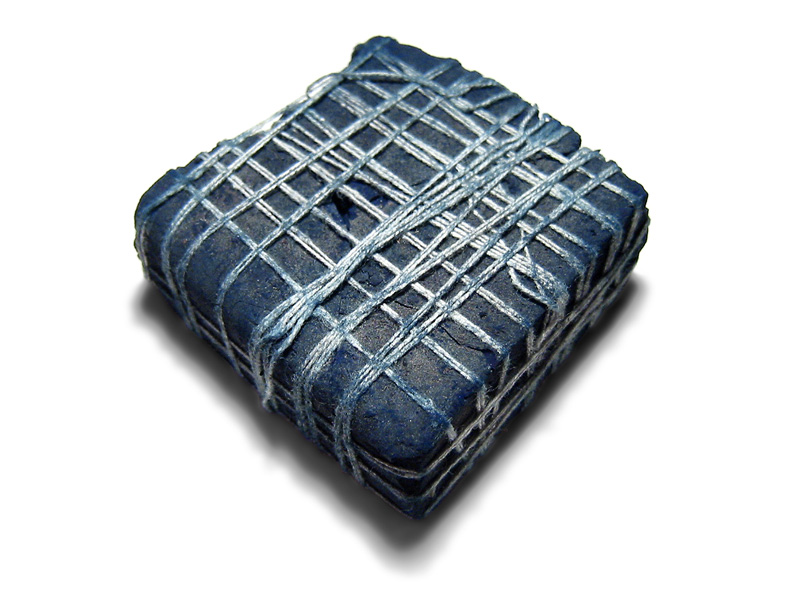
Indigo
A deep blue named for the dye once exported from IndiaNamed shade · 🇮🇳 India +5

Blue
Azurite
A deep blue copper mineral once prized as a pigment and gemstonePigment · 🇫🇷 France +5

Blue
Woad
A blue dye once vital to Europe's textile trade, made from the leaves of a flowering plantDye · 🇫🇷 France +3
Blue
Indigo
A deep blue dye from plants, now mostly made synthetically and known for colouring denimDye · 🇮🇳 India +5
#120A8F
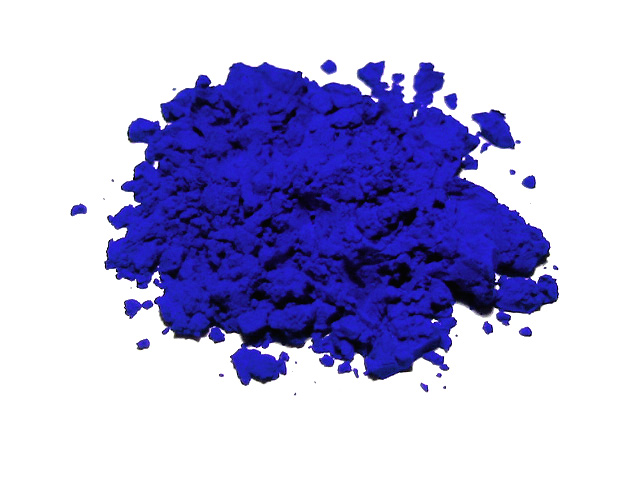
Ultramarine
A deep blue pigment once made from lapis lazuli, prized for centuries in artPigment · 🇦🇫 Afghanistan +2

#003153
Prussian blue
A deep blue pigment first made in Berlin in the early 1700sPigment · 🇯🇵 Japan

#007FFF
Azure
A clear sky blue, halfway between blue and cyan on the colour wheelNamed shade · 🇮🇹 Italy +2