Carmine
A deep red shade, close to pure red and seen in dried blood and rubies

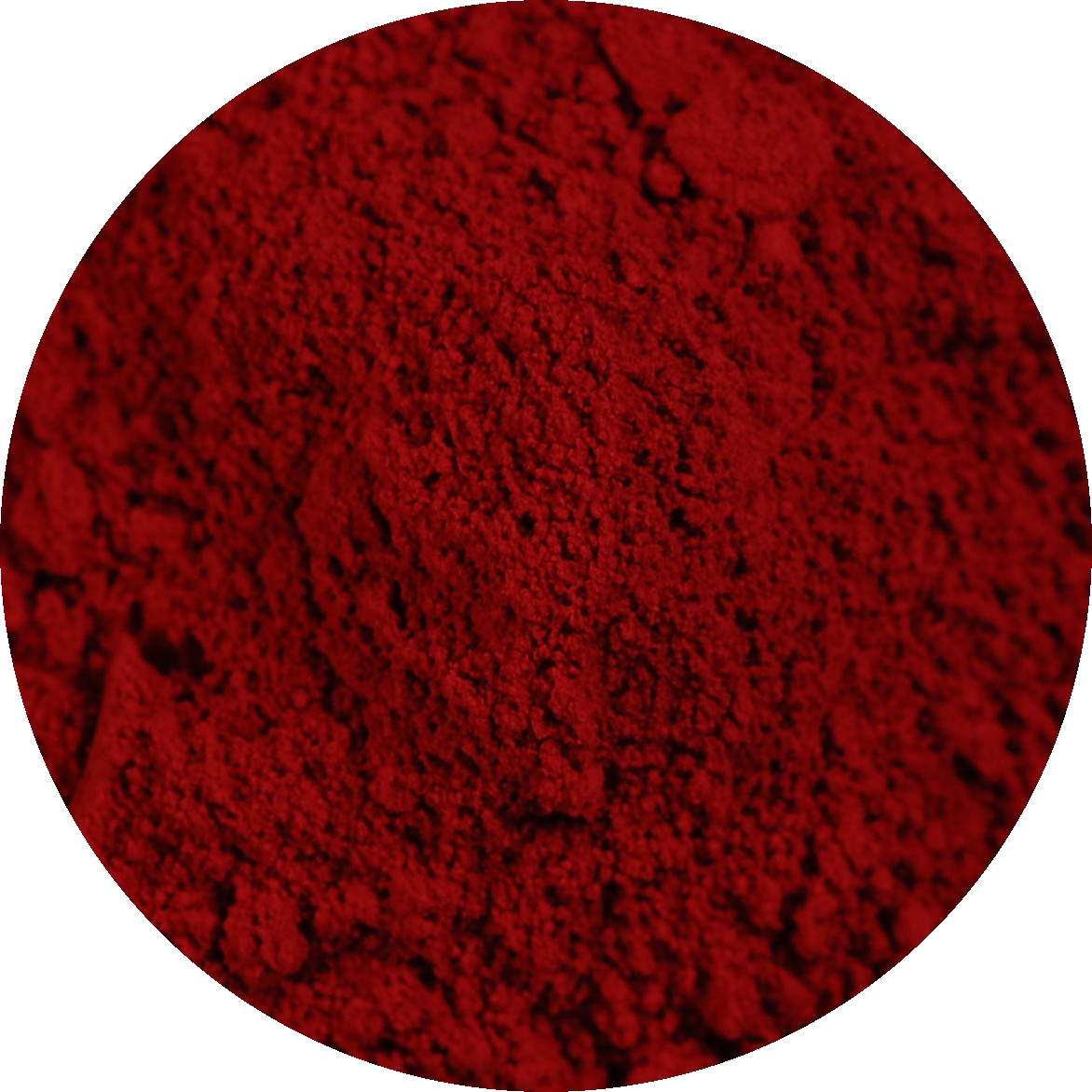
Carmine is a deep red colour, slightly purplish but nearer to pure red than crimson. The name first appeared in English in 1523. The raw pigment is dark, like dried blood, while processed forms can be lighter or brighter. Carmine appears in fashion, design, and national symbols such as the flag of Latvia.
Share on WhatsAppOpen in the lab
- Carmine is closer to pure red than crimson.
- The name first appeared in English in 1523.
- The Latvian flag uses carmine.
- Carmine is the colour of dried blood.
- Japanese carmine is called enji-iro (臙脂色).
What colour is Carmine?
Carmine is a deep red colour, just a little purplish but closer to pure red than crimson. The raw pigment is a dark, almost blood-like red, while processed versions can be lighter or brighter. Some rubies show a similar tone, and carmine is often used to describe the colour of dried blood. It stands out from other reds for its depth and slight purple hint.
Where does Carmine come from?
The word 'carmine' was first used in English in 1523. The name has been used for various deep reds, sometimes linked to the colour of rouge in cosmetics. In Japanese, the term enji-iro (臙脂色) means 'rouge colour' and is connected to both cosmetics and the insect used for red dye. The colour is also called Chinese carmine and Spanish carmine in some sources.
Where Carmine is used
Carmine is seen in art, textiles, and national symbols. It is the colour of the Latvian flag and is used by the Latvia national teams. In fashion and interior design, 'rich carmine' is a common shade. The pigment is also used in painting, where 'pictorial carmine' is a typical tone. Some sports teams, such as AS Roma, use carmine red in their colours.
Red around the world
What the red family means from country to country.
The torii gates of Shinto shrines are often painted vermilion, a bright orange-red. The colour is held to keep evil away, and the long tunnels of gates at Fushimi Inari are the best known.
Sacred and holyProtection and healingAweSource: ToriiThe flag is dark red with a narrow white band, a shade often called Latvian red. Legend says a wounded chief was wrapped in a white sheet, which his blood stained on either side.
Politics and protestCourageSource: Flag of LatviaThe flag uses the four Pan-Arab colours: a red bar at the hoist with green, white and black bands. It was designed by a young Emirati, Abdullah Al Maainah, in 1971.
Politics and protestPrideSource: Flag of the United Arab EmiratesThe flag is a black double-headed eagle on red, the banner of the fifteenth-century hero Skanderbeg. Fans chant Kuq e Zi, red and black.
Politics and protestPrideSource: Flag of AlbaniaArmenian scribes painted manuscripts with vordan karmir, a crimson dye made from an insect that lives on the roots of grasses in the Ararat plain.
Sacred and holySource: Armenian cochinealUnder Juan Manuel de Rosas in the 1830s and 1840s, everyone had to wear a scarlet ribbon to show loyalty to his Federalist party. His enemies, the Unitarians, were tied to sky blue.
Politics and protestFearSource: Juan Manuel de RosasShades and relatives of Carmine
Several shades fall within the carmine range, including wild watermelon, radical red, paradise pink, and rich carmine. Wild watermelon and radical red are fluorescent shades created by Crayola. Paradise pink is a Pantone colour. Japanese carmine, Spanish carmine, and pictorial carmine are regional or artistic variations, each with its own specific tone.
Colours that go with Carmine
Harmonies are worked out from the value #960018. Contrast ratios follow the WCAG 2 formula.
Questions people ask about Carmine
What colour is carmine?
Carmine is a deep red, slightly purplish but closer to pure red than crimson. The raw pigment is dark, like dried blood, while processed forms can be lighter or brighter.
Where does the name carmine come from?
The name 'carmine' was first recorded in English in 1523. In Japanese, a related term enji-iro means 'rouge colour' and refers to both cosmetics and a dye insect.
Where is carmine used?
Carmine appears in art, textiles, and national symbols. It is used in the Latvian flag, by national sports teams, and in fashion and interior design.
What are some variations of carmine?
Variations include wild watermelon, radical red, paradise pink, rich carmine, Japanese carmine, Spanish carmine, and pictorial carmine. Each has a slightly different tone.
Good reading and sources
- Carmine (color) on WikipediaEncyclopedia
- More pictures on Wikimedia CommonsPictures
- Wikidata recordOpen data
The facts on this page come from the Wikipedia article "Carmine (color)", written by its contributors and used under the CC BY-SA 4.0 licence, and from its Wikidata record (CC0). Rang rewrote the text in its own words, with AI assistance, and compares every page with the article to make sure no passage is copied. It may be reused under the same CC BY-SA 4.0 licence with a link back.
It may contain mistakes. The swatch is an approximation: named colours are not fixed standards, and every screen shows them a little differently. If something is wrong, tell us. Last refreshed 2026-10-03.
More of the red family
All of red
Red
Cinnabar
A scarlet to brick-red mineral and the main source of mercury and vermilion pigmentColour named from nature · 🇪🇸 Spain +5

Red
Realgar
An orange-red arsenic sulfide mineral once used as a pigment and poisonPigment · 🇨🇳 China +5

#E25822
Scarlet
A bright red with a touch of orange, long tied to power, sacrifice and sinNamed shade · 🇹🇷 Turkey +4

#E34234
Vermilion
A brilliant orange-red pigment, once made from toxic mercury orePigment · 🇹🇷 Turkey +5

Red
Rubia
A group of plants whose roots once dyed cloth and paint a lasting redColour named from nature · 🇪🇬 Egypt +5

#DC143C
Crimson
A deep red with a hint of purple, once made from insectsNamed shade · 🇳🇵 Nepal

#800000
Maroon
A deep brownish red named for the French word for chestnutNamed shade · 🇦🇺 Australia +4

Red
Sindoorसिन्दूर
A red or orange-red powder marking marriage for Hindu women in South AsiaTraditional colour · 🇮🇳 India +4