🇪🇸 The colours of Spain
7 meanings recorded, 13 colours tied to the country and 4 colour cities.
Spain’s national colours are red and yellow, arranged in three horizontal stripes with yellow in the centre and twice as wide as each red. These colours, officially specified as Pantone 7628 C (red) and 7406 C (yellow), have roots in 18th-century naval flags and are now a symbol of national identity and unity.
Where no official value is given, the swatch shows the colour family, not the exact shade.
- The yellow stripe is called gualda, after a natural dye.
- Pantone 7628 C (red) and 7406 C (yellow) are the official shades.
- The flag’s design dates back to a naval ensign from 1785.
- The flag must always be flown horizontally by law.
- The royal standard is crimson, not red or yellow.
The colours of the flag of Spain
The Spanish flag features three horizontal bands: red at the top and bottom, with a wider yellow stripe in the middle. The yellow is known as gualda, a term linked to a natural dye. The official flag includes the national coat of arms on the yellow stripe. While the flag’s colours are widely recognised, the sources do not state any official meaning for red or yellow. The design is set by law and is commonly called la Rojigualda, referring to its red and yellow bands.
National colours of Spain
Beyond the flag, Spain’s national colours of red and yellow are used in various official contexts, such as military flags, the royal standard, and the yacht ensign. The royal standard is crimson with the royal coat of arms, while the Princess of Asturias has a light blue flag. The naval jack and other historical flags also use red and yellow, often alongside other heraldic colours.
How the colours were chosen of Spain
The red and yellow stripes originated in 1785 as a naval ensign chosen by Charles III from twelve designs. These colours were first used mainly at sea and in coastal defences, but during the Peninsular War, they became a symbol of resistance on land as well. By 1843, the design was adopted for all armed forces. Earlier Spanish flags used a variety of colours and symbols, reflecting the different kingdoms that united to form Spain.
Official shades and rules of Spain
The colours of the flag are strictly defined by Royal Decree 441/1981, which specifies them in CIE colour spaces and matches them to Pantone 7628 C (red) and 7406 C (yellow). The flag’s proportions and the placement and size of the coat of arms are also regulated. The flag must always be flown horizontally and kept in good condition, with detailed rules for display and mourning.
The facts in this overview come from the Wikipedia article "Flag of Spain", written by its contributors and used under the CC BY-SA 4.0 licence. Rang rewrote the text in its own words, with AI assistance, and compares every page with the article to make sure no passage is copied. It may be reused under the same CC BY-SA 4.0 licence with a link back.
What colours mean in Spain
Customs vary by region, faith and family; these are the meanings most often recorded.
The flag is red and yellow, the rojigualda. The colours were chosen for the navy in 1785 because they stood out at sea, and the men's football team is called La Roja.
Politics and protestPrideSource: Flag of SpainIn the last part of a bullfight the matador uses a small red cape, the muleta. Bulls do not see red as we do. It is the movement that draws them, and the colour hides the blood.
Danger and warningCourageSource: BullfightingAt the San Fermin festival in Pamplona each July, runners and crowds dress in white with a red neckerchief and red sash.
Festival and celebrationJoySource: Festival of San FermínGreen has a bawdy sense in Spanish. A chiste verde is a dirty joke, and a viejo verde is a lecherous old man.
Love and desireShameSource: GreenThe Falange, the fascist party of the Franco years, wore blue shirts, and its song Cara al Sol speaks of the new shirt. Today blue is the colour of the conservative People's Party.
Politics and protestSource: Falange Española de las JONSIn Holy Week, members of religious brotherhoods walk in procession in robes and pointed hoods, many of them purple, the colour of penance. A purple band also marked the flag of the Second Republic.
Sacred and holyPolitics and protestSource: Holy Week in SpainUnder Philip II in the sixteenth century, plain black became the dress of the Spanish court and was copied across Europe. The deep black dye came from logwood shipped from the Americas.
Royalty and powerMourning and deathSource: BlackColour and feeling in Spain
Romantic fiction is called the 'pink novel', novela rosa in Spanish and romanzo rosa in Italian.
Picasso painted almost wholly in cold blues from about 1901 to 1904, in Barcelona and Paris, after the death of his friend Carles Casagemas.
Green is the colour of hope in set phrases: verde esperanza, verde speranza, Grün ist die Hoffnung.
In his Blue Period, about 1901 to 1904, Picasso painted beggars, prisoners and solitary figures in cold blues.
Spain remembers the sixteenth and seventeenth centuries, the time of Cervantes and Velázquez, as the Siglo de Oro, the Golden Age.
Colour cities of Spain
 🇪🇸 The Smurf villageJúzcarA white Andalusian village painted entirely blue for a film launch in 2011, which then voted to stay blue.
 🇪🇸 White walls and albero yellowSevilleWhitewashed houses edged in golden yellow, bitter orange trees along the streets and tiled squares.
 🇪🇸 City of flowered patiosCórdobaWhite courtyards hung with blue pots of red geraniums, and a great mosque of red-and-white striped arches.
 🇪🇸 The red fortress of the AlhambraGranadaA palace-fortress of reddish earth walls on a hill, facing a white quarter and snowy mountains.
Colours tied to Spain

Red
Cinnabar
A scarlet to brick-red mineral and the main source of mercury and vermilion pigmentColour named from nature · 🇪🇸 Spain +5

#E34234
Vermilion
A brilliant orange-red pigment, once made from toxic mercury orePigment · 🇹🇷 Turkey +5
Purple and violet
Logwood
A tree whose wood yields a dye once vital for textiles and scienceColour named from nature · 🇲🇽 Mexico +3

#8A3324
Umber
A natural brown pigment from earth, valued for its warmth and versatility in artPigment · 🇨🇾 Cyprus +2

Red
Kermes
A deep red dye made from Mediterranean scale insects, once prized for scarlet clothDye · 🇪🇬 Egypt +5
#E32636
Rose madder
A traditional red pigment made from the roots of the madder plantPigment · 🇪🇬 Egypt +5

Red
Blood rain
Rain that appears red, often caused by dust or microalgae in the waterColour named from nature · 🇮🇹 Italy +5
#893F45
Cordovan
A deep, dark red named after Córdoba and known for its link to leatherNamed shade · 🇪🇸 Spain

Yellow
Saffronزعفران
A golden-yellow colour from the dried stigmas of the saffron crocus flowerColour named from nature · 🇮🇷 Iran +5
Brown
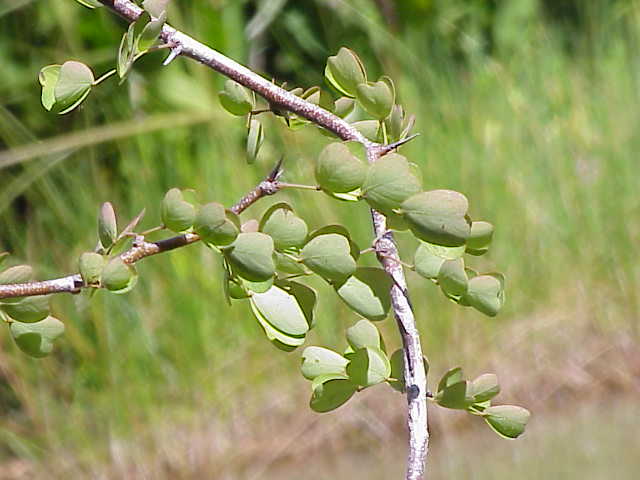
Quercus lusitanica
A Mediterranean oak shrub that yields nutgalls for dyeingColour named from nature · 🇵🇹 Portugal +2
Photo credits on this page
The small pictures above come from Wikimedia Commons under free licences. Some are cropped to fit.
- Umber: Gixie, CC BY-SA 3.0, source
- Logwood: Kurt Stüber [1], CC BY-SA 3.0, source
- Blood rain: Hans Glaser (Druck), Public domain, source
- Kermes: MyName ( Gryffindor ) stitched by Marku1988 This panoramic image was c, Public domain, source
- Cinnabar: H. Zell, CC BY-SA 3.0, source
- Vermilion: عُثمان, CC0, source
- Saffron: Hubertl, CC BY-SA 4.0, source
- Juzcar Es: Rafael Tello, CC BY-SA 4.0, source
- Seville Es: El-mejor, CC BY-SA 3.0, source
- Cordoba Es: Jose María Ligero Loarte, CC BY-SA 4.0, source
- Granada Es: Jebulon, CC0, source