Tagetes patula dye
A golden yellow dye and spice made from French marigold flowers
No single value: Tagetes patula dye is a material, and its colour varies. The background shows its family, yellow.

Tagetes patula, or French marigold, yields a golden yellow dye from its flower petals. Native to Mexico and Guatemala, it is also used as a spice in Georgia and as a colouring for food and textiles. The dye is valued for its earthy colour and is used for both animal and human foods, as well as in traditional crafts.
- Petals yield a golden yellow dye for food and textiles
- Known as 'Imeretian saffron' in Georgian cuisine
- Used to colour egg yolks in poultry feed
- Dye works on wool and silk without mordant
- Native to Mexico and Guatemala
What colour is Tagetes patula dye?
Tagetes patula dye is made from the petals of the French marigold, a plant with bright yellow to orange flowers. The colour produced is a golden yellow, which stands out for its earthy tone. The dye is used for both food and textiles, and the plant is also known for its strong, pungent oils.
Where does Tagetes patula dye come from?
The French marigold is native to Mexico and Guatemala. The Latin name 'patula' refers to its spreading growth habit. The use of its petals as a dye and spice is especially noted in Georgia, where it is called 'Imeretian saffron' for its colour and flavour. Its cultivation has spread widely due to its ease of growth and vivid blooms.
How is Tagetes patula dye made?
The dye is obtained by harvesting the flower petals of Tagetes patula. For textiles, the golden yellow colour can be applied directly to wool and silk without a mordant, but cotton and synthetic fibres require a mordant for the dye to fix. The petals are also dried and ground for use as a spice or food colouring.
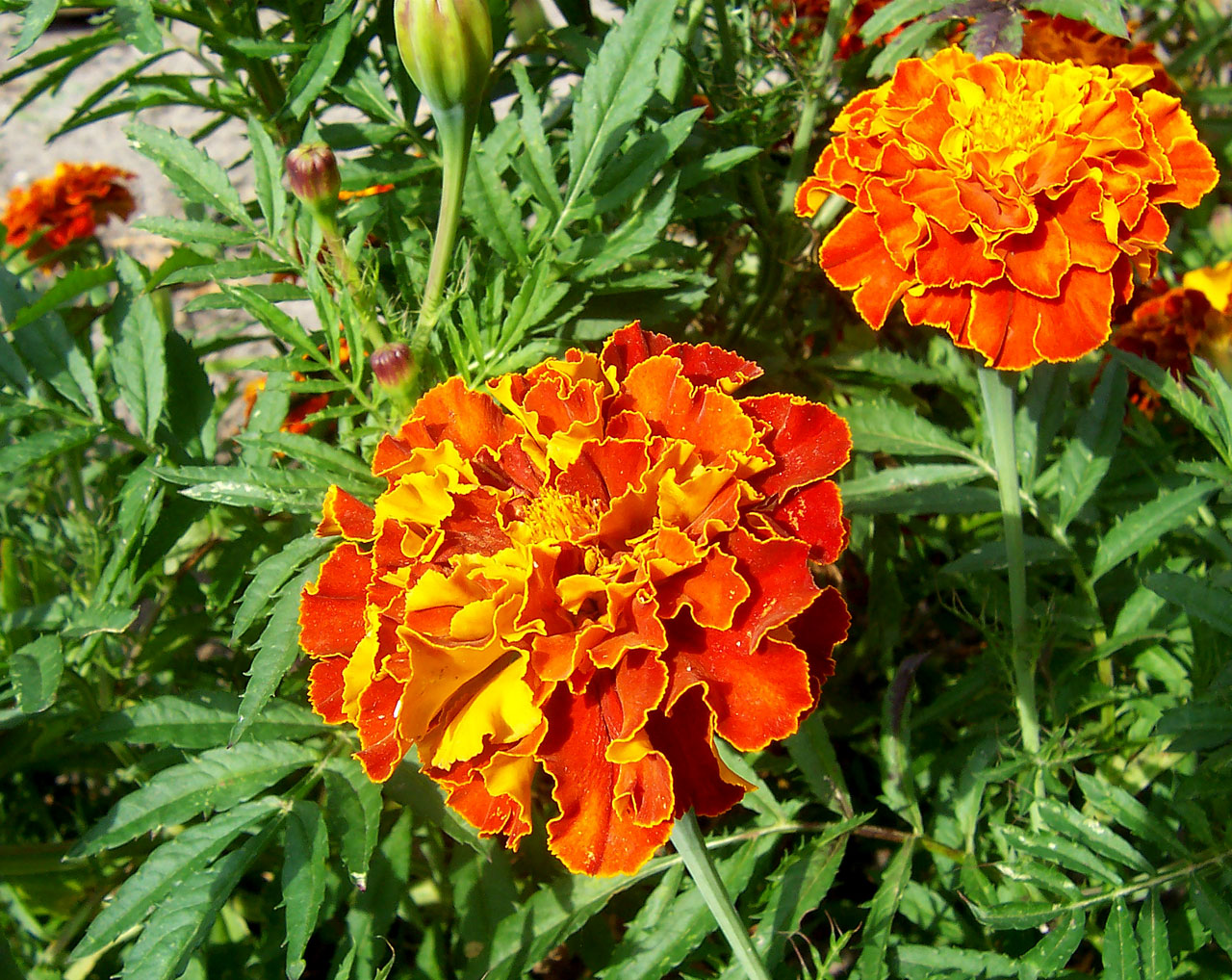


Where Tagetes patula dye is used
In Georgia, the dried petals are a key ingredient in the spice mix khmeli suneli and are prized for their earthy flavour and golden colour. The dye is added to poultry feed to deepen egg yolk colour and is also used to colour human foods. In textiles, it is used to dye wool and silk yellow, and sometimes cotton and synthetics with a mordant.
Yellow around the world
What the yellow family means from country to country.
In Maya thought each direction has a colour: red for east, white for north, black for west and yellow for south. They match the four colours of maize.
Sacred and holySource: Maya civilizationPeople wear yellow for Vasant Panchami, the spring festival of the goddess Saraswati. Before many weddings, turmeric paste is rubbed on the bride and groom in the haldi ceremony.
Sacred and holyFestival and celebrationWeddings and marriageJoySource: Vasant PanchamiOn New Year's Eve many people wear yellow underwear to bring money in the year ahead, and red to bring love.
Luck and prosperitySource: New Year's EveThe yellow disc of the Aboriginal flag is the sun, giver of life. The flag was designed by the Luritja artist Harold Thomas and first flown in Adelaide in 1971.
Sacred and holySource: Australian Aboriginal flagAt the gaye holud, held a day or two before a wedding, relatives rub turmeric paste on the bride and groom. Guests dress in yellow and orange.
Weddings and marriageFestival and celebrationJoySource: Gaye holudOn Pohela Falgun, the first day of spring, young women wear yellow and orange saris, a shade called basanti, with flowers in their hair.
Festival and celebrationNature and renewalJoySource: Pohela FalgunShades and relatives of Tagetes patula dye
Tagetes patula is sometimes confused with Tagetes erecta, the Mexican marigold, as some authorities consider them synonyms. The colours from different cultivars can range from bright yellow to orange and russet, but the dye is mainly golden yellow.
Questions people ask about Tagetes patula dye
What colour does Tagetes patula dye produce?
It produces a golden yellow dye, which is used to colour textiles and foods.
Where does the name 'Tagetes patula' come from?
The Latin word 'patula' means 'with a spreading habit', describing the plant's growth.
What is 'Imeretian saffron'?
In Georgia, dried Tagetes patula petals are called 'Imeretian saffron' and used as a spice for their colour and earthy flavour.
How is the dye used in textiles?
The golden yellow dye colours wool and silk directly, but cotton and synthetics need a mordant to fix the colour.
Is Tagetes patula native to any country?
Yes, it is native to Mexico and Guatemala.
Good reading and sources
- Tagetes patula on WikipediaEncyclopedia
- More pictures on Wikimedia CommonsPictures
- Wikidata recordOpen data
The facts on this page come from the Wikipedia article "Tagetes patula", written by its contributors and used under the CC BY-SA 4.0 licence, and from its Wikidata record (CC0). Rang rewrote the text in its own words, with AI assistance, and compares every page with the article to make sure no passage is copied. It may be reused under the same CC BY-SA 4.0 licence with a link back.
It may contain mistakes. The swatch is an approximation: named colours are not fixed standards, and every screen shows them a little differently. If something is wrong, tell us. Last refreshed 2026-10-03.
More of the yellow family
All of yellow
Yellow
Turmeric
A golden yellow dye and spice from the rhizome of a tropical plantColour named from nature · 🇮🇳 India +5

Yellow
Orpiment
A golden-yellow mineral pigment once prized for its brilliant colour and rarityPigment · 🇪🇬 Egypt +5

Yellow
Tartrazine
A synthetic lemon yellow dye widely used in food, cosmetics and medicinesDye

#FFFDD0
Cream
A soft yellow-white named after the top layer of milkNamed shade

#E49B0F
Gamboge
A strong yellow pigment tapped from Southeast Asian treesPigment · 🇰🇭 Cambodia +5

#C2B280
Ecru
A pale, greyish yellow once named for unbleached linenNamed shade

#FADA5E
Naples yellow
A historic synthetic yellow pigment once prized by painters and pottersPigment · 🇪🇬 Egypt +1

#E3A857
Indian Yellow
A clear, glowing orange-yellow pigment once made in India from cow urinePigment · 🇮🇳 India
More colours tied to Mexico
The colours of Mexico
#6A5DFF
Indigo
A deep blue named for the dye once exported from IndiaNamed shade · 🇮🇳 India +5

Green
Malachite
A banded green mineral and pigment once prized for art and decorationColour named from nature · 🇪🇬 Egypt +4

Blue
Azurite
A deep blue copper mineral once prized as a pigment and gemstonePigment · 🇫🇷 France +5

#40E0D0
Turquoise
A blue-green colour named after a prized mineral long used for gems and decorationNamed shade · 🇮🇷 Iran +5