Indigoidine
A blue pigment made by certain bacteria and studied for its unique colour
No single value: Indigoidine is a material, and its colour varies. The background shows its family, blue.

Indigoidine is a blue pigment from the azaquinone group, produced by several bacterial species. It appears as a blue amorphous powder, insoluble in water but turning royal blue in hydrochloric acid. Its colour comes from an indigoid chromophore, and it has been researched for its structure and synthesis since the late 19th century.
- Indigoidine is a blue pigment made by some bacteria
- It is insoluble in water but turns royal blue in hydrochloric acid
- Its colour comes from an indigoid chromophore
- First described in bacteria in the late 19th century
What colour is Indigoidine?
Indigoidine is a blue pigment that belongs to the azaquinone group of organic compounds. It is produced by certain bacteria, which release it into their surroundings. As a powder, it is blue and does not dissolve in water or most solvents, but it shows a royal blue colour in hydrochloric acid and an orange-brown in hot sulfuric acid. Its blue colour is due to an indigoid chromophore, a part of the molecule responsible for absorbing and reflecting light in a way that gives the pigment its distinct hue.
Where does Indigoidine come from?
The pigment was first noted in the late 19th century, when bacteria producing a blue dye were described by Heinr Claessen and later by Otto Voges, who studied a species now called Vogesella indigofera. The structure and laboratory synthesis of indigoidine were further explored in the 1960s and 1970s. Its name comes from its indigo-like colour and chemical structure.
How is Indigoidine made?
Indigoidine can be made in the laboratory from citrazinic acid, which itself is produced from citric acid and ammonia. In nature, certain bacteria create indigoidine through a process starting with glutamine, an amino acid. This is then oxidised and cyclised by enzymes, eventually forming the blue pigment. Indigoidine is found as a blue powder that is insoluble in water but dissolves in strong acids.
Blue around the world
What the blue family means from country to country.
Lapis lazuli has been mined in the mountains of Badakhshan for more than six thousand years. Ground to powder it gave ultramarine, the costliest blue in European painting.
Royalty and powerSacred and holyAweSource: Lapis lazuliThe chadari is a full-length covering for women with a mesh panel over the eyes. In Kabul and the north it is most often a light blue.
Protection and healingSource: BurqaThe blue band of the flag stands for the wish of the Armenian people to live under peaceful skies. The red above it is for the highlands and the struggle to survive.
Politics and protestHopeSource: Flag of ArmeniaThe flag is sky blue, white and sky blue, created by Manuel Belgrano in 1812. National teams are called the Albiceleste, the white and sky blue.
Politics and protestPrideSource: Flag of ArgentinaBoca Juniors play in blue and gold. The club's story is that in 1907 it took the colours of the flag of the next ship into port, which was Swedish.
Festival and celebrationPrideSource: Boca JuniorsTo be true blue is to be honestly and loyally Australian. The phrase is older than the country, but Australians have made it their own.
Politics and protestTrustSource: True Blue (John Williamson song)Shades and relatives of Indigoidine
A related compound is N5,N5′-Didodecylindigoidine, a violet pigment found in the bacterium Shewanella violacea. Indigoidine is chemically related to other blue dyes such as indigo and indigotin, but it is distinct in its structure and bacterial origin.
Questions people ask about Indigoidine
What colour is indigoidine?
Indigoidine is a blue pigment, appearing as a blue amorphous powder. In hydrochloric acid, it becomes royal blue.
Where does the name indigoidine come from?
The name refers to its indigo-like colour and chemical structure, as it is related to indigo dyes.
How is indigoidine produced?
It is produced naturally by certain bacteria and can also be synthesised in the lab from citrazinic acid, which is made from citric acid and ammonia.
What makes indigoidine blue?
Its blue colour is due to an indigoid chromophore, a part of the molecule that gives it its distinct hue.
Good reading and sources
The facts on this page come from the Wikipedia article "Indigoidine", written by its contributors and used under the CC BY-SA 4.0 licence, and from its Wikidata record (CC0). Rang rewrote the text in its own words, with AI assistance, and compares every page with the article to make sure no passage is copied. It may be reused under the same CC BY-SA 4.0 licence with a link back.
It may contain mistakes. The swatch is an approximation: named colours are not fixed standards, and every screen shows them a little differently. If something is wrong, tell us. Last refreshed 2026-10-03.
More of the blue family
All of blue
Blue
Lapis lazuli
A deep blue stone prized for jewellery and the source of ultramarine pigmentColour named from nature · 🇦🇫 Afghanistan +5

Blue
Azurite
A deep blue copper mineral once prized as a pigment and gemstonePigment · 🇫🇷 France +5

Blue
Woad
A blue dye once vital to Europe's textile trade, made from the leaves of a flowering plantDye · 🇫🇷 France +3
Blue
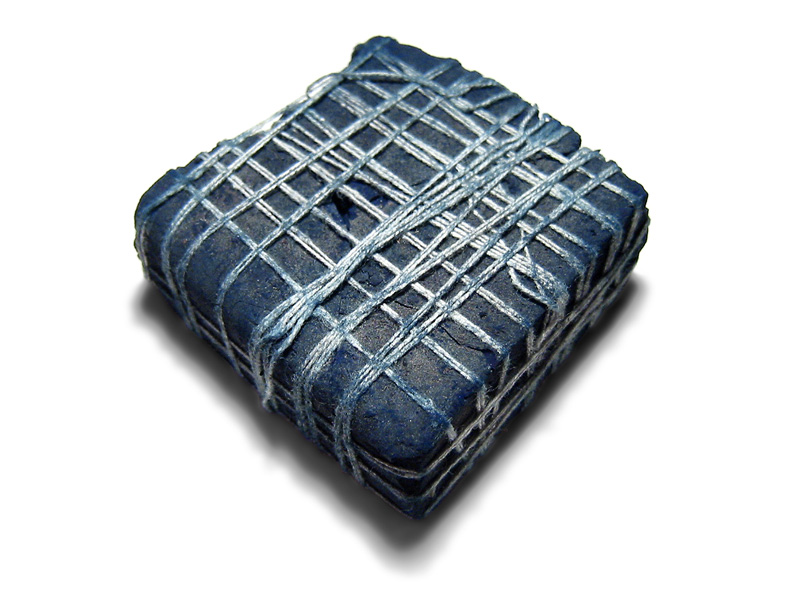
Indigo
A deep blue dye from plants, now mostly made synthetically and known for colouring denimDye · 🇮🇳 India +5
Blue
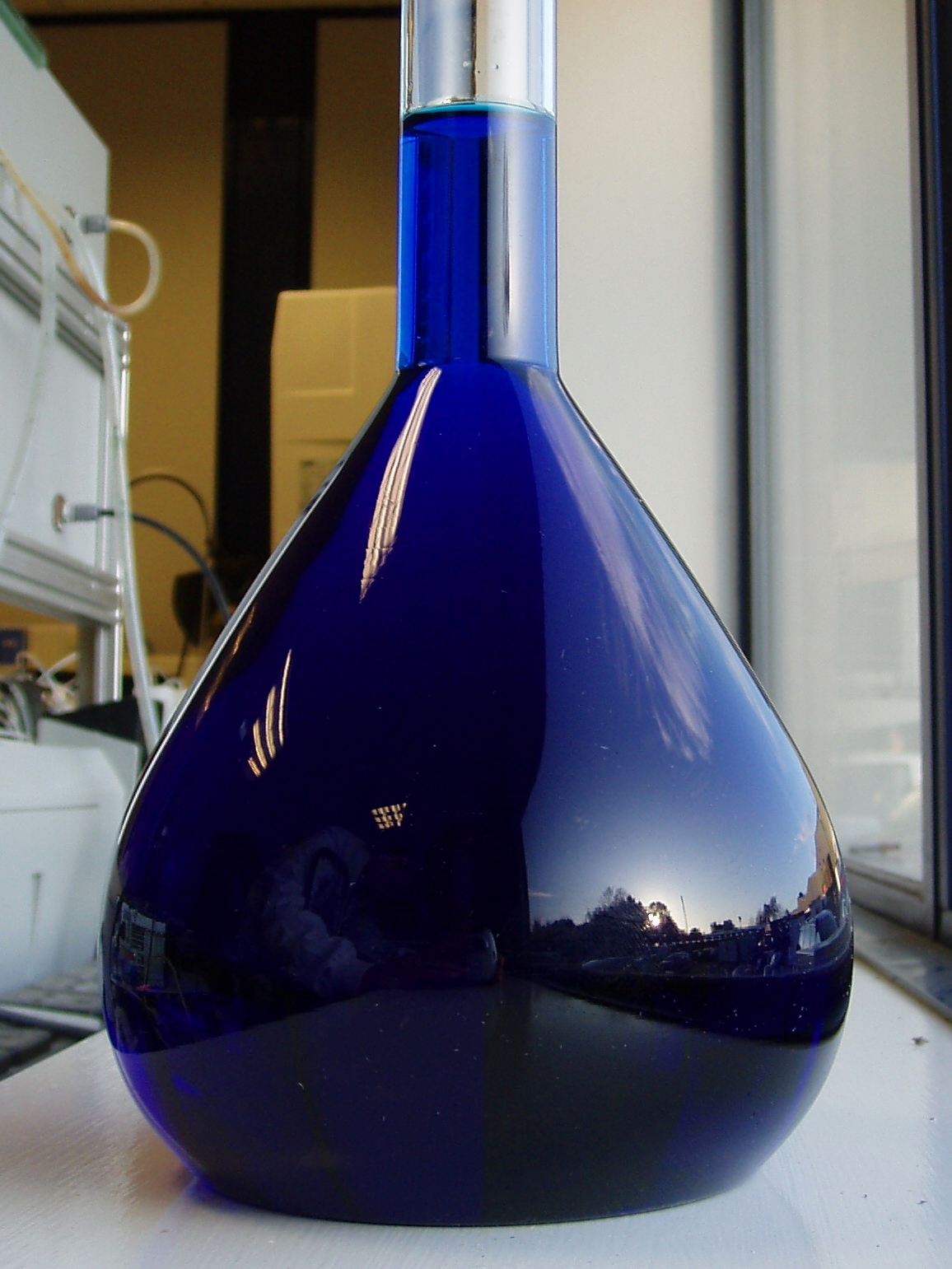
Methylene blue
A synthetic blue dye and medicine first made in 1876Dye
#120A8F
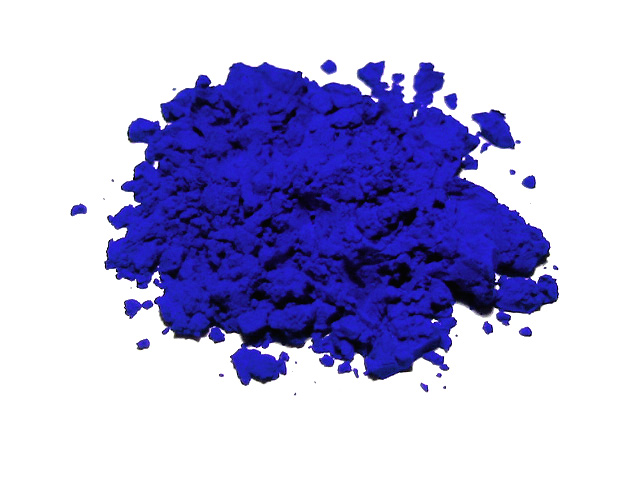
Ultramarine
A deep blue pigment once made from lapis lazuli, prized for centuries in artPigment · 🇦🇫 Afghanistan +2

#003153
Prussian blue
A deep blue pigment first made in Berlin in the early 1700sPigment · 🇯🇵 Japan

Blue
Haematoxylin
A natural dye from logwood, best known for staining cell nuclei in histologyDye · 🇵🇭 Philippines