Annatto
A natural orange-red dye from the seeds of a tropical shrub
No single value: Annatto is a material, and its colour varies. The background shows its family, orange.

Annatto is a red-orange dye made from the waxy coating of Bixa orellana seeds, a shrub native to Mexico and Central and South America. Used for centuries in food, body paint, and cosmetics, it gives a yellow to orange colour to cheese, butter, and many traditional dishes across Latin America and the Caribbean.
- Annatto comes from the seeds of the Bixa orellana shrub
- It colours cheese, butter, and many Latin American dishes
- Indigenous peoples use it for body paint and lipstick
- The main pigment is bixin, found in the seed's waxy coating
What colour is Annatto?
Annatto is a natural dye that ranges from yellow to deep orange-red. It comes from the waxy outer layer (aril) of seeds produced by the Bixa orellana shrub, sometimes called the lipstick tree. The colour is rich and warm, and has been used for both food and body decoration. Annatto stands out from other natural dyes for its strong colour, mild flavour, and wide use in both traditional and industrial products.
Where does Annatto come from?
The name 'annatto' comes from the plant Bixa orellana, which Linnaeus named using the Taíno word 'bixa' and in honour of explorer Francisco de Orellana. 'Achiote' comes from the Nahuatl word 'āchiotl'. The plant is native to Mexico and Central and South America, and its seeds have been used by indigenous peoples for centuries. Annatto spread to Asia and Africa through trade in the 16th and 17th centuries.
How is Annatto made?
The dye is extracted from the waxy red aril that coats the seeds of Bixa orellana. The pigment, mainly bixin and norbixin, is separated using alkaline water, vegetable oil, or organic solvents. The seeds can be ground and mixed with other spices for cooking, or the dye can be processed for use in food colouring and cosmetics.


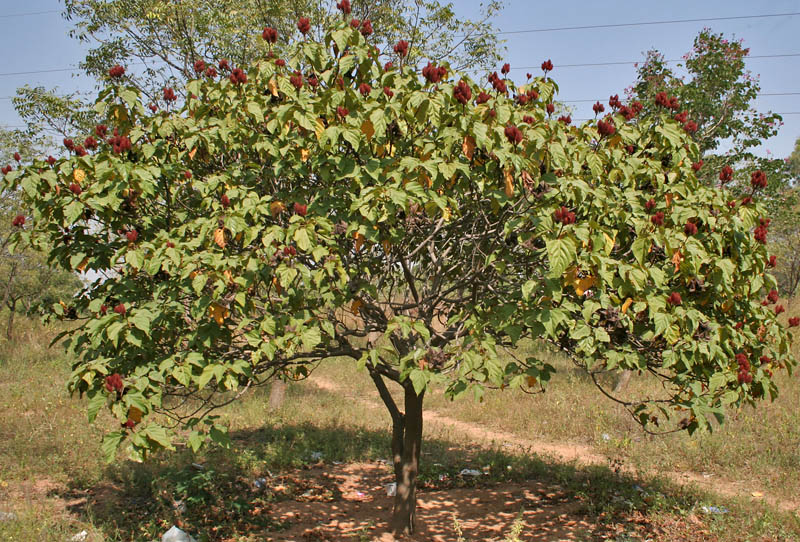

Where Annatto is used
Annatto is widely used to colour foods such as cheese, butter, ice cream, meats, and sauces. In Latin American and Caribbean cuisines, ground seeds are used in pastes and powders for traditional dishes. The dye is also used in cosmetics like lipstick and body paint, and was once used as ink for manuscript painting by the Aztecs. It is valued for not affecting flavour and being non-toxic.
What Annatto means
Among indigenous peoples of the Americas, annatto has been used as body and face paint, often believed to offer protection from evil spirits and illness. Its use as a protective or ritual colour is especially noted in Brazil, Puerto Rico, Ecuador, and among Amazonian tribes. The colour is also associated with decoration and celebration in these cultures.
Orange around the world
What the orange family means from country to country.
Saffron is the colour of renunciation, worn by Hindu sadhus, holy men who have given up worldly life. The top band of the national flag is saffron, which stands for strength and courage.
Sacred and holyPolitics and protestCourageSource: Saffron (color)In the 2005 referendum on a new constitution, ballots showed a banana for yes and an orange for no. The no side won and became the Orange Democratic Movement.
Politics and protestSource: Orange Democratic MovementFor the Day of the Dead, altars and graves are covered in orange marigolds, cempasuchil. Their colour and scent are said to guide the souls of the dead home.
Sacred and holyMourning and deathNostalgiaSource: Day of the DeadThe lowest band of the flag is orange, often called apricot, after the national fruit. The constitution says it stands for the creative talent and hard work of the people.
Politics and protestNature and renewalPrideSource: Flag of ArmeniaThe flag is split corner to corner. The orange half stands for the Buddhist tradition, and the white dragon across the middle for purity.
Sacred and holySource: Flag of BhutanOn 30 September people wear orange shirts to remember the children sent to residential schools. Phyllis Webstad's new orange shirt was taken from her on her first day at one.
Mourning and deathPolitics and protestGriefSource: National Day for Truth and ReconciliationShades and relatives of Annatto
Annatto can produce a range of shades from yellow to deep orange-red, depending on how it is prepared and used. In Brazil, a powder called colorau is made by mixing ground annatto seeds with maize. In Mexico and Belize, recado rojo or achiote paste blends annatto with other spices. The main pigments, bixin (red) and norbixin (yellow), account for the variation in hue.
Questions people ask about Annatto
What colour is annatto?
Annatto produces a yellow to orange-red dye, depending on how it is extracted and used. It is most often seen as a warm orange in food and cosmetics.
Where does the name annatto come from?
The name comes from the plant Bixa orellana, named by Linnaeus using the Taíno word 'bixa' and in honour of explorer Francisco de Orellana. 'Achiote' is from the Nahuatl language.
What is annatto used for?
Annatto is used to colour foods like cheese, butter, and ice cream, and in traditional dishes across Latin America and the Caribbean. It is also used in cosmetics, especially lipstick and body paint.
How is annatto made?
The dye is extracted from the waxy red coating on the seeds of the Bixa orellana shrub, using water, oil, or solvents. The seeds can also be ground for use in cooking.
Good reading and sources
- Bixa orellana on WikipediaEncyclopedia
- More pictures on Wikimedia CommonsPictures
- Wikidata recordOpen data
The facts on this page come from the Wikipedia article "Bixa orellana", written by its contributors and used under the CC BY-SA 4.0 licence, and from its Wikidata record (CC0). Rang rewrote the text in its own words, with AI assistance, and compares every page with the article to make sure no passage is copied. It may be reused under the same CC BY-SA 4.0 licence with a link back.
It may contain mistakes. The swatch is an approximation: named colours are not fixed standards, and every screen shows them a little differently. If something is wrong, tell us. Last refreshed 2026-10-03.
More of the orange family
All of orange
#CC7722
Ochre
A natural earth pigment ranging from yellow to deep orange or brownPigment · 🇦🇺 Australia +5

Orange
Annatto
A yellow-orange dye and flavour from the seeds of the achiote treeDye · 🇲🇽 Mexico +5

#F4C430
Saffron
A yellow-orange shade named after the colour of saffron crocus threadsNamed shade · 🇮🇳 India +1

#E32600
Methyl orange
An orange-red azo dye used as a pH indicator in chemistryDye
Orange
Tenné
A rare heraldic stain of orange-tawny, named for tanned leatherNamed shade · 🇫🇷 France +3

#FF4203
Minium
A bright orange-red pigment made by heating lead, once common in medieval manuscriptsPigment · 🇨🇳 China +5
Orange
Flexirubin
A yellow-orange pigment found in certain bacteriaPigment

Orange
Carotene
The orange pigment found in carrots and many fruits and vegetablesPigment
More colours tied to Mexico
The colours of Mexico
#6A5DFF
Indigo
A deep blue named for the dye once exported from IndiaNamed shade · 🇮🇳 India +5

Green
Malachite
A banded green mineral and pigment once prized for art and decorationColour named from nature · 🇪🇬 Egypt +4

Blue
Azurite
A deep blue copper mineral once prized as a pigment and gemstonePigment · 🇫🇷 France +5

#40E0D0
Turquoise
A blue-green colour named after a prized mineral long used for gems and decorationNamed shade · 🇮🇷 Iran +5