🇲🇽 The colours of Mexico
9 meanings recorded, 24 colours tied to the country and 6 colour cities.
Mexico’s flag features green, white, and red stripes, with the national coat of arms at the centre. These colours, first used after independence, represent the national army and have shifted in meaning over time. The central emblem recalls the Aztec foundation legend of Tenochtitlan.
Where no official value is given, the swatch shows the colour family, not the exact shade.
- The flag’s green, white, and red were first used in 1821.
- The central emblem shows an eagle on a cactus eating a serpent.
- The flag’s colours were originally those of the national army.
- Mexico’s flag is longer and uses darker green than Italy’s.
- Flag Day is celebrated on 24 February each year.
The colours of the flag of Mexico
The Mexican flag is made up of three vertical stripes: green at the hoist, white in the centre, and red at the fly. The national coat of arms sits in the middle of the white stripe. While the colours were first chosen for the national army after independence, their meanings have shifted and are not officially set out in law today. The central emblem shows an eagle on a cactus eating a serpent, a reference to the Aztec story of the founding of Tenochtitlan. The flag’s proportions are four to seven.
How the colours were chosen of Mexico
Mexico’s colours were first used by the Army of the Three Guarantees after independence from Spain in 1821. Earlier flags during the independence movement included religious images and other colour schemes, such as blue and white. The tricolour design was decreed by Agustín de Iturbide for the new empire, with the coat of arms changing over time. The current flag, with its side-facing eagle, was adopted in 1968 and confirmed by law in 1984. The shades of green and red are darker than those on the Italian flag, which has led to changes in Mexico’s merchant flag to avoid confusion.
Official shades and rules of Mexico
The flag’s design and proportions are set by law: three equal vertical stripes of green, white, and red, with the coat of arms centred in the white stripe. The coat of arms must be three-fourths the width of the white stripe. There are no official legal definitions for the exact shades of the colours, though suggested Pantone values have been circulated unofficially. The flag’s aspect ratio is 4:7.
The facts in this overview come from the Wikipedia article "Flag of Mexico", written by its contributors and used under the CC BY-SA 4.0 licence. Rang rewrote the text in its own words, with AI assistance, and compares every page with the article to make sure no passage is copied. It may be reused under the same CC BY-SA 4.0 licence with a link back.
What colours mean in Mexico
Customs vary by region, faith and family; these are the meanings most often recorded.
Cochineal, a deep red dye made from insects that live on prickly pear cactus, was raised in Oaxaca long before the Spanish came. It became one of New Spain's most valuable exports.
Nature and renewalSource: CochinealThe flag is green, white and red with an eagle on a cactus. Today the red is read as the blood of the national heroes, though it first stood for union.
Politics and protestCourageSource: Flag of MexicoFor the Day of the Dead, altars and graves are covered in orange marigolds, cempasuchil. Their colour and scent are said to guide the souls of the dead home.
Sacred and holyMourning and deathNostalgiaSource: Day of the DeadOn New Year's Eve many people wear yellow underwear to bring money in the year ahead, and red to bring love.
Luck and prosperitySource: New Year's EveThe green band of the flag is read as hope. When the colours were chosen in 1821 it stood for independence from Spain.
Politics and protestHopeSource: Flag of MexicoIn the image of Our Lady of Guadalupe, Mary wears a blue-green cloak covered in stars. Turquoise was precious to the Aztecs, who used it in mosaic masks.
Sacred and holyAweSource: Our Lady of GuadalupeMaya blue is a bright, lasting pigment made by heating indigo with a special clay. Maya painters used it on murals, pottery and offerings to the rain god.
Sacred and holySource: Maya blueOn Day of the Dead altars, purple cut-paper banners and candles stand for mourning, alongside the orange of the flowers.
Mourning and deathGriefSource: Day of the DeadRosa mexicano is a strong, hot pink. The designer Ramon Valdiosera made it known abroad in the 1940s, and it is seen in textiles, sweets and the walls of Luis Barragan's houses.
Festival and celebrationJoyPrideSource: Mexican pinkColour and feeling in Mexico
A vivid pink known as rosa mexicano, named by the designer Ramón Valdiosera, is used in dress, craft and buildings as a sign of Mexican festivity.
The football red card was devised by English referee Ken Aston and first used at the 1970 World Cup in Mexico.
For the Day of the Dead, families lay paths and altars of orange cempasúchil marigolds, whose colour and scent are said to guide the dead home.
Colour cities of Mexico
 🇲🇽 The Yellow CityIzamalA town in Yucatán where the convent, the arcades and nearly every house are painted the same egg-yolk yellow.
 🇲🇽 A ravine full of coloured housesGuanajuatoA silver-mining city wedged in a narrow valley, its hillsides stacked with houses of every colour.
 🇲🇽 Cochineal red and green stoneOaxacaA city of green stone and painted walls in a region that gave the world a brilliant red dye from insects.
 🇲🇽 Ochre walls and a pink churchSan Miguel de AllendeA colonial hill town in central Mexico painted in reds, ochres and yellows, around a pink stone church.
 🇲🇽 Walled city of pastel streetsCampecheA fortified port on the Gulf of Mexico with straight streets of low houses in pale, carefully kept colours.
 🇲🇽 River port of bold arcadesTlacotalpanA quiet town on the Papaloapan river where every house has a columned porch in a different strong colour.
Colours tied to Mexico
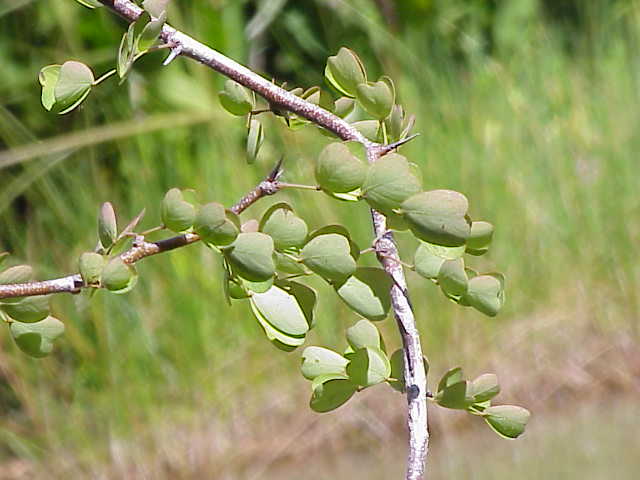
Purple and violet
Logwood
A tree whose wood yields a dye once vital for textiles and scienceColour named from nature · 🇲🇽 Mexico +3

Orange
Annatto
A yellow-orange dye and flavour from the seeds of the achiote treeDye · 🇲🇽 Mexico +5

#73C2FB
Maya blueazul maya
A vivid turquoise blue pigment made by the ancient Maya and AztecsPigment · 🇲🇽 Mexico +1

Yellow
Safflower
A thistle-like plant whose petals yield red and yellow dyesColour named from nature · 🇪🇬 Egypt +4

Orange
Annatto
A natural orange-red dye from the seeds of a tropical shrubColour named from nature · 🇲🇽 Mexico +5

Yellow
Tagetes patula dye
A golden yellow dye and spice made from French marigold flowersColour named from nature · 🇲🇽 Mexico +3
Blue
Indigofera suffruticosa
A shrub from the Americas used to make indigo dye and Maya blue pigmentColour named from nature · 🇺🇸 United States +5

Yellow
Cosmos sulphureus dye
An orange-yellow dye from the flowers of the Cosmos sulphureus plantColour named from nature · 🇲🇽 Mexico +5

Yellow
Old fustic
A yellow dye from a tropical tree, once key for military khakiDye · 🇲🇽 Mexico +1

Red
Haematoxylum brasiletto
A Central American tree whose heartwood gives red and pink dyesColour named from nature · 🇲🇽 Mexico +5

Red
Apoplanesia paniculata red dye
A red dye from a Yucatan tree, once used in Maya murals and paperDye · 🇲🇽 Mexico +1

Purple and violet
Berberis fremontii purple
A purple dye from the berries of a North American barberry shrubColour named from nature · 🇲🇽 Mexico
Orange
Argythamnia heterantha
A Mexican shrub whose orange seed endosperm colours and flavours foodColour named from nature · 🇲🇽 Mexico
Photo credits on this page
The small pictures above come from Wikimedia Commons under free licences. Some are cropped to fit.
- Safflower: AndrewMT, CC BY 3.0, source
- Maya blue: Unknown author, Public domain, source
- Annatto: Porto Neto, CC BY-SA 4.0, source
- Logwood: Kurt Stüber [1], CC BY-SA 3.0, source
- Annatto: Primejyothi, CC BY-SA 3.0, source
- Tagetes patula dye: Muhammad Mahdi Karim, GFDL 1.2, source
- Cosmos sulphureus dye: Alejandro Bayer Tamayo, CC BY-SA 2.0, source
- Old fustic: Jorge Vallmitjana, Public domain, source
- Apoplanesia paniculata red dye: Gaiacoyote, CC0, source
- Haematoxylum brasiletto: Roger Culos, CC BY-SA 3.0, source
- Berberis fremontii purple: C T Johansson, CC BY 3.0, source
- Izamal Mx: Inri, CC0, source
- Guanajuato Mx: Nathaniel C. Sheetz, CC BY-SA 3.0, source
- Oaxaca Mx: Apsu09, CC BY 3.0, source
- San Miguel De Allende Mx: https://www.flickr.com/photos/jiuguangw/, CC BY-SA 2.0, source
- Campeche Mx: self., CC BY-SA 4.0, source
- Tlacotalpan Mx: panza.rayada, CC BY-SA 3.0, source