Green fluorescent protein
A jellyfish protein that glows green under blue or ultraviolet light
No single value: Green fluorescent protein is a material, and its colour varies. The background shows its family, green.
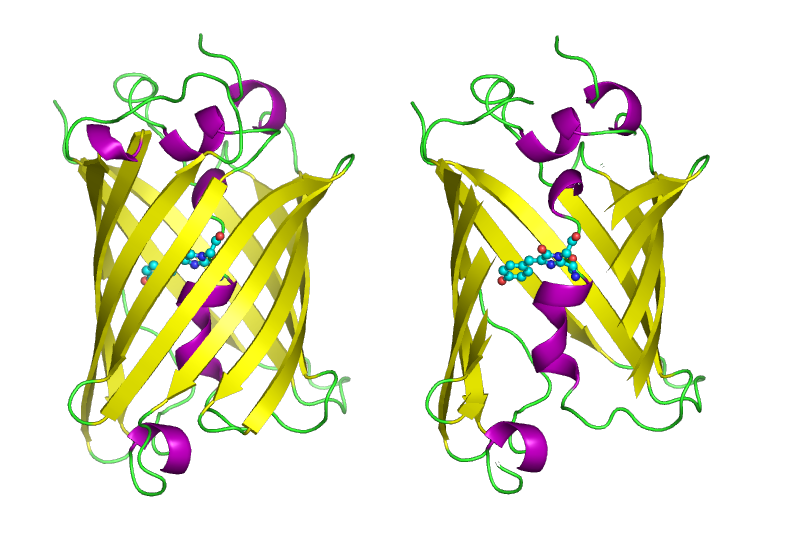
Green fluorescent protein is a natural protein first found in the jellyfish Aequorea victoria. It glows green when exposed to blue or ultraviolet light, with its main emission at 509 nm. Scientists use GFP as a marker in biology because it forms its own glowing centre and can be expressed in many organisms. Its discovery led to a Nobel Prize in Chemistry in 2008.
- First found in the jellyfish Aequorea victoria
- Glows green at 509 nm when exposed to blue or UV light
- Used as a marker in biological research
- Forms its own glowing centre without extra chemicals
- Led to a Nobel Prize in Chemistry in 2008
What colour is Green fluorescent protein?
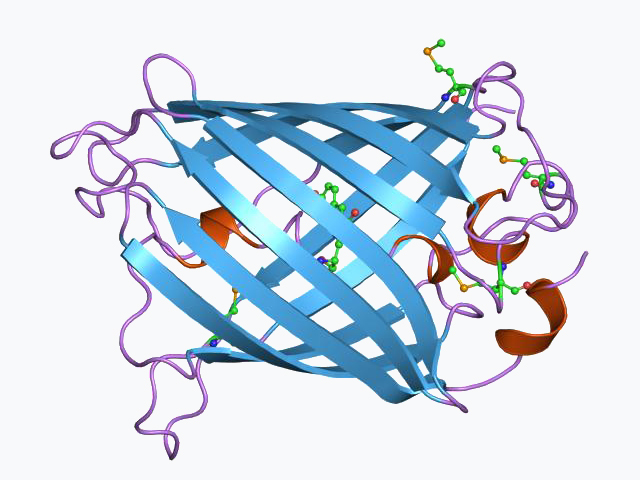
Green fluorescent protein, or GFP, is a protein that glows green when blue or ultraviolet light shines on it. Its glow comes from a part of the protein called a chromophore, which forms inside the protein itself. The main emission is at 509 nanometres, in the lower green part of the visible spectrum. GFP is different from other green colours because it is not a dye or pigment, but a protein that makes its own light when excited by certain wavelengths.
Where does Green fluorescent protein come from?
GFP was first isolated from the jellyfish Aequorea victoria in the 1960s and 1970s. Its use in biology began in the 1990s, when scientists cloned its gene and showed it could glow in other organisms. The protein’s natural role in jellyfish is not fully understood, but it works with another protein, aequorin, to shift blue bioluminescence towards green. The discovery and development of GFP earned a Nobel Prize in Chemistry in 2008.
How is Green fluorescent protein made?
GFP is made by living organisms, mainly certain jellyfish, corals, sea anemones, zoanthids, copepods, and lancelets. The protein forms its own chromophore, which is the part that glows, without needing extra chemicals or enzymes apart from oxygen. In the lab, scientists can produce GFP by inserting its gene into bacteria or other cells, which then make the protein themselves.


Where Green fluorescent protein is used
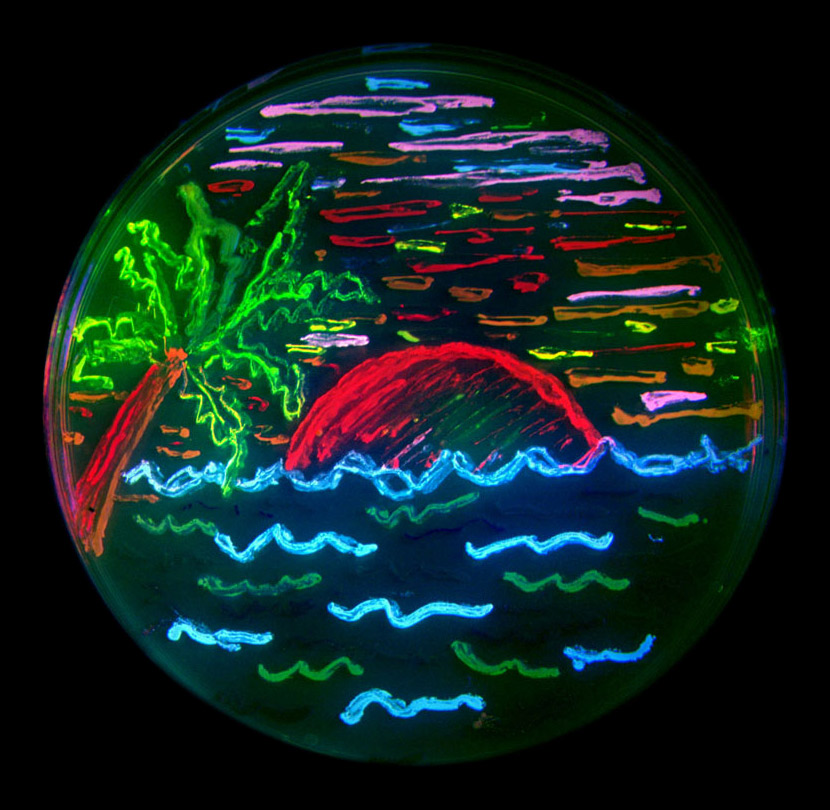
Scientists use GFP as a marker in cell and molecular biology. By attaching the GFP gene to other genes, they can track where and when those genes are active, because the cells glow green under blue or ultraviolet light. GFP has also been used to create biosensors and to show gene expression in many species, from bacteria to mammals. Its ability to glow makes it valuable in research and imaging.
Green around the world
What the green family means from country to country.
A green kerchief is the sign of the campaign for legal abortion. Huge crowds wore it in 2018, and the movement was called the green wave.
Politics and protestHopeSource: Green scarfGreen and gold have been the official national colours since 1984 and are worn by national sports teams. They echo the leaves and flowers of the golden wattle.
Festival and celebrationPrideSource: National colours of AustraliaA Test cricketer is given a dark green cap, the baggy green, on first playing for Australia. Many players wear the same faded cap for a whole career.
Festival and celebrationPrideSource: Baggy greenThe green field of the flag stands for the land and its rice fields. Many people also read it as the youth and vigour of the country.
Nature and renewalPolitics and protestHopeSource: Flag of BangladeshThe flag is white, green and red. The green band, which took the place of the blue in the Russian flag, is read as the country's forests and farmland.
Politics and protestNature and renewalSource: Flag of BulgariaThe green field of the flag is commonly said to stand for the forests. It was first the colour of the House of Braganza, the family of the first emperor.
Politics and protestNature and renewalPrideSource: Flag of BrazilShades and relatives of Green fluorescent protein
Many modified forms of GFP exist, including enhanced GFP (EGFP), superfolder GFP (sfGFP), and colour variants like blue, cyan, and yellow fluorescent proteins. These variants have been engineered for brighter glow, better stability, or different colours. Some are sensitive to pH, metal ions, or redox state, allowing them to act as sensors for specific conditions in cells.
Questions people ask about Green fluorescent protein
What colour is green fluorescent protein?
Green fluorescent protein glows green, with its main emission at 509 nanometres, when exposed to blue or ultraviolet light.
Where does the name green fluorescent protein come from?
The name comes from its ability to fluoresce, or glow, green under certain light. It was first found in the jellyfish Aequorea victoria.
How is GFP used in science?
Scientists use GFP as a marker to track gene expression and protein location in living cells. By attaching the GFP gene to other genes, they can see when and where those genes are active because the cells glow green.
Is GFP a dye or a pigment?
GFP is not a dye or pigment. It is a protein that forms its own glowing centre, called a chromophore, inside its structure.
Are there other colours of fluorescent proteins?
Yes, scientists have created variants of GFP that glow blue, cyan, yellow, and other colours by changing parts of the protein.
Good reading and sources
- Encyclopaedia BritannicaArticle
- BBC NEWS | Asia-Pacific | Taiwan breeds green-glowing pigsBBC, Article
- Green fluorescent protein on WikipediaEncyclopedia
- More pictures on Wikimedia CommonsPictures
- Wikidata recordOpen data
The facts on this page come from the Wikipedia article "Green fluorescent protein", written by its contributors and used under the CC BY-SA 4.0 licence, and from its Wikidata record (CC0). Rang rewrote the text in its own words, with AI assistance, and compares every page with the article to make sure no passage is copied. It may be reused under the same CC BY-SA 4.0 licence with a link back.
It may contain mistakes. The swatch is an approximation: named colours are not fixed standards, and every screen shows them a little differently. If something is wrong, tell us. Last refreshed 2026-10-03.
More of the green family
All of green
Green
Malachite
A banded green mineral and pigment once prized for art and decorationColour named from nature · 🇪🇬 Egypt +4
#50C878
Paris Green
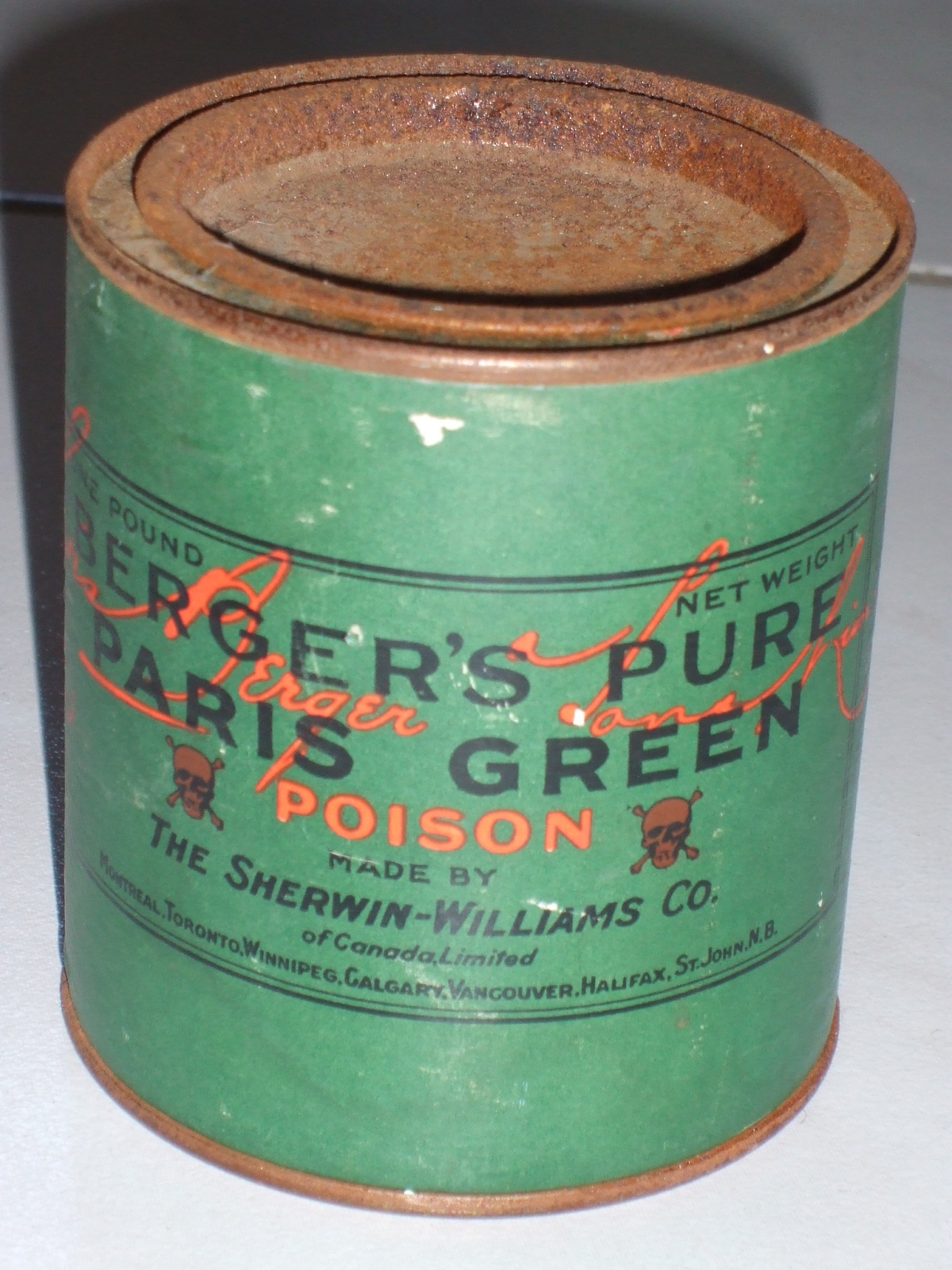
A toxic emerald-green pigment once prized in art and used as an early insecticidePigment · 🇩🇪 Germany +4

#43B3AE
Verdigris
A historic bluish-green pigment formed on copper and used in art since antiquityPigment · 🇬🇷 Greece +1

Green
Scheele's green
A yellowish-green pigment once prized for its brilliance, now infamous for its toxicityPigment

#40826D
Viridian
A blue-green pigment made from hydrated chromium oxide, valued in painting since the 1800sPigment

Green
Jade
A decorative stone prized for its green shades and cultural meaning across continentsColour named from nature · 🇨🇳 China +5
Green
Bioluminescence
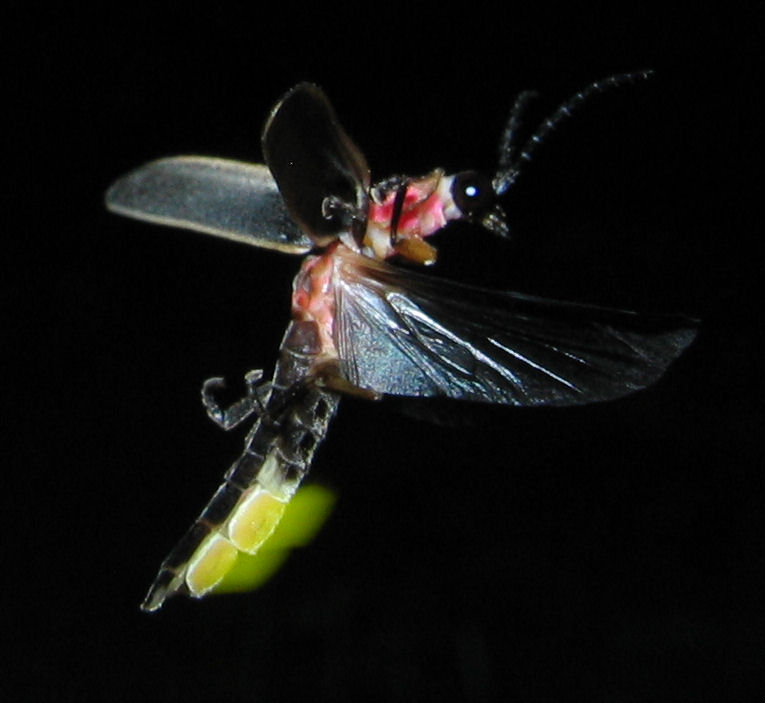
Light produced by living things through a chemical reactionColour named from nature

Green
Chromium(III) oxide
A strong green pigment and polishing compound made from chromium orePigment