Dominant white
A group of horse coat colours caused by KIT gene mutations, often producing all-white coats
No single value: Dominant white is a material, and its colour varies. The background shows its family, white.

Dominant white refers to several genetic variants on the KIT gene in horses that lead to all-white, near-white, or boldly white-spotted coats. These horses are born with pink skin and white hair, and the patterns can range from small markings to fully white, depending on the specific allele involved. The term covers a range of patterns, some formerly called sabino, and is genetically distinct from grey or albino hors
- Dominant white is caused by mutations on the KIT gene
- Horses are born with pink skin and white hair
- Over 30 different alleles can produce dominant white patterns
- Dominant white is not the same as albinism in horses
- DNA testing is needed to confirm the specific allele
What colour is Dominant white?
Dominant white is a term for a group of horse coat colours caused by mutations on the KIT gene. These mutations can result in horses that are all white, nearly all white, or have bold white markings or spots. The amount and pattern of white depend on which specific KIT allele is present. Most horses with this trait have pink skin under their white hair, which is due to a lack of pigment cells, and usually have dark eyes. Dominant white is different from other pale horse colours like grey or cremello.
Where does Dominant white come from?
The name 'dominant white' comes from the way these coat colours are inherited: a horse only needs one copy of the altered KIT gene to show the white or white-spotted pattern. Many of the alleles were first described as 'sabino', a term still used by some registries. The first identified allele, Sabino 1 (SB-1), was found in 2005, and since then, over 30 related alleles have been discovered, each linked to a particular family or breed. These mutations often arise spontaneously in horses with non-white parents.
How is Dominant white made?
Dominant white is not a pigment or dye but a genetic trait. It results from specific mutations in the KIT gene, which controls pigment cell development. Each unique mutation, or allele, can be identified through DNA testing. Some alleles are inherited dominantly, while others are incomplete dominants, and some combinations can be lethal if inherited from both parents.

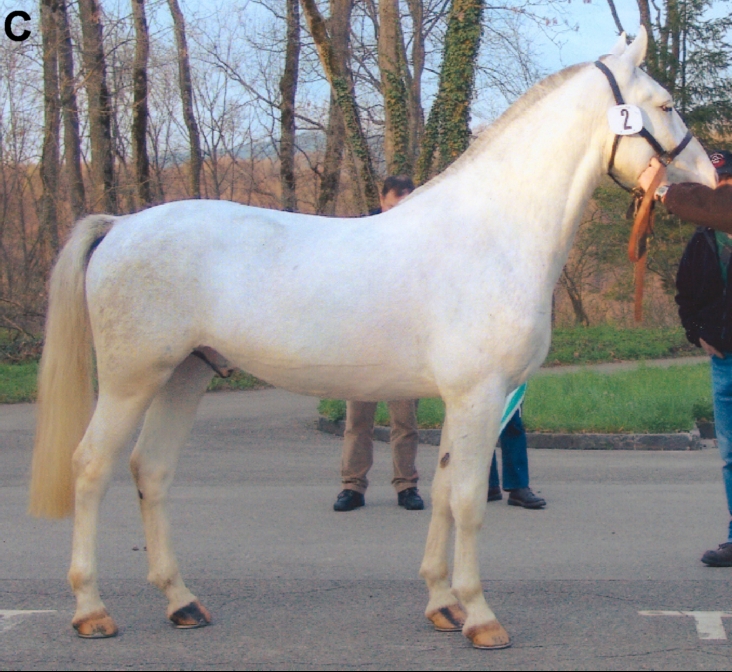


Where Dominant white is used
Dominant white patterns can appear in many horse breeds, including Thoroughbreds, Arabians, Icelandic horses, and others. The trait is valued for its striking appearance, and some breeds, like the Camarillo White Horse, are known for their pure white coats. However, the presence of dominant white can be unexpected, even in breeds that do not favour white markings.
What Dominant white means
The sources do not link dominant white to any particular meaning, emotion, or cultural association. It is mainly discussed as a genetic and visual trait in horses, rather than a symbol or sign in any tradition.
White around the world
What the white family means from country to country.
The Taliban flag is white with the Muslim declaration of faith in black. It replaced the black, red and green tricolour of the republic in 2021.
Politics and protestSacred and holySource: Flag of AfghanistanThe Mothers of the Plaza de Mayo wore white headscarves as they marched to demand news of children who disappeared under the dictatorship of 1976 to 1983.
Politics and protestMourning and deathCourageSource: Mothers of Plaza de MayoThe wiphala, a square flag of 49 small squares in seven colours with a white diagonal, stands for the Andean peoples. It has been a second national flag since 2009.
Politics and protestPrideSource: WiphalaOn New Year's Eve crowds on the beaches dress in white for peace in the year ahead. The custom comes from the Afro-Brazilian religions, whose followers wear white.
Luck and prosperityFestival and celebrationSacred and holyHopeSource: New Year's EveAn ordinary citizen's kabney is white with fringes. It must be worn to enter a dzong, the fortress that houses both monks and government offices.
Purity and peaceSource: KabneyA red cross on white, the Swiss flag reversed, marks medical staff and aid workers in war and must not be attacked under the Geneva Conventions.
Protection and healingTrustSource: Emblems of the International Red Cross and Red Crescent MovementShades and relatives of Dominant white
There are over 30 known dominant white alleles, labelled W1 through W28 and W30 through W35, plus Sabino 1 (SB-1). These can produce a wide range of patterns, from small white markings to fully white coats. Some alleles can combine to create more extensive white areas. Dominant white is distinct from other white-like colours in horses, such as grey or cremello, and is not the same as albinism.
Questions people ask about Dominant white
What colour is dominant white in horses?
Dominant white in horses can range from pure white to near-white or boldly white-spotted coats. The exact pattern depends on which KIT gene allele is present.
Where does the name 'dominant white' come from?
The name refers to the way the trait is inherited: only one copy of the altered KIT gene is needed for a horse to show the white or white-spotted pattern.
Is dominant white the same as albinism in horses?
No, dominant white is genetically and visually distinct from albinism. True albinism has never been documented in horses.
Can dominant white occur in any horse breed?
Yes, dominant white mutations can arise spontaneously and have been found in many breeds, including Thoroughbreds, Arabians, and Icelandic horses.
How is dominant white identified?
Because the patterns can vary widely, DNA testing is the only reliable way to confirm if a horse has a dominant white allele.
Good reading and sources
- Dominant white on WikipediaEncyclopedia
- More pictures on Wikimedia CommonsPictures
- Wikidata recordOpen data
The facts on this page come from the Wikipedia article "Dominant white", written by its contributors and used under the CC BY-SA 4.0 licence, and from its Wikidata record (CC0). Rang rewrote the text in its own words, with AI assistance, and compares every page with the article to make sure no passage is copied. It may be reused under the same CC BY-SA 4.0 licence with a link back.
It may contain mistakes. The swatch is an approximation: named colours are not fixed standards, and every screen shows them a little differently. If something is wrong, tell us. Last refreshed 2026-10-03.
More of the white family
All of white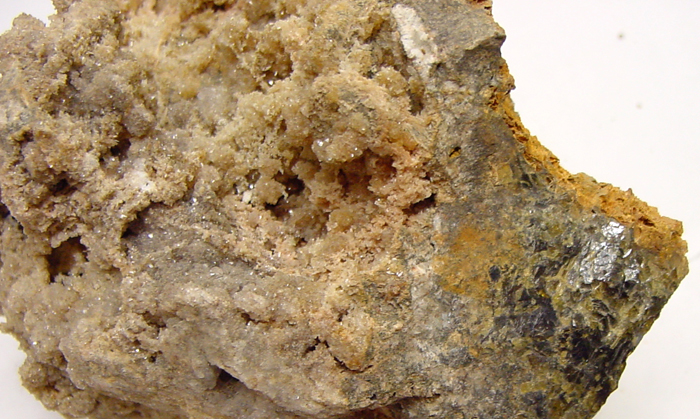
White
Zinc oxide
A white inorganic powder used in pigments, ointments, ceramics and electronicsPigment · 🇮🇳 India +2
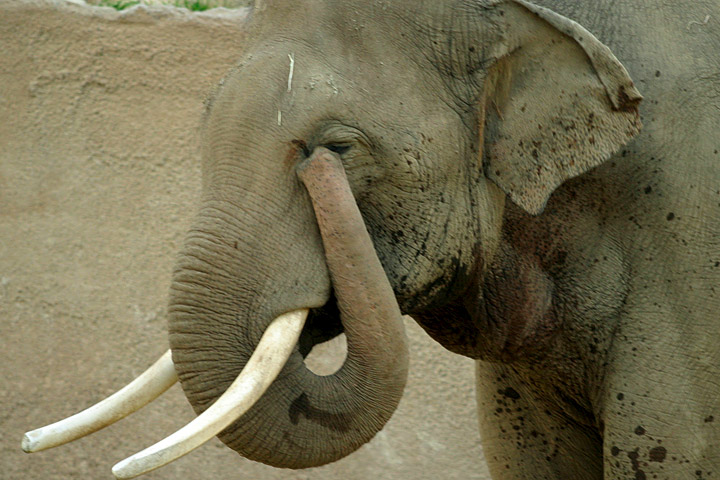
#FFFFF0
Ivory
A soft off-white shade with a hint of yellow, named after animal tusksNamed shade

#FDF8FF
Zinc white
A cool, low-toxicity white pigment made from zinc oxidePigment

White
Lead white
A dense, opaque white pigment once used in art, home, and cosmetics worldwidePigment · 🇨🇳 China +2

White
Barium sulfate
A dense, white mineral used in pigments, X-rays, and industryPigment
White
Antimony trioxide
A white antimony compound used in flame retardants and glassmakingPigment · 🇨🇳 China +4

White
White lead
A historic opaque white pigment once made from lead and vinegarPigment

White
White hair
Hair that has lost its pigment and appears white or grey with age or other causesNamed shade