Magenta (dye)
A deep pink-purple dye first made from coal tar in 1859
Magenta (dye) is a vivid pinkish-purple colour first made from coal tar dyes in 1859. Its name was changed to magenta in 1860, after the Battle of Magenta near the Italian town of the same name, and it was one of the earliest synthetic dyes.
Share on WhatsAppOpen in the lab
- First made from coal tar dyes in 1859
- Named after the Battle of Magenta in Italy
- Originally called fuchsine or roseine
- One of the first synthetic aniline dyes
What colour is Magenta (dye)?
Magenta (dye) is a strong pinkish-purple colour, deeper and richer than the magenta used in printers or on screens today. It stands out for its vividness and was known as 'rich magenta' to set it apart from later versions. This colour was one of the first to be made artificially, giving it a special place in the history of dyes.
Where does Magenta (dye) come from?
The dye was first created from coal tar in 1859, soon after the Battle of Magenta near the town of Magenta in northern Italy. Originally, it was called fuchsine or roseine, but in 1860 the name was changed to magenta for marketing, linking it indirectly to the Italian town and the battle.
How is Magenta (dye) made?
Magenta dye was produced using aniline, a chemical derived from coal tar. This made it one of the earliest synthetic dyes, marking a shift from natural sources to artificial ones in the dye industry. The process allowed for vivid, lasting colours that were not possible before.
Pink around the world
What the pink and magenta family means from country to country.
The leader of the Giro d'Italia cycle race wears the maglia rosa, the pink jersey. It matches the pink paper of La Gazzetta dello Sport, which founded the race.
Festival and celebrationPrideSource: General classification in the Giro d'ItaliaThe president's office in Buenos Aires is the Casa Rosada, the Pink House. A popular story says its paint once had ox blood mixed in, though this is not proven.
Politics and protestSource: Casa RosadaThe third day of the New Year's Test at the Sydney Cricket Ground is Jane McGrath Day. The crowd wears pink to raise money for breast cancer nurses.
Protection and healingHopeSource: McGrath FoundationThe Rose Valley near Kazanlak grows pink damask roses for rose oil. The harvest in late May and June is marked by a festival and the crowning of a Rose Queen.
Nature and renewalFestival and celebrationJoySource: Rose Valley, BulgariaToulouse is called la Ville Rose, the pink city, for the soft pink brick of its old buildings.
Nature and renewalSource: ToulouseIn November 2003 protesters entered parliament carrying roses, and the president resigned without bloodshed. The change of power is called the Rose Revolution.
Politics and protestHopeSource: Rose RevolutionShades and relatives of Magenta (dye)
Rich magenta, or original magenta, is deeper than printer's magenta and electric magenta, which were developed later for printing and digital displays. The original dye is sometimes confused with these newer shades, but it is distinct in both history and appearance.
Colours that go with Magenta (dye)
Harmonies are worked out from the value #CA1F7B. Contrast ratios follow the WCAG 2 formula.
Questions people ask about Magenta (dye)
What colour is magenta (dye)?
It is a vivid pinkish-purple, deeper and richer than the magenta used in printers or on screens today.
Where does the name magenta come from?
The name was adopted in 1860 after the Battle of Magenta, which took place near the town of Magenta in northern Italy.
What was magenta dye originally called?
It was first known as fuchsine or roseine before being renamed magenta.
How was magenta dye made?
It was made using aniline, a chemical derived from coal tar, making it one of the first synthetic dyes.
Good reading and sources
The facts on this page come from the Wikipedia article "Shades of magenta" (the section "Magenta dye (original variation) (1860)"), written by its contributors and used under the CC BY-SA 4.0 licence. Rang rewrote the text in its own words, with AI assistance, and compares every page with the article to make sure no passage is copied. It may be reused under the same CC BY-SA 4.0 licence with a link back.
It may contain mistakes. The swatch is an approximation: named colours are not fixed standards, and every screen shows them a little differently. If something is wrong, tell us. Last refreshed 2026-10-03.
More of the pink and magenta family
All of pink and magenta
#FF00FF
Magenta
A purplish-pink colour named after a battle and key to modern printingNamed shade · 🇫🇷 France +4

Pink and magenta
Basic fuchsine
A magenta dye used in biology and textile staining since the 19th centuryPigment

#FA8072
Salmon
A warm pink-orange shade named after the flesh of the salmon fishNamed shade

#FF0080
Rose
A bright colour halfway between red and magenta on the colour wheelNamed shade
#DE3163
Cerise
A dark pink named after the French word for cherryNamed shade

#997A8D
Mountbatten pink
A muted pink-grey once used as naval camouflage in World War IINamed shade
#FF91AF
Baker-Miller Pink
A strong pink once used in prisons and sports to try to calm aggressionNamed shade · 🇨🇭 Switzerland +1

#F56FA1
Cyclamen
A pinkish flower colour named after the Cyclamen plantNamed shade
More colours tied to Italy
The colours of Italy
Blue
Lapis lazuli
A deep blue stone prized for jewellery and the source of ultramarine pigmentColour named from nature · 🇦🇫 Afghanistan +5

Blue
Woad
A blue dye once vital to Europe's textile trade, made from the leaves of a flowering plantDye · 🇫🇷 France +3
#120A8F
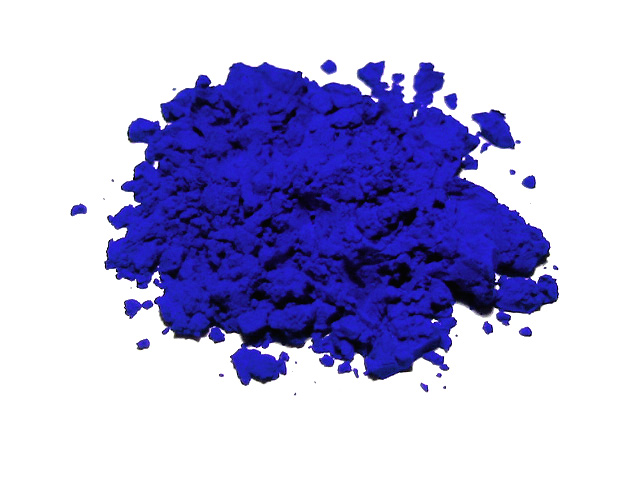
Ultramarine
A deep blue pigment once made from lapis lazuli, prized for centuries in artPigment · 🇦🇫 Afghanistan +2

#E25822
Scarlet
A bright red with a touch of orange, long tied to power, sacrifice and sinNamed shade · 🇹🇷 Turkey +4