🇧🇩 The colours of Bangladesh
7 meanings recorded, 5 colours tied to the country and 1 colour city.
Bangladesh’s flag features a deep green field with a red circle slightly off-centre. The green stands for the country’s lush landscape, while the red circle recalls the blood shed for independence and the rising sun. These meanings are widely accepted, though some also link green to youth and progress.
Where no official value is given, the swatch shows the colour family, not the exact shade.
- The flag’s red circle is slightly off-centre to appear centred when flying.
- Green stands for the country’s lush landscape and sometimes youth.
- Red recalls the blood shed for independence and the rising sun.
- The original flag included a yellow map, later removed for practicality.
- Official flag colours are specified by dye names, not hex codes.
The colours of the flag of Bangladesh
The flag of Bangladesh is made up of a dark green background with a red circle set slightly towards the hoist. Official explanations say the green represents the country’s rich, green landscape. The red circle is said to recall the blood of those who died in the 1971 Liberation War and also suggests a rising sun, echoing new beginnings. Some descriptions add that green stands for youth and progress, and the red for revolution and renewal. These meanings are widely accepted, though not all are official.
How the colours were chosen of Bangladesh
The first version of the flag was created in 1970 by student activists. It included a yellow map of Bangladesh inside the red circle, which was later removed in 1972 for practical reasons. The flag was first raised publicly at Dhaka University in March 1971, before independence. The design deliberately avoided symbols used by West Pakistan, such as the star and crescent. The current flag, with only the red circle and green field, was adopted in January 1972.
Official shades and rules of Bangladesh
The flag’s proportions are set at 10:6, with the red circle’s radius one-fifth the flag’s length. The circle is placed so it appears centred when flying. Official specifications name the green as Procion Brilliant Green H-2RS and the red as Procion Brilliant Orange H-2RS, but no exact hex codes are given. The flag is flown on government buildings and by certain officials on vehicles, with specific sizes for different uses.
The facts in this overview come from the Wikipedia article "Flag of Bangladesh", written by its contributors and used under the CC BY-SA 4.0 licence. Rang rewrote the text in its own words, with AI assistance, and compares every page with the article to make sure no passage is copied. It may be reused under the same CC BY-SA 4.0 licence with a link back.
What colours mean in Bangladesh
Customs vary by region, faith and family; these are the meanings most often recorded.
The flag is a red disc on a green field. The red is read both as the sun rising over Bengal and as the blood of those who died in the 1971 Liberation War.
Politics and protestPrideSource: Flag of BangladeshOn Pohela Boishakh, the Bengali New Year in April, women wear white saris with red borders and men wear red and white panjabis for the morning processions.
Festival and celebrationJoySource: Pohela BoishakhA Bengali Muslim bride usually marries in a red sari, often a Benarasi or a Jamdani, with gold jewellery.
Weddings and marriageLoveSource: Bengali Muslim weddingAt the gaye holud, held a day or two before a wedding, relatives rub turmeric paste on the bride and groom. Guests dress in yellow and orange.
Weddings and marriageFestival and celebrationJoySource: Gaye holudOn Pohela Falgun, the first day of spring, young women wear yellow and orange saris, a shade called basanti, with flowers in their hair.
Festival and celebrationNature and renewalJoySource: Pohela FalgunThe green field of the flag stands for the land and its rice fields. Many people also read it as the youth and vigour of the country.
Nature and renewalPolitics and protestHopeSource: Flag of BangladeshOn 21 February, Language Martyrs' Day, people wear black badges and black and white clothes and walk barefoot to the Shaheed Minar to honour those killed in 1952.
Mourning and deathPolitics and protestGriefSource: Bengali language movement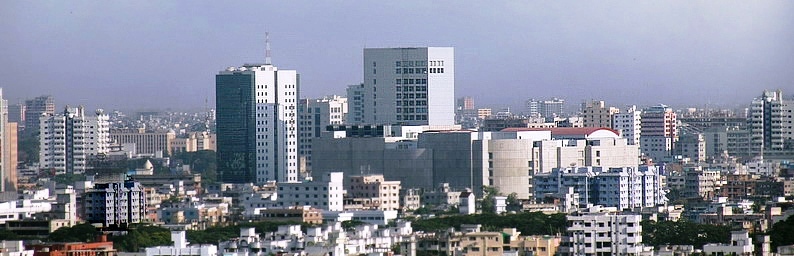
Colours tied to Bangladesh

Red
Sappanwood
A tropical Asian tree whose heartwood yields a red dye called brazilinColour named from nature · 🇳🇵 Nepal +4
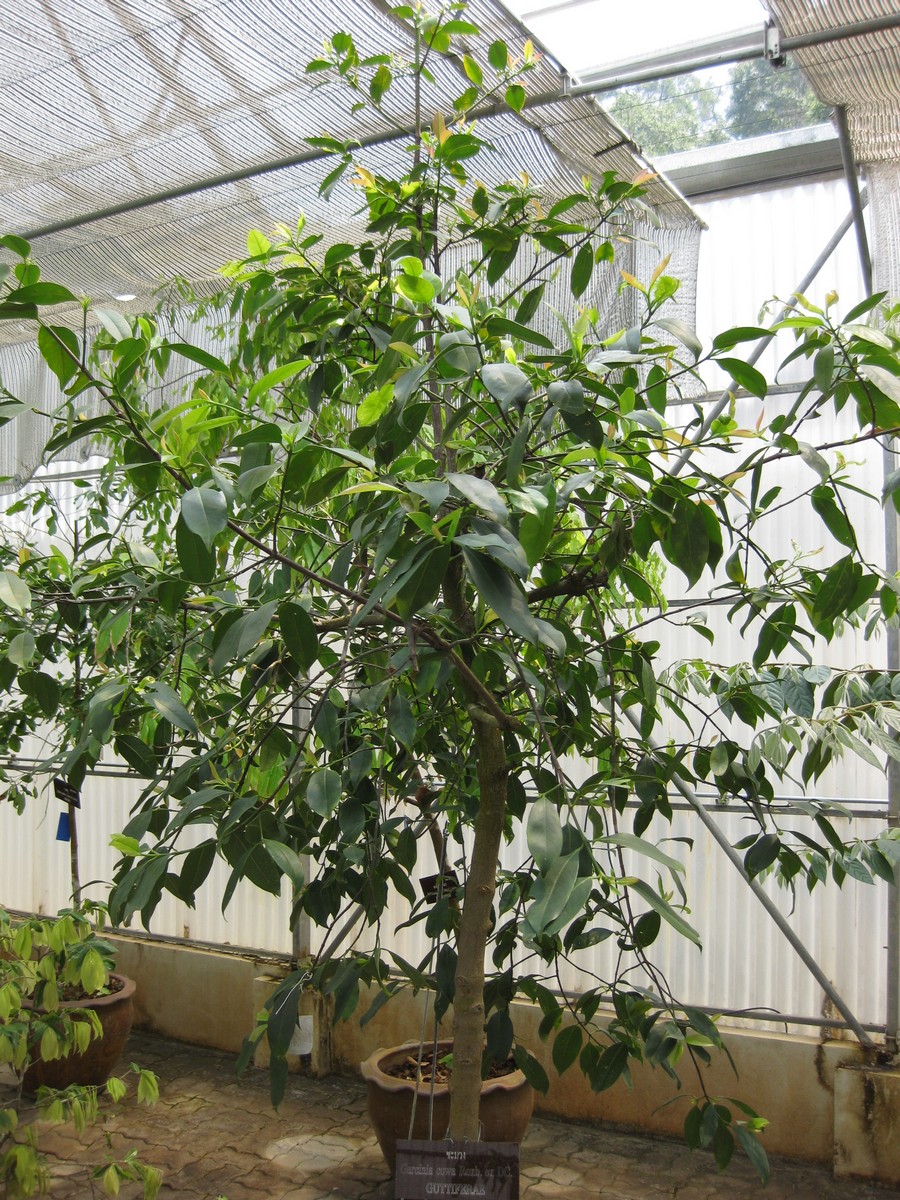
Yellow
Garcinia cowa yellow
A yellow dye from the bark of the Garcinia cowa tree in tropical AsiaColour named from nature · 🇮🇳 India +5

Yellow
Gamboge (from Garcinia cambogioides)
A yellow resin from the Garcinia cambogioides tree, used in food, paint and medicineColour named from nature · 🇮🇳 India +2
Photo credits on this page
The small pictures above come from Wikimedia Commons under free licences. Some are cropped to fit.
- Garcinia cowa yellow: Raffi Kojian, CC BY-SA 3.0, source
- Gamboge (from Garcinia cambogioides): Franz Eugen Köhler, Köhler's Medizinal-Pflanzen, Public domain, source
- Sappanwood: Vinayaraj, CC BY-SA 3.0, source
- Dhaka Bd: Tanweer drmc, Public domain, source