Lead ochre
In its own language: bleiocker
A group of yellow, orange and red lead-based pigments resembling ochre
No single value: Lead ochre is a material, and its colour varies. The background shows its family, yellow.

Lead ochre is a name for several lead minerals used as pigments, with colours ranging from cream and yellow to orange and red. These minerals, including massicot, litharge, and minium, were valued by glassblowers, artisans, and miners for their powdery texture and strong hues.
- Covers yellow, orange, and red lead-based pigments
- Includes massicot, litharge, and minium minerals
- Used by glassblowers, artisans, and miners
- Powdery texture similar to natural ochre
What colour is Lead ochre?
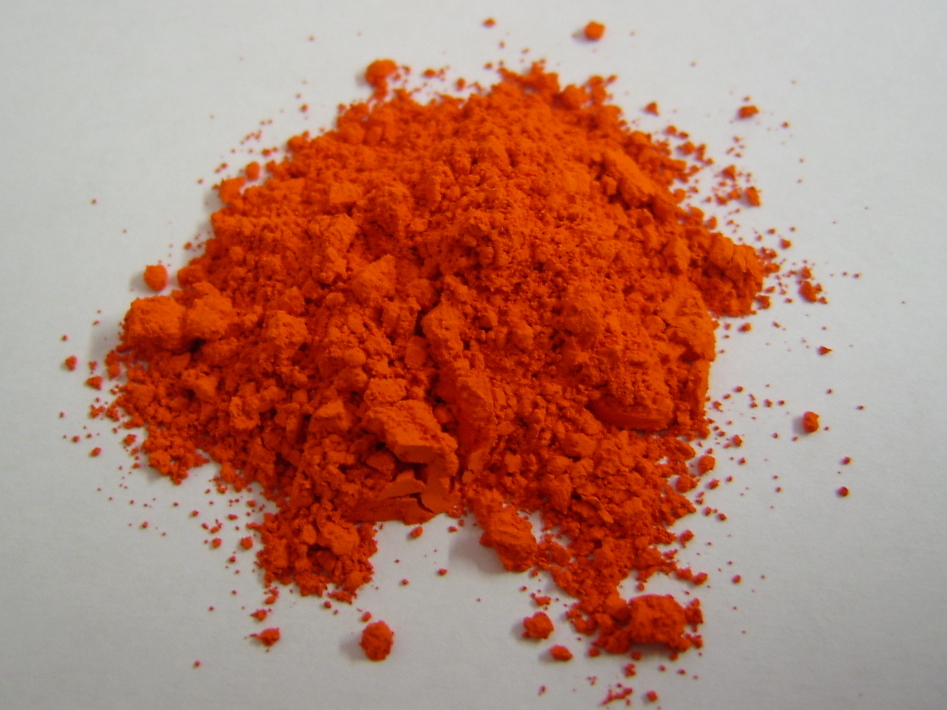
Lead ochre refers to several lead-based minerals that are used as pigments and share a powdery look and earthy colours similar to natural ochre. These pigments can be cream, yellow, orange, or red, and are known for their strong, bright hues. The main minerals called lead ochre are massicot (yellow), litharge (orange-red), and minium (bright orange-red). Their appearance and texture set them apart from other mineral pigments.
Where does Lead ochre come from?
The name 'lead ochre' comes from its resemblance to ochre, a natural earth pigment, and its lead content. The term was mainly used by glassblowers, artisans, geologists, and miners. The word 'ochre' itself comes from ancient Greek, meaning 'pale yellow' or 'orange.'
How is Lead ochre made?
Lead ochre pigments are made from minerals that form through the oxidation of galena, a lead ore. Massicot (yellow) and litharge (orange-red) are both forms of lead(II) oxide, differing in crystal structure and colour. Minium, also called red lead, is another lead oxide mineral with a bright orange-red colour. These minerals are ground into powders for use as pigments.
Where Lead ochre is used
Lead ochre pigments have been used mainly by glassblowers and artisans, as well as in geology and mining. Their strong colours made them useful in art and ceramics, where they provided yellow, orange, and red tones. The powdery consistency made them easy to mix and apply.
Yellow around the world
What the yellow family means from country to country.
The yellow disc of the Aboriginal flag is the sun, giver of life. The flag was designed by the Luritja artist Harold Thomas and first flown in Adelaide in 1971.
Sacred and holySource: Australian Aboriginal flagAt the gaye holud, held a day or two before a wedding, relatives rub turmeric paste on the bride and groom. Guests dress in yellow and orange.
Weddings and marriageFestival and celebrationJoySource: Gaye holudOn Pohela Falgun, the first day of spring, young women wear yellow and orange saris, a shade called basanti, with flowers in their hair.
Festival and celebrationNature and renewalJoySource: Pohela FalgunThe Flemish flag is a black lion on yellow, and the Walloon flag a red cockerel on yellow. The language communities are often shown by these colours.
Politics and protestPrideSource: Flag of FlandersThe flag is yellow, the colour of the Sultan. By custom, ordinary people did not wear yellow in the ruler's presence.
Royalty and powerPrideSource: Flag of BruneiThe national football team plays in a yellow shirt with green trim, the canarinho. It was chosen in a newspaper contest after the 1950 World Cup final was lost in white.
Festival and celebrationPrideJoySource: Brazil national football teamShades and relatives of Lead ochre
Lead ochre covers a range of colours depending on the mineral: massicot is yellow, litharge is orange-red, and minium is bright orange-red. These may be confused with other ochres, such as those based on iron or antimony, but lead ochres are distinct for their lead content and brighter, more vivid colours.
Questions people ask about Lead ochre
What colour is lead ochre?
Lead ochre can be cream, yellow, orange, or red, depending on the mineral. Massicot is yellow, litharge is orange-red, and minium is bright orange-red.
Where does the name 'lead ochre' come from?
The name comes from its similarity to ochre, a natural earth pigment, and its lead content. The term 'ochre' is from ancient Greek, meaning 'pale yellow' or 'orange.'
What minerals are included in lead ochre?
Lead ochre includes massicot (yellow), litharge (orange-red), and minium (bright orange-red), all of which are lead-based minerals used as pigments.
How is lead ochre made?
Lead ochre pigments are made from minerals that form when galena, a lead ore, oxidises. The minerals are then ground into powder for use as pigments.
Good reading and sources
- Lead ochre on WikipediaEncyclopedia
- More pictures on Wikimedia CommonsPictures
- Wikidata recordOpen data
The facts on this page come from the Wikipedia article "Lead ochre", written by its contributors and used under the CC BY-SA 4.0 licence, and from its Wikidata record (CC0). Rang rewrote the text in its own words, with AI assistance, and compares every page with the article to make sure no passage is copied. It may be reused under the same CC BY-SA 4.0 licence with a link back.
It may contain mistakes. The swatch is an approximation: named colours are not fixed standards, and every screen shows them a little differently. If something is wrong, tell us. Last refreshed 2026-10-03.
More of the yellow family
All of yellow
#FFFF00
Yellow
A primary colour between green and orange, seen in sunlight, leaves, and pigmentsBasic colour · 🇫🇷 France +5

Yellow
Turmeric
A golden yellow dye and spice from the rhizome of a tropical plantColour named from nature · 🇮🇳 India +5

Yellow
Orpiment
A golden-yellow mineral pigment once prized for its brilliant colour and rarityPigment · 🇪🇬 Egypt +5

Yellow
Tartrazine
A synthetic lemon yellow dye widely used in food, cosmetics and medicinesDye

#E49B0F
Gamboge
A strong yellow pigment tapped from Southeast Asian treesPigment · 🇰🇭 Cambodia +5

#FADA5E
Naples yellow
A historic synthetic yellow pigment once prized by painters and pottersPigment · 🇪🇬 Egypt +1

#E3A857
Indian Yellow
A clear, glowing orange-yellow pigment once made in India from cow urinePigment · 🇮🇳 India

#FFA700
Chrome yellow
A bright yellow pigment made from lead chromate, once popular in art and industryPigment