Agouti coloration
A banded hair colour pattern in mammals, controlled by the agouti gene
No single value: Agouti coloration is a material, and its colour varies. The background shows its family, brown.

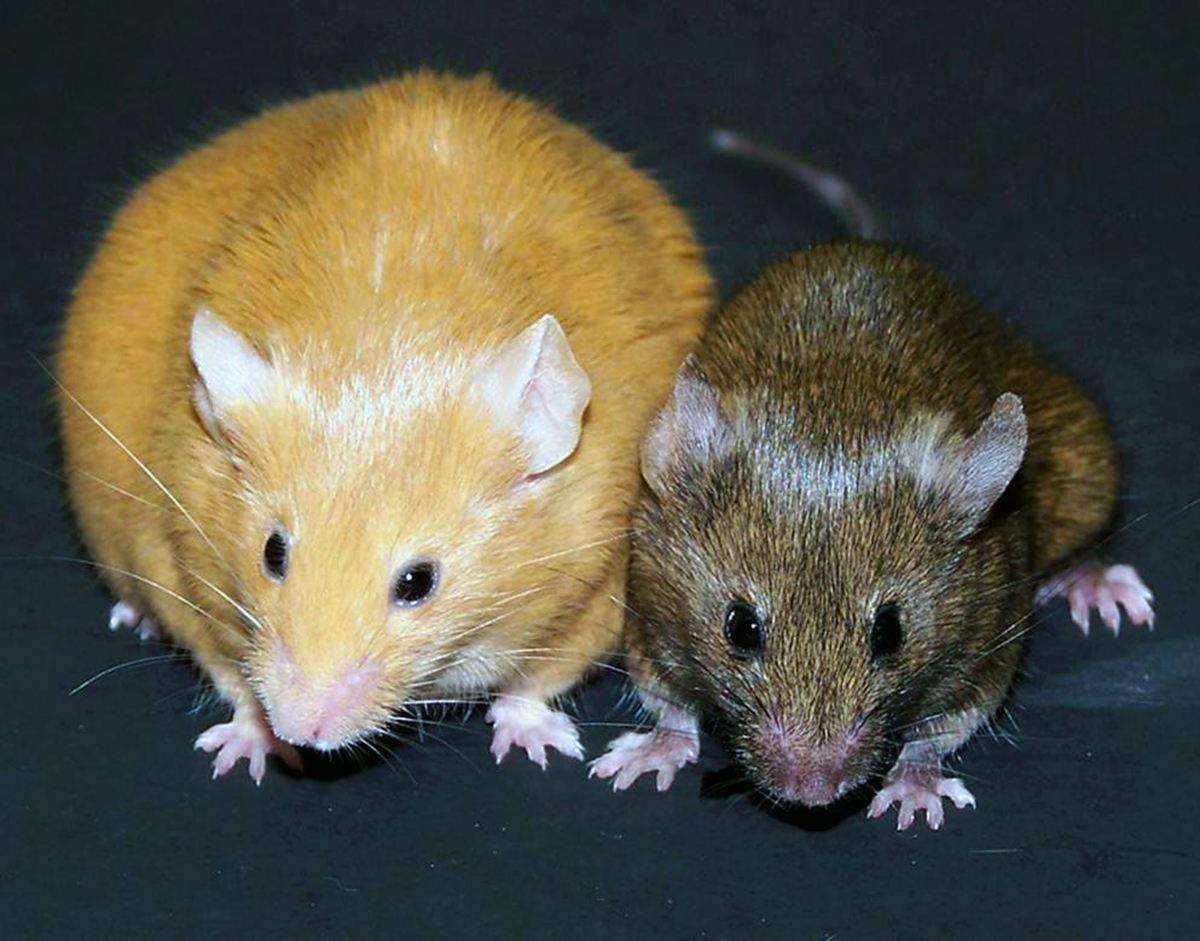
Agouti coloration is a pattern seen in the fur of many mammals, where each hair shows bands of yellow or red and black. This effect is caused by the agouti gene, which controls the type and timing of pigment made in the hair. The pattern is common in wild mice, dogs, rabbits, and other animals, and changes in the gene can lead to coats that are all black, all yellow, or show other patterns.
- Agouti hairs have bands of yellow and black pigment
- The agouti gene controls this pattern in many mammals
- Mutations can cause all-black or all-yellow coats
- In dogs, agouti is linked to fawn, sable, and wolf sable patterns
- In cats, non-agouti hides the tabby pattern
What colour is Agouti coloration?
Agouti coloration is a natural fur pattern found in many mammals. Each hair has bands of yellow or reddish pigment and black pigment, giving the animal a speckled or grizzled look. The pattern is most often seen in wild mice, rabbits, dogs, and other animals. Agouti fur stands out from plain black or brown coats because of these distinct bands on each hair, which can make the animal's coat look flecked or ticked.
Where does Agouti coloration come from?
The name 'agouti' comes from the agouti, a rodent with this type of banded fur. The colour pattern is controlled by the agouti gene, also called ASIP (agouti-signaling protein), which is found in many mammals. The gene's action has been studied in animals like mice, dogs, cats, horses, rabbits, and donkeys. Over time, researchers have identified many different versions (alleles) of the gene, each leading to different coat patterns.
How is Agouti coloration made?
Agouti coloration is not made from a pigment or dye, but is the result of how the agouti gene controls pigment production in the hair. The gene switches between making yellow-red pheomelanin and black-brown eumelanin as each hair grows. In wildtype animals, this switching creates bands of colour along each hair. Mutations in the gene can change the pattern, leading to solid colours or other effects.


Where Agouti coloration is used
Agouti coloration is seen in the natural coats of many wild and domestic mammals. In animals like mice, rabbits, and dogs, it helps provide camouflage. In domestic animals, breeders may select for or against agouti patterns depending on the desired appearance. The pattern is also important in genetics research, as it helps scientists study how genes control colour.
Brown around the world
What the brown family means from country to country.
Brown is the colour of Nazism in German political speech, after the brown shirts of the party's stormtroopers. To call a view "brown" is to call it far right.
Politics and protestDanger and warningShameSource: SturmabteilungMasi is bark cloth beaten from paper mulberry and printed in brown and black. It is worn at weddings and funerals and given in ceremonial exchanges.
Sacred and holyWeddings and marriageSource: Tapa clothKuntunkuni is a dark brown mourning cloth of the Asante, dyed with tree bark. Adinkra cloth, stamped with symbols, was first made on such dark grounds for funerals.
Mourning and deathSadnessSource: Adinkra symbolsThe batik of the Javanese courts at Yogyakarta and Surakarta is dyed in soga brown with indigo and cream. Some court patterns were once reserved for the royal family.
Royalty and powerPrideSource: BatikBogolanfini, or mud cloth, is cotton painted with fermented river mud in browns, black and white. Hunters wear it for protection, and women after childbirth.
Protection and healingSacred and holySource: BògòlanfiniShades and relatives of Agouti coloration
There are many variations of agouti coloration, depending on the species and the specific form of the gene. In mice, alleles can cause yellow, mottled, black, or classic agouti patterns. In dogs, the gene leads to fawn, sable, wolf sable, tan point, and recessive black coats. In cats, the non-agouti form hides the tabby pattern. Horses and donkeys also show different effects depending on the agouti gene.
Questions people ask about Agouti coloration
What colour is agouti?
Agouti is a pattern where each hair has bands of yellow or red and black, giving a flecked or grizzled look. It is common in the fur of wild mice, rabbits, dogs, and other mammals.
Where does the name 'agouti' come from?
The name comes from the agouti, a rodent known for its banded fur. The same type of pattern is seen in many other mammals and is controlled by the agouti gene.
What causes agouti coloration?
Agouti coloration is caused by the agouti gene (ASIP), which switches pigment production in the hair between yellow-red and black-brown as the hair grows.
Can animals have different agouti patterns?
Yes, different versions of the agouti gene lead to a range of patterns, including classic agouti, all-black, all-yellow, sable, and others, depending on the species.
Does agouti coloration have a use?
In the wild, agouti coloration helps animals blend into their surroundings. In domestic animals, it is sometimes bred for or against, depending on breed standards.
Good reading and sources
The facts on this page come from the Wikipedia article "Agouti coloration genetics", written by its contributors and used under the CC BY-SA 4.0 licence, and from its Wikidata record (CC0). Rang rewrote the text in its own words, with AI assistance, and compares every page with the article to make sure no passage is copied. It may be reused under the same CC BY-SA 4.0 licence with a link back.
It may contain mistakes. The swatch is an approximation: named colours are not fixed standards, and every screen shows them a little differently. If something is wrong, tell us. Last refreshed 2026-10-03.
More of the brown family
All of brown
Brown
Terracotta
A clay-based material and colour, known for its reddish-brown toneColour named from nature · 🇮🇳 India +4

#C3B091
Khaki
A light tan with a yellowish tinge, once made for military uniformsNamed shade · 🇮🇳 India +2

#F5F5DC
Beige
A pale, warm colour named after natural, undyed woolNamed shade · 🇫🇷 France +2

#704214
Sepia
A reddish-brown colour named for the ink of the cuttlefishNamed shade

#8A3324
Umber
A natural brown pigment from earth, valued for its warmth and versatility in artPigment · 🇨🇾 Cyprus +2

#3D2B1F
Bistre
A dark brown pigment and colour made from soot, once used in Old Master drawingsPigment

#E97451
Sienna
A reddish-brown earth pigment named after the city of Siena in ItalyPigment · 🇫🇷 France
#B87333
Copper
A reddish brown shade named for the metal it matchesNamed shade