Rust
A deep reddish-orange named after the colour of oxidised iron

Rust is a deep red-orange shade that looks like the colour of iron when it oxidises. Its name comes from the reddish coating seen on weathered iron and has been used in English since 1692. Rust is often seen on cars and is similar in colour to photographic safelights under tungsten lighting.
Share on WhatsAppOpen in the lab
- Rust is named for the colour of oxidised iron.
- The first recorded use of 'rust' as a colour name in English was in 1692.
- Rust resembles the colour of photographic safelights under tungsten light.
- It is a common colour for cars.
What colour is Rust?
Rust is a deep reddish-orange colour, closely resembling the look of iron oxide, which forms when iron is exposed to air and moisture. The shade sits between red and orange, with a muted, earthy quality that sets it apart from brighter reds or oranges. It is often described as the colour of weathered iron surfaces and is darker and browner than most other reds.
Where does Rust come from?
The name 'rust' comes from the reddish coating that forms on iron when it oxidises. The English word traces back to the Proto-Germanic 'rusta', meaning 'redness', and is related to 'ruddy', another term for a reddish hue. The colour term 'rust' was first recorded in English in 1692.

Where Rust is used
Rust is a popular colour for cars and is also used in art, textiles, and architecture. In photography, safelights with a rust-like filter are used over tungsten bulbs to create a similar reddish-orange glow. The colour is chosen for its earthy, natural appearance and its association with aged or weathered materials.
Red around the world
What the red family means from country to country.
The flag uses the four Pan-Arab colours: a red bar at the hoist with green, white and black bands. It was designed by a young Emirati, Abdullah Al Maainah, in 1971.
Politics and protestPrideSource: Flag of the United Arab EmiratesThe flag is a black double-headed eagle on red, the banner of the fifteenth-century hero Skanderbeg. Fans chant Kuq e Zi, red and black.
Politics and protestPrideSource: Flag of AlbaniaArmenian scribes painted manuscripts with vordan karmir, a crimson dye made from an insect that lives on the roots of grasses in the Ararat plain.
Sacred and holySource: Armenian cochinealUnder Juan Manuel de Rosas in the 1830s and 1840s, everyone had to wear a scarlet ribbon to show loyalty to his Federalist party. His enemies, the Unitarians, were tied to sky blue.
Politics and protestFearSource: Juan Manuel de RosasThe flag is red, white and red. Legend says Duke Leopold V's white tunic was soaked in blood at the siege of Acre, all but the band under his belt.
Politics and protestCourageSource: Flag of AustriaRed ochre is used in Aboriginal rock art and ceremony, and is traded over long distances. In the Aboriginal flag the red half stands for the earth and for that ochre.
Sacred and holyNature and renewalAweSource: Australian Aboriginal flagShades and relatives of Rust
Rust is similar to iron oxide red, but it is generally deeper and more orange than standard red. It can be confused with other earthy reds and reddish-browns, but its link to the colour of oxidised iron gives it a distinctive place among red shades.
Colours that go with Rust
Harmonies are worked out from the value #B7410E. Contrast ratios follow the WCAG 2 formula.
Questions people ask about Rust
What colour is rust?
Rust is a deep reddish-orange shade that looks like the colour of iron when it oxidises, with a muted, earthy tone.
Where does the name 'rust' come from?
The name comes from the reddish coating that forms on iron as it oxidises, and the word traces back to the Proto-Germanic 'rusta', meaning 'redness'.
When was 'rust' first used as a colour name in English?
The first recorded use of 'rust' as a colour name in English was in 1692.
Where is rust colour commonly seen?
Rust is often used on cars, in art, textiles, and architecture. It is also the colour of photographic safelights under tungsten lighting.
Good reading and sources
- Rust (color) on WikipediaEncyclopedia
- More pictures on Wikimedia CommonsPictures
- Wikidata recordOpen data
The facts on this page come from the Wikipedia article "Rust (color)", written by its contributors and used under the CC BY-SA 4.0 licence, and from its Wikidata record (CC0). Rang rewrote the text in its own words, with AI assistance, and compares every page with the article to make sure no passage is copied. It may be reused under the same CC BY-SA 4.0 licence with a link back.
It may contain mistakes. The swatch is an approximation: named colours are not fixed standards, and every screen shows them a little differently. If something is wrong, tell us. Last refreshed 2026-10-03.
More of the red family
All of red
#E25822
Scarlet
A bright red with a touch of orange, long tied to power, sacrifice and sinNamed shade · 🇹🇷 Turkey +4

#E34234
Vermilion
A brilliant orange-red pigment, once made from toxic mercury orePigment · 🇹🇷 Turkey +5

#DC143C
Crimson
A deep red with a hint of purple, once made from insectsNamed shade · 🇳🇵 Nepal

#800000
Maroon
A deep brownish red named for the French word for chestnutNamed shade · 🇦🇺 Australia +4

#800020
Burgundy
A purplish dark red named after the wine region in FranceNamed shade · 🇫🇷 France

#C41E3A
Cardinal
A strong, deep red linked to church robes and team coloursNamed shade
#4A0000
Oxblood
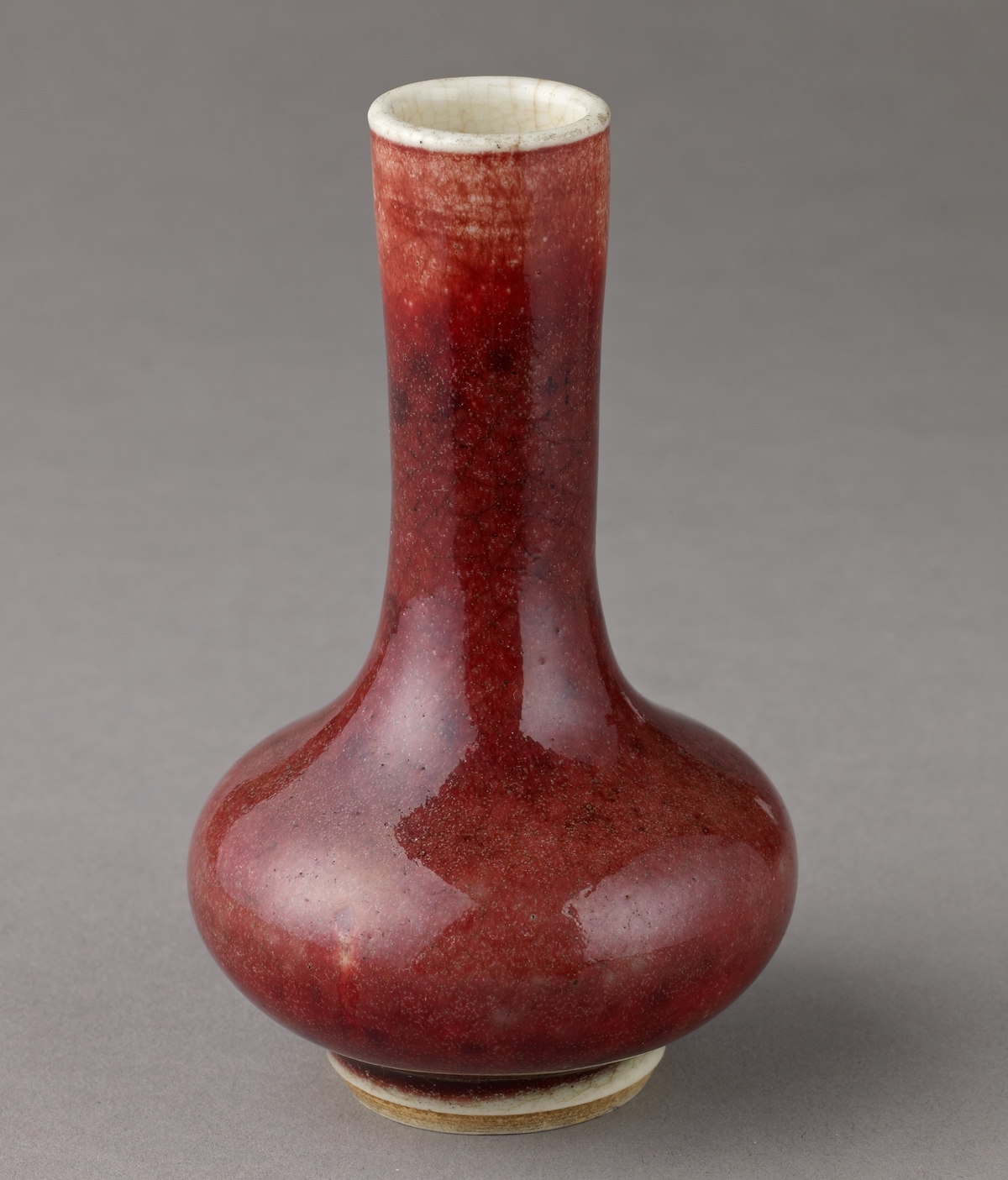
A deep, brownish red seen in ceramics, shoes and fashionNamed shade

#660000
Blood red
A deep, dark red inspired by the colour of human bloodNamed shade