🇳🇱 The colours of the Netherlands
8 meanings recorded, 5 colours tied to the country and 3 colour cities.
The Netherlands' flag features three horizontal bands: red, white, and blue. Red stands for bravery and strength, white for peace and honesty, and blue for loyalty and justice. These colours have roots in both heraldic tradition and the country's history as a republic.
Where no official value is given, the swatch shows the colour family, not the exact shade.
The colours of the flag of the Netherlands
The Dutch flag is a horizontal tricolour with red (bright vermilion) at the top, white (described as silver) in the middle, and blue (cobalt blue) at the bottom. Each band is the same size. Officially, red stands for bravery and strength, white for peace and honesty, and blue for loyalty and justice. Another view links red to the people, white to the church, and blue to the nobility. These meanings come from heraldic tradition and social theory, rather than a single official statement.
How the colours were chosen of the Netherlands
The earliest Dutch flag was the orange-white-blue Prince's Flag, tied to William of Orange and the revolt against Spain in the late 16th century. Orange was gradually replaced by red in the early 17th century, reflecting a shift away from the House of Orange. The red-white-blue flag, known as the States Flag, became standard and later inspired other national flags. The colours were formally fixed as red, white, and blue by royal decree in 1937, and their exact shades were defined in 1949.
Official shades and rules of the Netherlands
The flag's proportions are 2:3, with horizontal stripes of equal width. The colours are officially described as bright vermilion (red), white (silver), and cobalt blue. In 1958, the colour parameters were defined using a specific colour space and lighting standard. The flag is flown at government buildings year-round, with special rules for adding an orange pennant on royal occasions.
The facts in this overview come from the Wikipedia article "Flag of the Netherlands", written by its contributors and used under the CC BY-SA 4.0 licence. Rang rewrote the text in its own words, with AI assistance, and compares every page with the article to make sure no passage is copied. It may be reused under the same CC BY-SA 4.0 licence with a link back.
What colours mean in the Netherlands
Customs vary by region, faith and family; these are the meanings most often recorded.
The flag is red, white and blue. Its first stripe was orange, as in the Prince's Flag of the revolt against Spain, and had become red by the mid 1600s.
Politics and protestSource: Flag of the NetherlandsOrange is the colour of the royal family, the House of Orange-Nassau. On King's Day, 27 April, the whole country dresses in orange for street markets and parties.
Royalty and powerFestival and celebrationPrideJoySource: KoningsdagNational teams play in orange and are called Oranje. The craze that takes over streets and shops during big football tournaments has its own name, oranjegekte.
Festival and celebrationPrideEnergySource: OranjegekteOn the King's birthday and other royal days, an orange pennant is flown above the national flag.
Royalty and powerSource: Flag of the NetherlandsDelft blue is tin-glazed pottery painted in blue on white. Potters in Delft began making it in the 1600s as a cheaper answer to Chinese porcelain.
Nature and renewalSource: DelftwareA cabinet that joins the red Labour Party with the blue liberals is called paars, purple. The first purple coalition governed from 1994.
Politics and protestSource: Purple coalitionThe Homomonument in Amsterdam is made of three triangles of pink granite. It turns the pink triangle, the Nazi camp badge for gay men, into a memorial.
Politics and protestProtection and healingCourageSource: HomomonumentThe wealthy citizens painted by Rembrandt and Frans Hals wear sober black with white collars. A good black was costly to dye, so it showed both wealth and Calvinist restraint.
Purity and peaceSource: BlackColour cities of the Netherlands
 🇳🇱 Home of Delft blueDelftA Dutch canal town whose potters made blue-and-white ware famous across Europe from the 17th century.
 🇳🇱 Orange on King's DayAmsterdamOnce a year the brick-and-water city turns entirely orange for the King's birthday.
 🇳🇱 The green wooden villageZaanse SchansWooden houses and windmills painted dark green with white trim, on a river north of Amsterdam.
Colours tied to the Netherlands
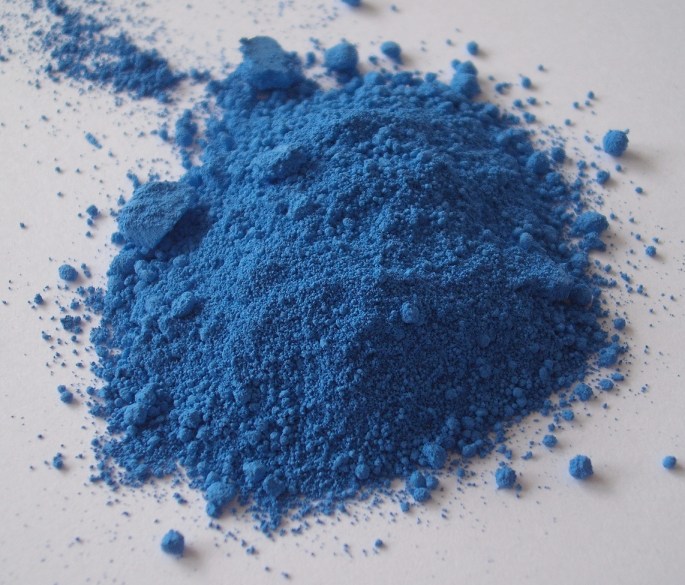
#0047AB
Cobalt blue
A strong, stable blue pigment made from cobalt and alumina since the early 1800sPigment · 🇫🇷 France +3
#A91101
Turkey red
A lasting bright red dye for cotton, made from madder root by a complex processNamed shade · 🇹🇷 Turkey +4

#009C8C
Blue-green
The colour between blue and green, part of the cyan familyNamed shade · 🇦🇺 Australia +3
Photo credits on this page
The small pictures above come from Wikimedia Commons under free licences. Some are cropped to fit.
- Blue-green: Vyacheslav Argenberg, CC BY 4.0, source
- Cobalt blue: FK1954, Public domain, source
- Delft Nl: W. Bulach, CC BY-SA 4.0, source
- Amsterdam Nl: ESA (European Space Agency), Attribution, source
- Zaanse Schans Nl: Frila, CC BY-SA 3.0, source