Hematite
A mineral iron oxide, black to red, used since prehistory as a pigment and ore
No single value: Hematite is a material, and its colour varies. The background shows its family, grey.

Hematite is an iron oxide mineral found in rocks and soils, showing colours from black and steel-grey to rust-red. Its name comes from the Greek for blood, due to its red streak. Hematite has been used as a pigment since early human history and is a major source of iron. It is found worldwide and is important in both art and industry.
- Hematite leaves a red streak, even when its surface is grey or black
- Used as a pigment since at least 164,000 years ago
- Main source of iron ore worldwide
- Present in ochre, sienna, and umber pigments
- Traditional Swedish Falu red paint is made from hematite mine tailings
What colour is Hematite?
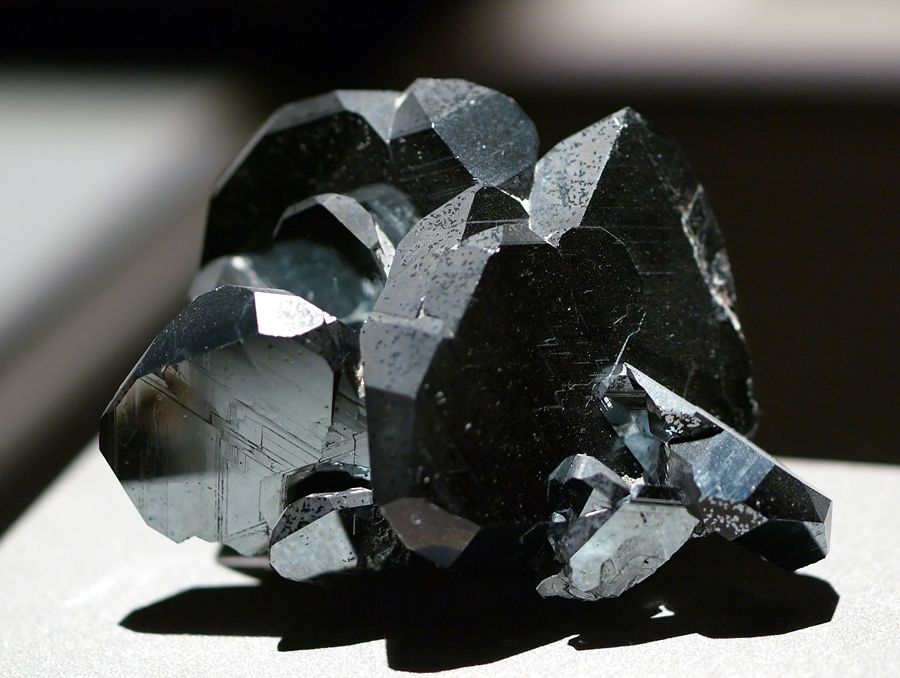
Hematite is a mineral form of iron oxide, Fe2O3, found in many rocks and soils. Its colour ranges from metallic grey and black in crystals to earthy red in compact forms. All types leave a red streak when scratched on a surface. Hematite stands out for its hardness and brittleness compared to pure iron, and for its use as both a pigment and a major iron ore.
Where does Hematite come from?
The name hematite comes from the Greek word for blood, reflecting the red colour seen in some forms. The English word traces back through Middle French and Latin, all referring to the stone’s blood-red appearance. Hematite has been used since early human history, with evidence of its use as a pigment and for decoration dating back over 160,000 years in South Africa. Ancient mines in Poland and Hungary show its long-standing role in human culture.
How is Hematite made?
Hematite forms naturally as iron(III) oxide in a range of environments, from still waters and hot springs to soils and volcanic areas. It is mined directly from the earth, especially from large deposits in banded iron formations. When used as a pigment, hematite is ground into a fine powder. It is also present in ochre, which gets its colour from varying amounts of hematite.


Where Hematite is used
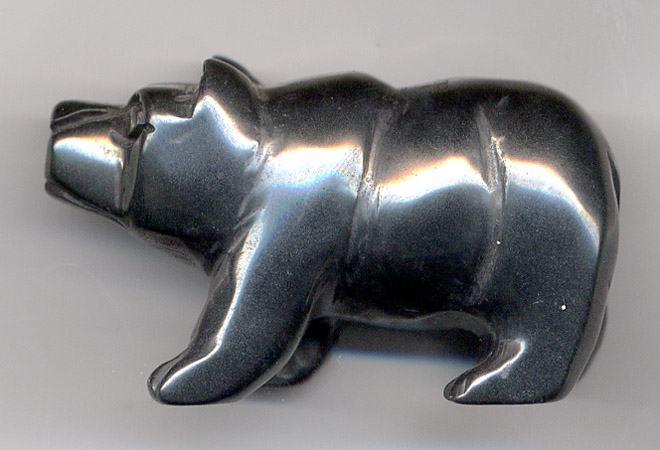
Hematite has been used as a pigment in art since prehistoric times, providing red and brown tones in cave paintings and later artworks. It appears in traditional house paints, especially in Sweden as Falu red. The mineral is also shaped into beads and jewellery, and used in gilding and intaglio engraving. Industrially, hematite is a key source of iron and is used in radiation shielding, ship ballast, and coal separation.
Shades and relatives of Hematite
Hematite occurs in several forms, including kidney ore, martite, iron rose, and specularite. All share the same chemical makeup but differ in appearance. Ochre, sienna, and umber pigments contain hematite in varying amounts. Hematite is sometimes confused with magnetite, but unlike magnetite, it is only weakly magnetic.
Questions people ask about Hematite
What colour is hematite?
Hematite can appear black, steel-grey, silver-grey, brown, reddish-brown, or red, but always leaves a rust-red streak when scratched.
Where does the name hematite come from?
The name comes from the Greek word for blood, 'haima', due to the red colour seen in some forms of the mineral.
How has hematite been used by people?
Hematite has been used as a pigment in art and decoration since prehistoric times, as well as for making jewellery and as a major source of iron.
What is hematite made of?
Hematite is made of iron(III) oxide, with the chemical formula Fe2O3.
Is hematite magnetic?
Hematite is only very weakly magnetic, unlike magnetite, which is strongly attracted to magnets.
Good reading and sources
The facts on this page come from the Wikipedia article "Hematite", written by its contributors and used under the CC BY-SA 4.0 licence, and from its Wikidata record (CC0). Rang rewrote the text in its own words, with AI assistance, and compares every page with the article to make sure no passage is copied. It may be reused under the same CC BY-SA 4.0 licence with a link back.
It may contain mistakes. The swatch is an approximation: named colours are not fixed standards, and every screen shows them a little differently. If something is wrong, tell us. Last refreshed 2026-10-03.
More of the grey family
All of grey
Grey
Gray horse
A horse coat that turns lighter with age, often ending up nearly whiteNamed shade
#020D15
Gunmetal
A dark copper alloy once used for casting guns and now valued for its strength and finishNamed shade · 🇺🇸 United States
#536878
Payne's grey
A blue-grey paint mixture first made by William Payne in the 1700sNamed shade
Grey
Calcium plumbate
A lead-based inorganic pigment once used to prevent corrosion in paintsPigment

Grey
Roan
A coat colour with white and coloured hairs mixed evenly across the bodyNamed shade

#98817B
Cinereous
A grey with a hint of coppery brown, like the colour of wood ashNamed shade
Grey
Varnish roan
A horse coat pattern with intermingled white and dark hairs, linked to the Leopard complexNamed shade

#808080
Grey
A neutral colour between black and white, seen in clouds, ash, and undyed woolBasic colour
More colours tied to South Africa
The colours of South Africa
#CC7722
Ochre
A natural earth pigment ranging from yellow to deep orange or brownPigment · 🇦🇺 Australia +5
White
Antimony trioxide
A white antimony compound used in flame retardants and glassmakingPigment · 🇨🇳 China +4
Orange
Tenné
A rare heraldic stain of orange-tawny, named for tanned leatherNamed shade · 🇫🇷 France +3

Blue
Indigofera tinctoria
A shrub whose leaves yield natural indigo dyeColour named from nature · 🇮🇳 India +5