Dyebush
A desert shrub used for dyes and stains
No single value: Dyebush is a material, and its colour varies. The background shows its family, purple and violet.

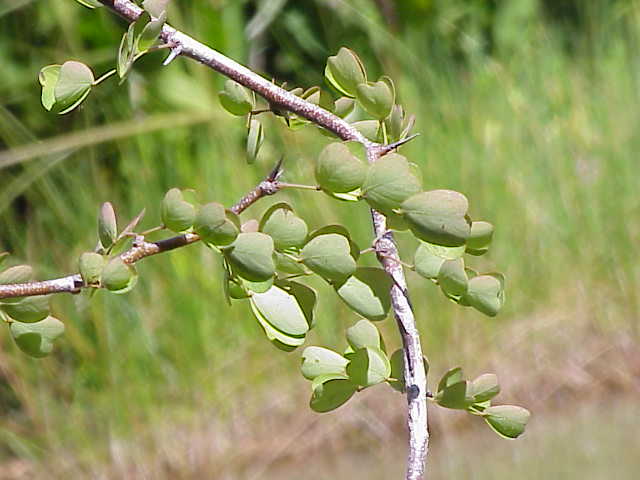
Dyebush is a perennial shrub found on desert mesas in southern Arizona, California, and Baja California. Known for its fragrant, oily branches and clusters of purple and white flowers, it has been used to make dyes and stains.
- Grows on desert mesas in Arizona, California, and Baja California
- Has hairy, greyish-white leaves and purple-white flowers
- Used for making dyes and stains
- Fragrant and oily branches
What colour is Dyebush?
Dyebush is a shrub that grows on desert mesas in the southern parts of Arizona, California, and Baja California. It reaches about one metre in height and has hairy, greyish-white leaves that help reflect sunlight. The plant produces clusters of purple and white flowers, which appear from March to June. Its branches are oily and have a noticeable scent.
Where does Dyebush come from?
The name dyebush comes from its use as a source of dye and stain. Its scientific name, Psorothamnus emoryi, refers to its classification in the legume family and honours Emory, but the sources do not specify further. The plant is native to the deserts of the southwestern United States and northern Mexico.
How is Dyebush made?
Dyes and stains are made from the fragrant, oily parts of the dyebush plant. The sources do not give details on the exact method, but the plant itself is the material used. Its natural oils and compounds are valued for colouring.

Where Dyebush is used
Dyebush has been used for making dyes and stains, likely for textiles or other materials. Its use is tied to the regions where it grows, especially in desert areas. The sources do not mention any other uses in art, food, or ritual.
Purple around the world
What the purple and violet family means from country to country.
In Holy Week, members of religious brotherhoods walk in procession in robes and pointed hoods, many of them purple, the colour of penance. A purple band also marked the flag of the Second Republic.
Sacred and holyPolitics and protestSource: Holy Week in SpainSuffragettes campaigning for women's votes wore purple, white and green: purple for dignity, white for purity and green for hope.
Politics and protestCourageSource: SuffragetteA child born to a reigning Byzantine emperor was called porphyrogennetos, born in the purple. The birth took place in a palace room lined with purple stone.
Royalty and powerAweSource: Born in the purpleIn the elections of 2005, voters dipped a finger in purple ink to prevent double voting. The stained finger, held up for cameras, became a sign of the vote.
Politics and protestPrideSource: Election inkPurple dye from the murasaki plant was costly and hard to make. In the court rank system set up under Prince Shotoku, the highest officials wore purple caps.
Royalty and powerAweSource: Twelve Level Cap and Rank SystemThe Phoenician cities of Tyre and Sidon made Tyrian purple from sea snails. The dye was so costly that it became the colour of kings and Roman emperors.
Royalty and powerAweSource: Tyrian purpleShades and relatives of Dyebush
Dyebush is also called white dalea and Emory's indigo bush. The plant should not be confused with other indigo-producing plants, as its main use is for dyes and stains in its native desert regions.
Questions people ask about Dyebush
What colour is dyebush?
Dyebush produces clusters of purple and white flowers. The plant itself is greyish-white and is used for making dyes and stains, though the exact colour of the dye is not specified in the sources.
Where does the name dyebush come from?
The name dyebush comes from its traditional use as a source of dye and stain.
Where is dyebush found?
Dyebush grows on desert mesas in southern Arizona, California, and the Baja California region of Mexico.
What is dyebush used for?
Dyebush is used for making dyes and stains, likely for textiles or other materials.
Good reading and sources
- Psorothamnus emoryi on WikipediaEncyclopedia
- More pictures on Wikimedia CommonsPictures
- Wikidata recordOpen data
The facts on this page come from the Wikipedia article "Psorothamnus emoryi", written by its contributors and used under the CC BY-SA 4.0 licence, and from its Wikidata record (CC0). Rang rewrote the text in its own words, with AI assistance, and compares every page with the article to make sure no passage is copied. It may be reused under the same CC BY-SA 4.0 licence with a link back.
It may contain mistakes. The swatch is an approximation: named colours are not fixed standards, and every screen shows them a little differently. If something is wrong, tell us. Last refreshed 2026-10-03.
More of the purple and violet family
All of purple and violet
Purple and violet
Tyrian purple
A reddish-purple dye once worth its weight in silver, made from sea snailsDye · 🇱🇧 Lebanon +4

Purple and violet
Crystal violet
A synthetic purple dye used in science, medicine, and industryDye
Purple and violet
Logwood
A tree whose wood yields a dye once vital for textiles and scienceColour named from nature · 🇲🇽 Mexico +3

#E0B0FF
Mauve
A pale purple named after the mallow flower and once a fashion sensationNamed shade · 🇫🇷 France
Purple and violet
Mauveine
A purple dye first made by accident in 1856, launching the synthetic dye industryDye

#9966CC
Lavender
A pale purple named for the lavender flower, with many subtle variationsNamed shade
#CC8899
Puce
A brownish-purple shade named after the flea and once favoured in French fashionNamed shade · 🇫🇷 France +1

#8E4585
Plum
A purple shade named for the colour of plum fruitNamed shade