Pigment violet 23
A synthetic violet pigment from the dioxazine family, used in commercial applications
No single value: Pigment violet 23 is a material, and its colour varies. The background shows its family, purple and violet.
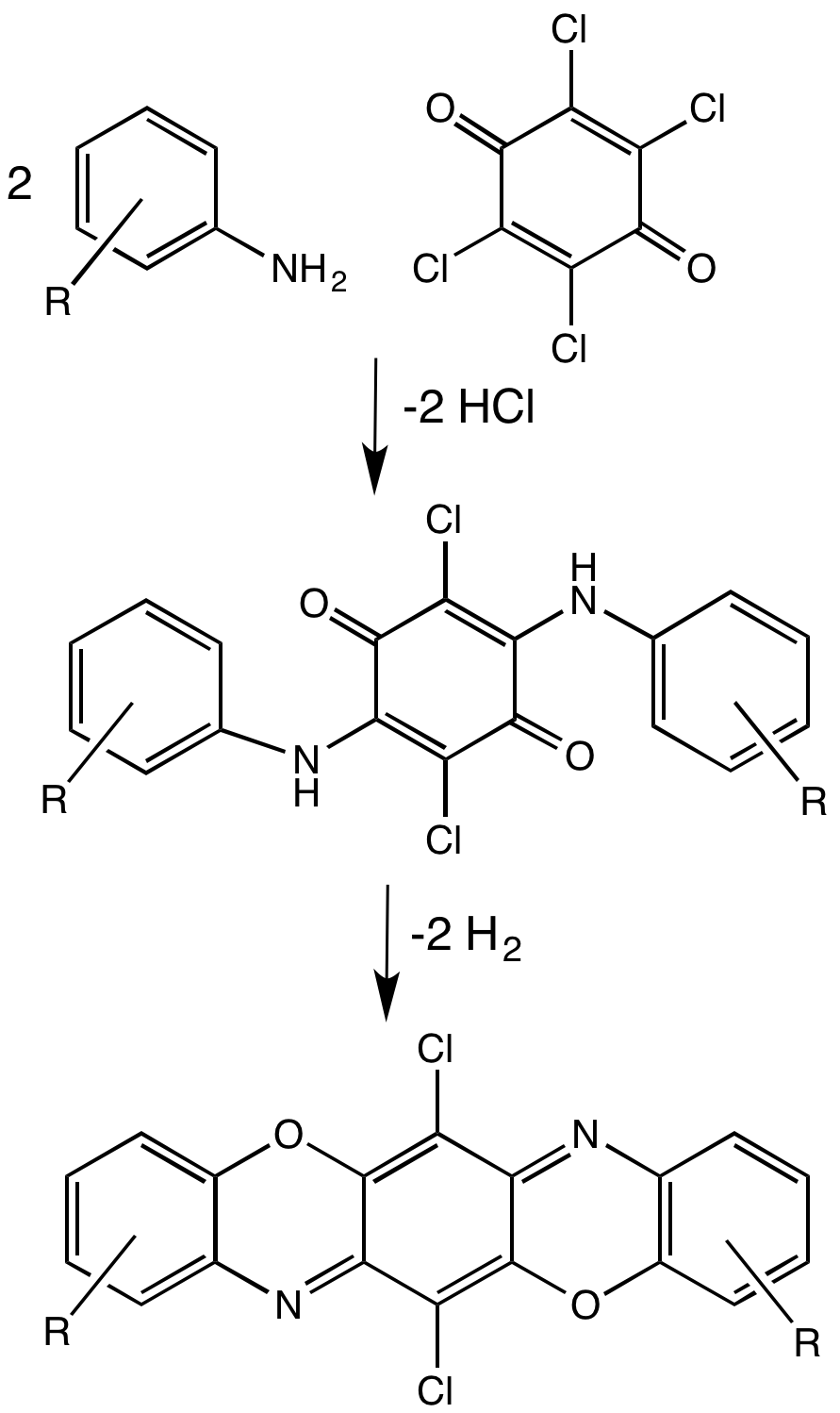
Pigment violet 23 is a synthetic organic pigment in the dioxazine group, made by condensing chloranil and an aniline compound. It is known for its violet colour and is used commercially as a pigment. Its structure is centrosymmetric and angular, not linear as once thought.
- Belongs to the dioxazine family of pigments
- Made by condensing chloranil and an aniline compound
- Has an angular, centrosymmetric structure
- Used as a commercial violet pigment
What colour is Pigment violet 23?
Pigment violet 23 is a synthetic violet pigment belonging to the dioxazine family of organic compounds. It is recognised for its deep purple hue and is widely used as a commercial pigment. The pigment has a centrosymmetric angular structure, which sets it apart from other violet pigments. Its colour is strong and consistent, making it a popular choice for artists and manufacturers.
Where does Pigment violet 23 come from?
The pigment is part of the dioxazine group but is made from carbazole derivatives. Its structure was once thought to be linear, but later research showed it is actually angular and centrosymmetric. The name 'Pigment violet 23' comes from its classification in commercial pigment naming systems.
How is Pigment violet 23 made?
Pigment violet 23 is produced by condensing chloranil with 3-amino-N-ethylcarbazole, or more generally, by reacting an aniline compound with chloranil. This process creates the pigment's distinctive structure and colour. The method is entirely synthetic and does not use natural materials.
Where Pigment violet 23 is used
This pigment is mainly used in art and commercial applications where a stable violet colour is needed. Its synthetic origin and strong hue make it suitable for a range of products, especially paints and coatings.
Purple around the world
What the purple and violet family means from country to country.
In Holy Week, members of religious brotherhoods walk in procession in robes and pointed hoods, many of them purple, the colour of penance. A purple band also marked the flag of the Second Republic.
Sacred and holyPolitics and protestSource: Holy Week in SpainSuffragettes campaigning for women's votes wore purple, white and green: purple for dignity, white for purity and green for hope.
Politics and protestCourageSource: SuffragetteA child born to a reigning Byzantine emperor was called porphyrogennetos, born in the purple. The birth took place in a palace room lined with purple stone.
Royalty and powerAweSource: Born in the purpleIn the elections of 2005, voters dipped a finger in purple ink to prevent double voting. The stained finger, held up for cameras, became a sign of the vote.
Politics and protestPrideSource: Election inkPurple dye from the murasaki plant was costly and hard to make. In the court rank system set up under Prince Shotoku, the highest officials wore purple caps.
Royalty and powerAweSource: Twelve Level Cap and Rank SystemThe Phoenician cities of Tyre and Sidon made Tyrian purple from sea snails. The dye was so costly that it became the colour of kings and Roman emperors.
Royalty and powerAweSource: Tyrian purpleShades and relatives of Pigment violet 23
Pigment violet 23 is part of a broader family of dioxazine pigments. It is sometimes confused with other violet pigments, but its unique angular structure and synthetic origin distinguish it from natural or mineral-based violets.
Questions people ask about Pigment violet 23
What colour is Pigment violet 23?
Pigment violet 23 is a synthetic pigment with a deep violet or purple colour, used widely in commercial products.
How is Pigment violet 23 made?
It is made by condensing chloranil with 3-amino-N-ethylcarbazole or a similar aniline compound, using a synthetic process.
What is the origin of the name Pigment violet 23?
The name comes from its classification in commercial pigment systems, where it is listed as number 23 among violet pigments.
What sets Pigment violet 23 apart from other violet pigments?
It has a unique angular, centrosymmetric structure and is entirely synthetic, unlike some natural violet pigments.
Good reading and sources
The facts on this page come from the Wikipedia article "Pigment violet 23", written by its contributors and used under the CC BY-SA 4.0 licence, and from its Wikidata record (CC0). Rang rewrote the text in its own words, with AI assistance, and compares every page with the article to make sure no passage is copied. It may be reused under the same CC BY-SA 4.0 licence with a link back.
It may contain mistakes. The swatch is an approximation: named colours are not fixed standards, and every screen shows them a little differently. If something is wrong, tell us. Last refreshed 2026-10-03.
More of the purple and violet family
All of purple and violet
Purple and violet
Crystal violet
A synthetic purple dye used in science, medicine, and industryDye

Purple and violet
Cobalt(II) phosphate
A violet pigment and chemical compound used as cobalt violet in artPigment

Purple and violet
Manganese violet
A synthetic purple pigment once favoured by Impressionist paintersPigment
Purple and violet
Purple of Cassius
A purple pigment made by reacting gold salts with tin(II) chloridePigment
Purple and violet
Caput mortuum
A deep purple pigment made from iron oxide, once used for painting robesPigment

Purple and violet
Murexide
A purple chemical once used as a dye and indicator in chemistryPigment · 🇩🇪 Germany +1

Purple and violet
Pigment Violet 29
A dark red-purple pigment used in paints, inks, and dyesPigment
Purple and violet
Croconate violet
A synthetic violet dye made from croconate and malononitrileDye