Next: 14 Apr 2027
Vaisakhi
Saffron and deep blue: the colours of the Khalsa, on turbans, flags and the robes of the five who lead the procession.
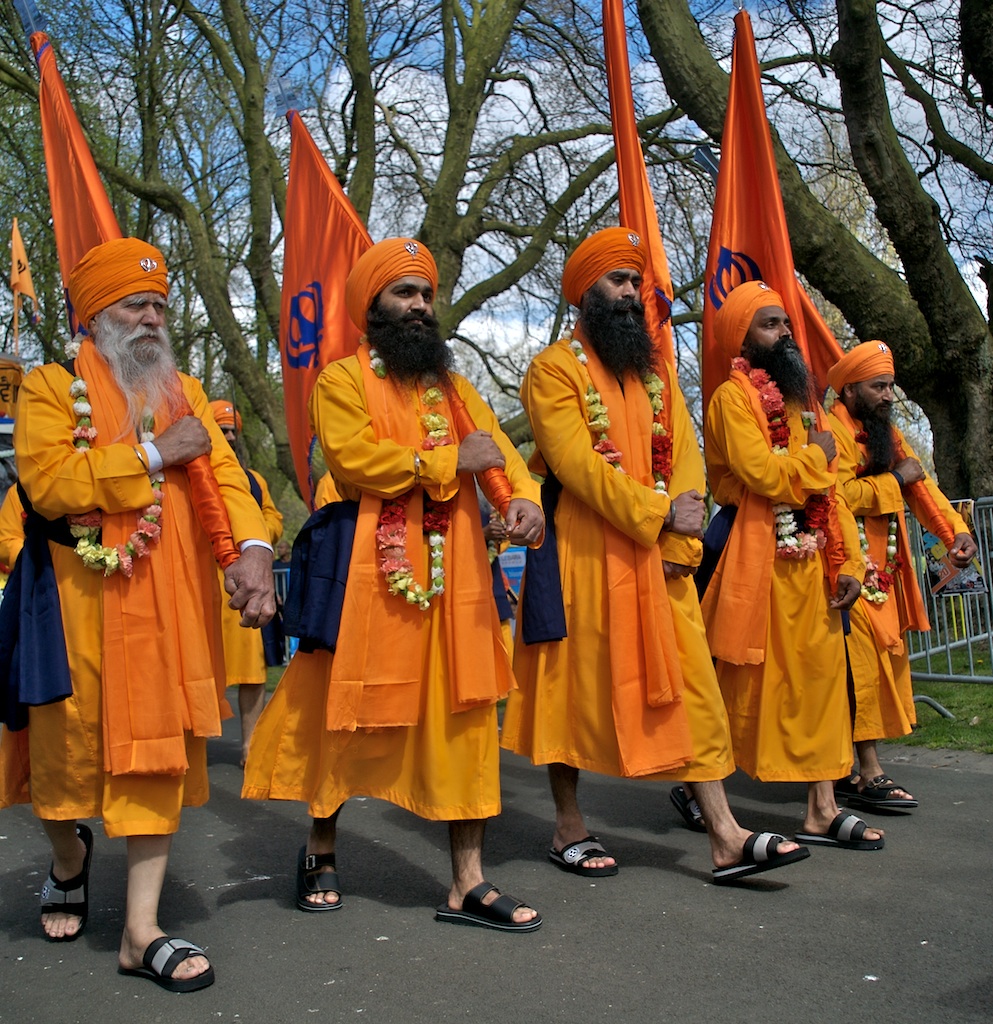
The colours of Vaisakhi
Vaisakhi is the spring harvest festival of Punjab, and for Sikhs it marks the day in 1699 when Guru Gobind Singh founded the Khalsa, the community of initiated Sikhs. The colours of the day are those of the Khalsa. A procession called the nagar kirtan is led by the Panj Pyare, five men dressed in saffron or deep blue robes and turbans who walk barefoot with drawn swords before the scripture. At each gurdwara the Nishan Sahib, the tall flag, is taken down, its pole washed in milk and water and wrapped in fresh cloth. The flag is yellow or saffron, with a dark blue emblem. In the villages people wear yellow, the colour of ripe wheat, and dance bhangra.
#F4801AKesari saffronRobes of the Panj Pyare; courage and sacrifice.#F7C61BBasanti yellowThe Nishan Sahib and the ripe fields.#1B2A6BKhalsa blueDeep blue of the flag’s emblem and of Nihang warriors.#D9B45AWheat goldThe harvest that gives the day its season.Values are fair approximations, not official shades.
Read about the colours
Written by the Rang desk with AI assistance. Background: "Vaisakhi" on Wikipedia. Customs differ from family to family and place to place. If this is your tradition and we have it wrong, tell us.